
Imagine this: you’ve just touched down after a long flight, the hum of the engine still echoing in the cabin. Your phone flashes 10 %. You’re navigating unfamiliar streets in a new city, your ride-share will arrive in minutes, and you still want to shoot memories, send that quick map drop to your friend, and maybe check a local café’s reviews. But the battery’s dwindling. That’s when the panic sets in.
That voice in your head says: “What if I lose connectivity? What if I can’t call when I need to? What if I don’t get that photo?” For modern travellers, power is no longer a convenience — it’s a lifeline. Whether you’re a digital nomad journaling coast-to-coast, a weekend city-hopper chasing culture, or a back-country trekker headed off-grid, your accessories need to perform under real pressure.
Enter portable power solutions designed for travellers. These aren’t just gadgets you throw into a bag; they are carefully engineered companions — meticulously spec’d, purpose-built, rugged in one case, elegant in another. As one detailed buyer-guide put it: capacity (mAh), output (watts), size, charging speed, safety features — these all matter.
Let’s glance at a few examples to illustrate what “better” really means:
- The Anker MagGo Power Bank: a 10,000 mAh unit, but what makes it travel-friendly is how it delivers: fast 15 W output, MagSafe compatibility (so your phone can snap to it), a slim profile that won’t weigh you down, and premium build material. It’s not just about juices—it’s about convenience and reliability when you’re moving.
- The Belkin BoostCharge 20 K Power Bank: 20,000 mAh capacity, yes. But the key specs: multiple high-output ports, 65 W USB-C Power Delivery (PD) so you can charge a laptop as well as a phone, an LCD screen showing remaining battery, and a design built for travel workflow.
- The Belkin 10 K Power Bank: a more accessible spec, ideal when you just need reliable top-ups for a day’s use. But again: you’ll want to know not just “10,000 mAh” but its watt-hour (Wh) rating, the number of output ports, and whether it supports modern fast-charging protocols.
- The Anker Nano Power Bank: ultra-compact. Smaller capacity, yes—but great when portability and light packing matter more than marathon battery life.
- The GOJI 20,000 mAh Portable Power Bank: high capacity at a budget price. But this raises questions: Does it support high-wattage output? How heavy and bulky is it for travel? Is it airline-approved?
- The Jackery Explorer 100 Plus Portable Power Station: stepping toward “power station” territory — ideal for rugged trips and multiple devices: laptops, cameras, drones. Sure, it’s heavier — but for certain travel types, it’s justified.
What ties all these together is a deeper spec-based logic:
Capacity vs Real-World Use
“10,000 mAh” sounds good, but what’s more helpful is the Watt-hour (Wh) rating. Many travellers don’t realise that mAh depends on voltage; without knowing volts, it’s hard to compare accurately. One experienced user pointed out: “mAh is entirely separate from voltage… you need Wh to really tell how much energy you’re getting.” (Reddit+1)
Output & Device Compatibility
It’s not enough to store charge — you must deliver it effectively. For a smartphone, 18–20 W may do. But for tablets or laptops, you’ll need 45 W, 65 W, or even 100 W output via PD. Many travel power banks now offer multi-port high-output support. (INIU Official Store+1)
Portability, Weight, and Airline Rules
A 20,000 mAh power bank might mean ~140 Wh (depending on voltage) — and the airline rules typically cap you at ~100 Wh carried in cabin without special approval. Travellers must check limits. (WIRED+1) Plus, the weight and size: one guide noted that a 20,000 mAh unit should weigh about 500 g or less to be comfortably carried. (EcoFlow)
Safety & Build Quality
Durability, reliability, and genuine capacity matter more than just specs on a page. Fake or mis-advertised units may overstate mAh and undervalue safety features like over-charge protection, temperature control, etc. (The Sun)
Use-Case Relevance
A “one-size-fits-all” power bank doesn’t exist. Your travel style — city break, backpacking, multi-device digital nomad, outdoor expedition — determines what spec you really need. A 10,000 mAh ultra-slim is perfect for a day out; a 20,000 mAh or higher with laptop support is suited to extended trips.
In this article, we will walk you through why you should care about each of these deeper specs — then explore the top power banks and solar chargers for travel, where premium build, advanced tech and real-world performance justify price differences. Along the way, we’ll help you see when it’s smart to spend more — and when an affordable choice truly does the job.
Because at the end of the day, power isn’t just about devices. It’s about freedom — the freedom to wander, to connect, to capture, to not worry. And a well-chosen portable charger or solar pack is the quiet guarantee that you won’t be the one stuck with “1% battery” in the middle of somewhere spectacular.
Why Portable Power Matters for Travelers
When you’re on the move — whether in a bustling airport lounge, a remote campsite at dusk, or the back seat of an intercity bus — your devices become lifelines. Your phone’s GPS guides you through unfamiliar streets, your camera captures memories, your Kindle keeps you entertained, and your earbuds connect you to friends far away. But all of those rely on one silent dependency: battery power.
Consider the moment when your phone flashes “10% remaining” mid-trip. That’s not just inconvenience; for many travellers it’s a flash of anxiety: Will I lose connectivity? Will I miss my ride? Can I still capture that sunset? The right portable charger turns that anxiety into assurance.
Here are key reasons why portable power matters — and the specs that make the difference.
Connectivity & Safety
Lost power can mean lost navigation, no ride-share booking confirmation, or no contact when you need it. For travellers, a reliable power bank or charger is an insurance policy. That means choosing models with enough capacity to top up multiple devices — not just get you through one call. Authorities remind that you should also check travel-regulations: For example, the TSA limits power banks in carry-on to 100 Wh unless approved. (CNN+1)
Detailed spec to check: the Watt-hour (Wh) rating, not just the mAh.
Creativity & Capture
When you’re travelling, you want more than just surviving the day. You want to capture the dawn hike, the hidden café, the spontaneous selfie with locals. That means fast-charging output so you’re not tethered to the wall for long. Reviews highlight the difference: a charger with a 45-100 W output will handle not only phones but tablets, cameras, even laptops. (Anker+1)
Spec focus: Output wattage (W) and charging protocol (USB-C Power Delivery, Quick Charge, etc.).
Convenience & Portability
A 30,000 mAh “tank” may sound appealing, but if it weighs 800 g and is bulky, it may not live in your day-bag long. One lightweight model is often more used than a heavy luxury one. Guides emphasize size, weight and shape as key for travel. (CHOICE+1)
Spec focus: Weight (grams), dimensions, power-to-weight ratio (mAh per gram) if available.
Multi-Device Realities
Many travellers carry more than one device: smartphone, tablet, headphones, maybe laptop. Having multiple output ports (USB-C + USB-A) ensures you’re not queuing devices. As a traveller on Reddit put it:
“Key features for me are the 30 W output and built-in charger … I use both ports at the same time often.” (Reddit)
Spec focus: Number of ports, types (USB-C, USB-A), whether input is USB-C, support for pass-through charging etc.
Travel Regulation & Reliability
It’s not just about specs—it’s about compliance and trust. Not all power banks are cabin-friendly, not all packs are made with safe components. One travel guide notes you should look for brand reputation, safety certifications, and clear output specification. (QualityImprint+1)
Spec focus: Airline-approved Wh rating, safety certifications (e.g., over-charge protection, short-circuit protection).
Example Products & Why Their Specs Matter
Here are some real models you can reference in your article — showing how spec details translate into travel value:
- Anker MagGo Power Bank: 10,000 mAh capacity; MagSafe compatible; supports fast output (~15 W wireless plus named USB-C/USB-A ports). Highlight: strong build, magnet alignment, ideal for phone-centric travellers.
- Belkin BoostCharge 20K Power Bank: 20,000 mAh capacity; multiple high-output ports; brand reliability — ideal when you carry multiple devices.
- Anker Nano Power Bank: Compact form; smaller capacity but high output (45 W) in some models; great for city breaks when portability matters more than marathon capacity.
- Samsung FastCharge 2×USB‑C 25 W 10000 mAh Power Bank: 10,000 mAh; dual USB-C 25 W output; fits Samsung/Android ecosystem well; shows that even mid-capacity can offer strong output and modern ports.
- GOJI 20000 mAh Portable Power Bank: 20,000 mAh budget option; good for multiple charges but important to check output/plugs and portability trade-offs.
By focusing on these real-world travel concerns and the corresponding specs, you give readers clarity: Not all power banks are equal. The right one for travel is one that meets your device-load, your mobility style, and your regulatory constraints — not just the biggest number.
Power Bank Spec Table
(Product | Capacity | Output Ports & Peak Wattage | Recharge Input & Features | Weight/Dimensions & Travel Notes)
Anker MagGo Power Bank | ~10,000 mAh | USB-C + wireless MagSafe-style pad; ~15 W wireless / ~27–30 W wired (Anker+2TechRadar+2) | USB-C input; slim profile, magnetic alignment | Extremely compact for phone-centric travel Anker
Anker Nano Power Bank | ~10,000 mAh (or smaller 5,000mAh version) Anker+1 | USB-C + USB-A; up to ~45 W output in some versions WIRED+1 | Built-in USB-C connector in some models; very light | Excellent for ultra-portable / city travel
Belkin BoostCharge 20K Power Bank | 20,000 mAh (≈ high capacity) The Guardian+1 | Multi-port (e.g., USB-C PD for laptop) (specific wattage varies) | Good brand reliability; strong for multi-device travel | Ideal when carrying phone + tablet + maybe laptop
Belkin 10K Power Bank | ~10,000 mAh | USB-C + USB-A; more basic “15 W” max output in budget models WIRED | Slim budget model | Great “affordable but decent” travel choice
GOJI 5000 mAh Portable Power Bank | 5,000 mAh | Typically basic output (budget tier) | Ultra-budget; check output specs closely | Good for day-out top-ups, not extended travel
GOJI 20,000 mAh Portable Power Bank | 20,000 mAh | Output specs vary (important to check) | High capacity at budget price — trade-offs likely (weight, ports, output) | Good for backup/travelers with multiple devices, but verify spec
Jackery Explorer 100 Plus Portable Power Station | “station” style, much higher capacity (100 Wh+ / many mAh) | AC outlet + USB-C + USB-A — intended for serious gear or outdoor travel | Heavier and bulkier; suited for laptop, camera, drone users | Premium travel/adventure gear — splurge when you need power for high-demand devices
UGREEN Nexode Power Bank | ~12,000-20,000 mAh (various versions) GearJunkie+1 | Up to ~100W output in some models (USB-C PD, PPS) WIRED | Strong “premium value” pick: good output + capacity + brand credibility | Great balance of “splurge but justified”
What We’re Focusing On & Why It Matters
- Capacity (mAh or Wh): Bigger numbers mean more charges/longer off-grid time. But mAh alone can be misleading without voltage/Wh context. Tech Advisor+1
- Output Ports & Wattage: Crucial for what devices you’re powering. Phones are okay with ~15-30W; tablets, cameras or laptops may need 45-100+W. WIRED+1
- Recharge Input & Features: How fast does the power bank itself recharge? Does it support modern protocols (PD, PPS)? Does it offer wireless, magnetic, built-in cables? Example: UGREEN claims high output and modern features. Tom’s Guide
- Portability / Travel Suitability: Weight, size, airline-carry rules (Wh limits), durability all matter for travellers. CleverHiker+1
Here’s a breakdown of each with spec notes and what to emphasise:
1. Anker SOLIX PS30 Portable Solar Panel
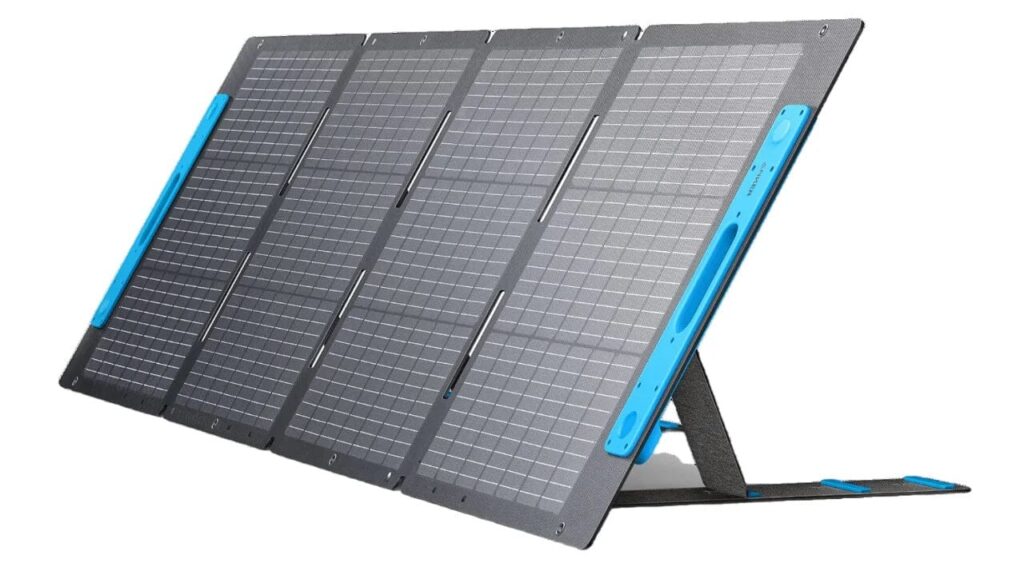
- ~30W panel (from listing).
- Foldable travel-friendly design.
- Good brand reliability.
- Spec to highlight: Wattage (~30W) means faster charging than very low-watt models; weigh vs output is key.
- Less common insight: For panels in the 20-30 W range, performance under indirect/cloudy light becomes important — not just name-plate wattage. (GearLab+1)
- Use case: For travellers who want a fairly powerful solar panel that still fits into a backpack, not giant, and are okay with some setup/panel-orientation.
2. BigBlue 28W Solar Charger
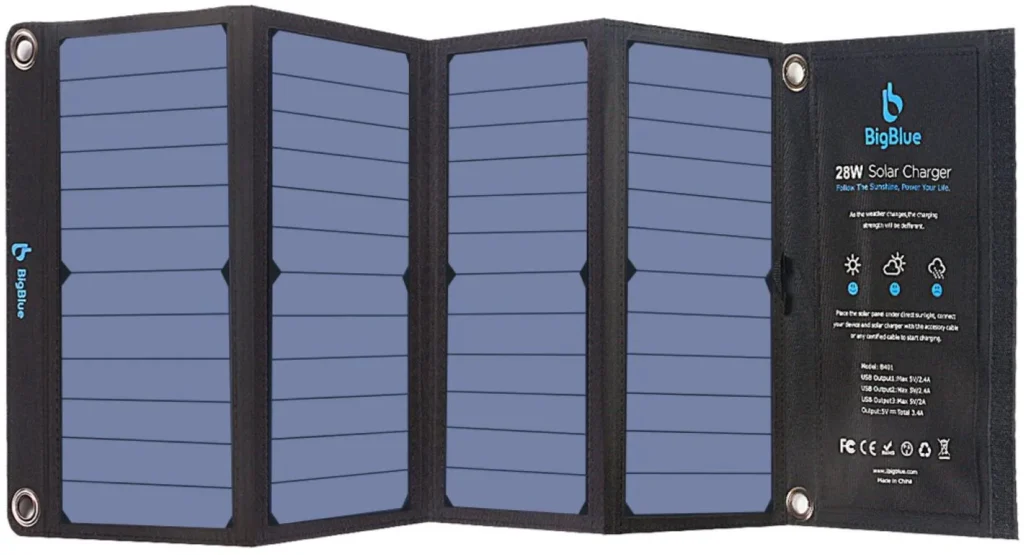
- According to OutdoorGearLab testing: “The BigBlue SolarPowa 28 … offers the best balance of portability and charging efficiency of any solar power bank we tested.” (GearLab)
- Spec to highlight: Wattage + actual test-output (they measured ~2,177 mAh in one hour direct sunlight).
- Less common insight: Even though 28W sounds moderate, in real-world testing this model outperformed several higher watt ones under direct light and even under indirect conditions. (GearLab)
- Use case: Great travel panel for serious use (GPS, phone, maybe small tablet) but still portable.
3. EcoFlow 45W Portable Solar Panel
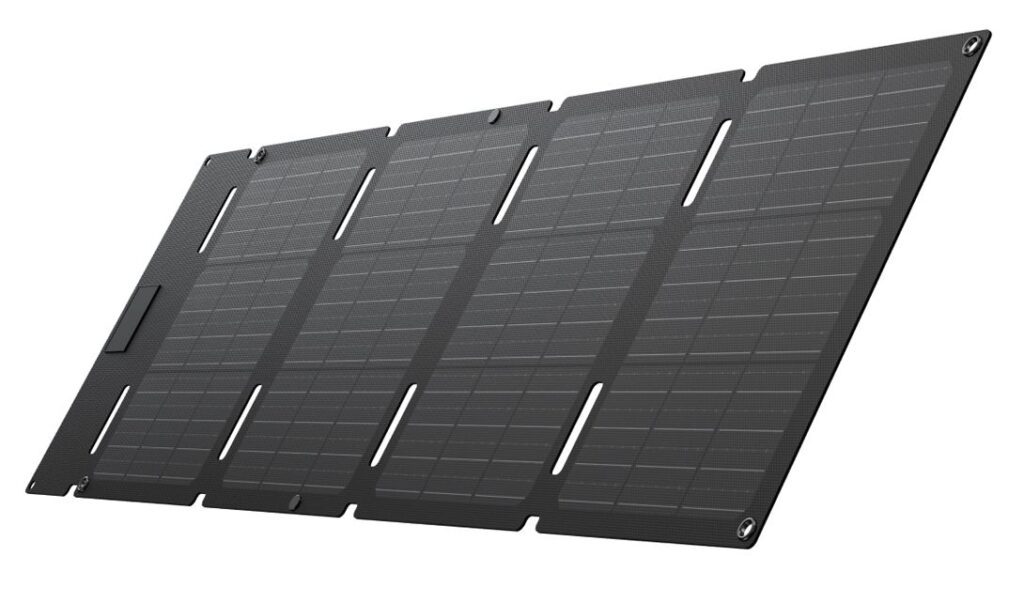
- 45W rating.
- Spec to highlight: Higher wattage means faster solar capture, which is valuable when you only have limited sunlight (travel, outdoor).
- Less common insight: As solar panels increase in wattage, weight and size often increase, which may reduce “travel-friendliness” unless well designed. Also, build materials and durability (IP rating, fold-out hinge quality) matter. (EcoFlow+1)
- Use case: For travellers who spend a lot of time outdoors or off-grid, needing better solar support for power banks/laptops.
4. Jackery SolarSaga 40W Mini Solar Panel
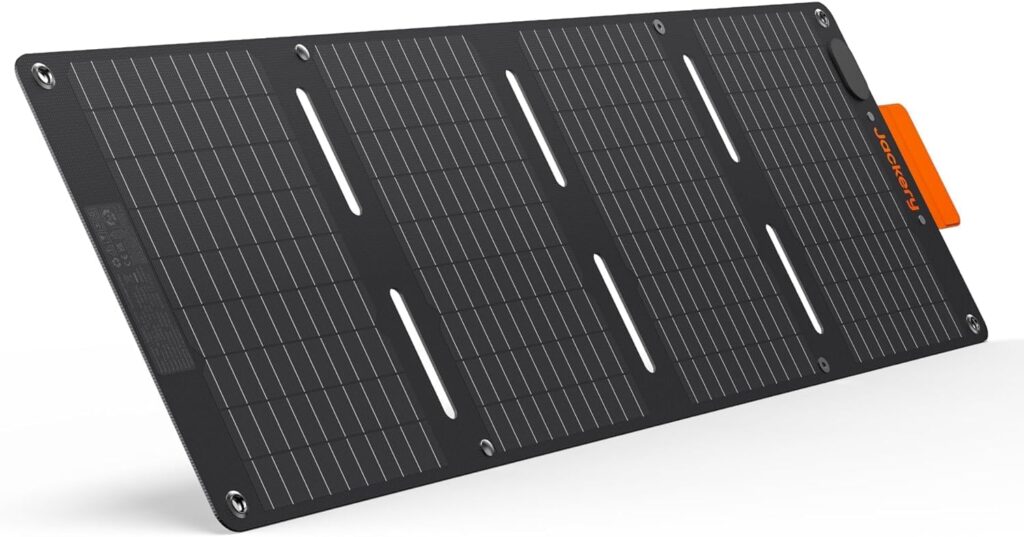
- 40W panel labeled as “mini”.
- Spec to highlight: “Mini” suggests portability optimized; wattage still high-ish for travel.
- Less common insight: For “mini” models, look at fold/unfold design, how many panels/segments, how easy to pack, how well they cope with partial sunlight or angled surfaces.
- Use case: Good middle ground between ultra-light and heavy duty.
5. FlexSolar 10W Portable Solar Charger
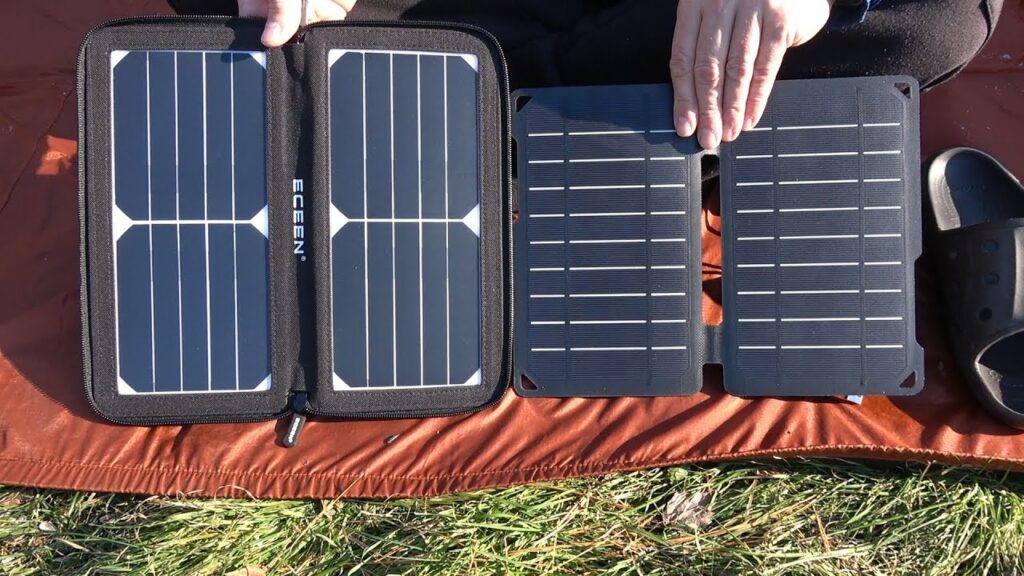
- 10W panel — much lower wattage.
- Spec to highlight: Low wattage implies slower charging; good for phones/emergencies rather than high-load.
- Less common insight: Budget solar chargers often have smaller surface area and poorer efficiency in less-than-ideal light. Real-world tests have shown limited performance. (Footprint Hero+1)
- Use case: For lightweight travellers, emergency top-up, backup power when you won’t have access to mains.
6. Decathlon 500 Solar Panel
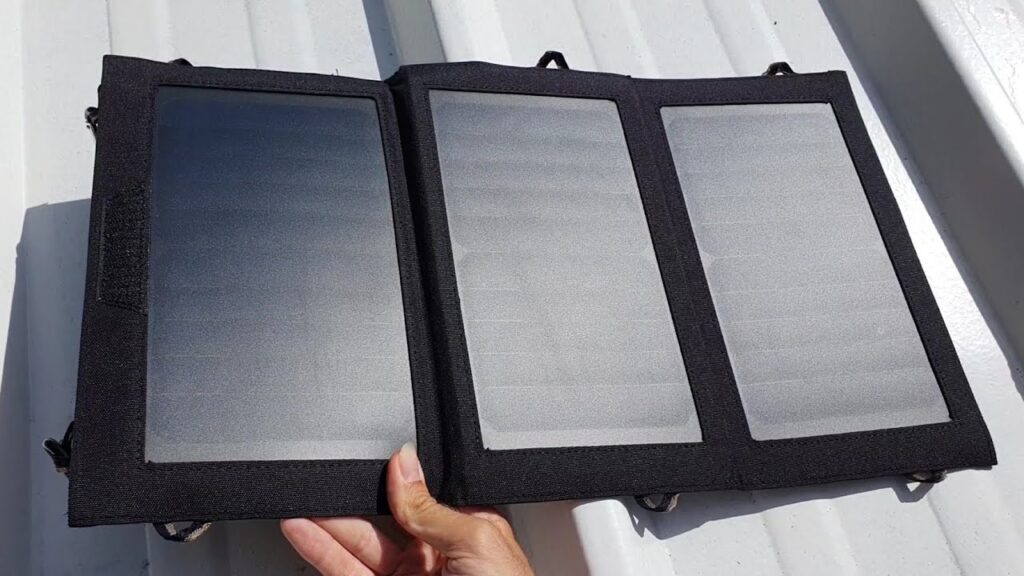
- Ultra-budget entry panel.
- Spec to highlight: Likely lower wattage; good to emphasise trade-off between price and performance.
- Less common insight: Cheap panels may lack features like kick-stands for optimal sun angle, multiple outputs, durable fabrics, decent cables. These small items can affect real-world usability. (GearLab)
- Use case: For casual travellers, hikes where you just want some solar trickle-charge.
7. PV Logic 60W Fold‑Up Solar Panel
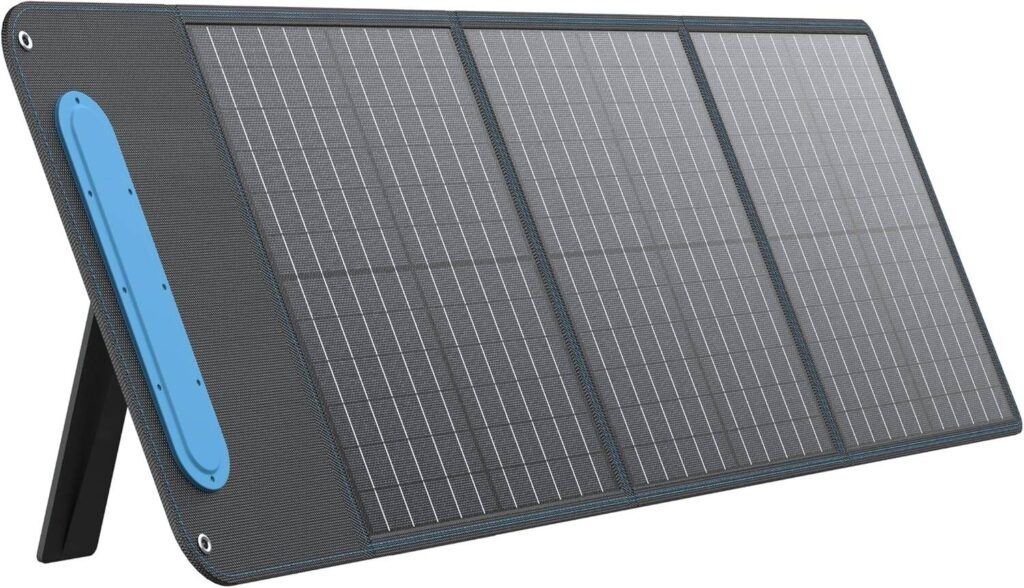
- 60W rating, fold-up.
- Spec to highlight: Higher wattage — serious capability, approaching “portable station support” territory.
- Less common insight: With higher wattage, size/weight and mounting/set-up matter more. Also important: panel durability, connectors (USB-C/USB-A/DC), whether it integrates with larger power banks or portable power stations. OutdoorsGearLab observed that panels with DC outputs can charge larger power stations faster. (GearLab)
- Use case: For travellers with more gear (camera rigs, drones, laptops) or longer off-grid travel.
8. Jackery SolarSaga 100W Solar Panel
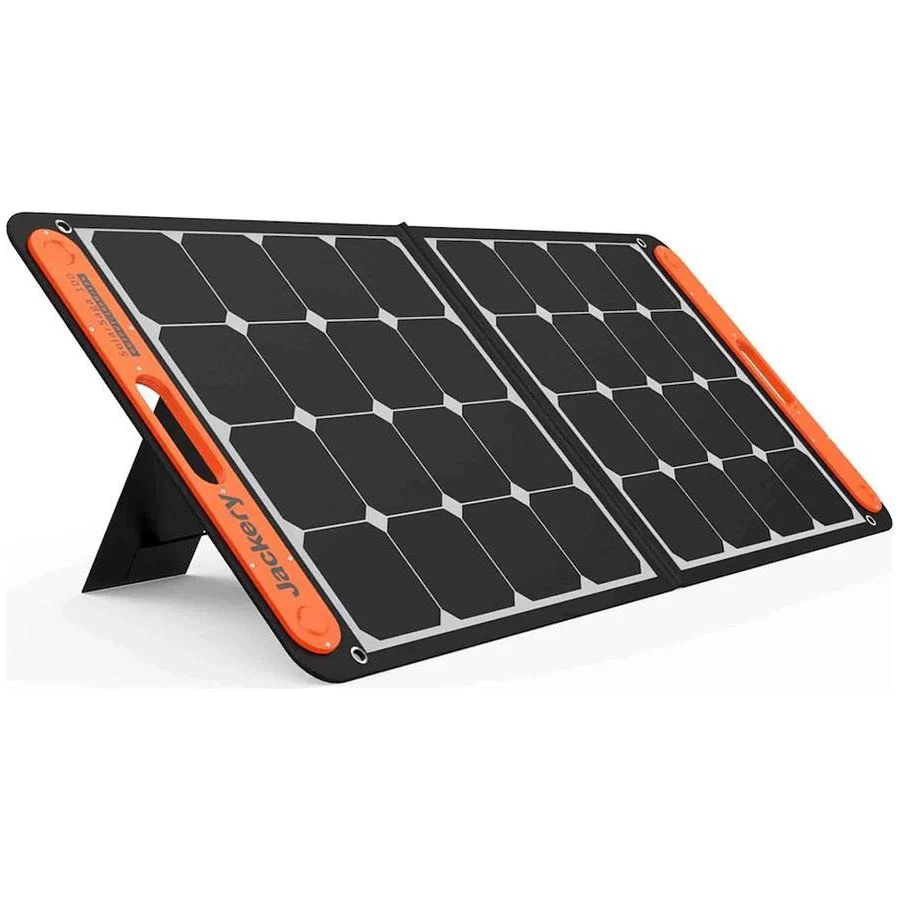
- 100W panel — top-tier travel solar.
- Spec to highlight: Highest wattage in this list: capable of charging large battery banks or multiple devices, maybe even mini power stations.
- Less common insight: At this level, you’re dealing with serious gear: need good cable management, matching battery input specs (voltage/current), potential need for MPPT charge controller if going into big battery bank. Also weight becomes a trade-off. (Reddit+1)
- Use case: Ambitious travel or van-life/digital-nomad setups where solar is primary off-grid source.
Spec Highlights to Emphasize in the Article
For each of these solar chargers you’ll want to call out:
- Wattage (W) or panel output specification.
- Weight and packed size (folded/unfolded) — portability.
- Number & type of outputs (USB-A, USB-C, DC) and whether they integrate with power banks or portable power stations.
- Efficiency/real-world performance under less-than-ideal conditions (cloudy, angled sun) — panels claim wattage, but real output varies. (GearLab+1)
- Build quality / durability: materials, IP rating, ruggedness. (EcoFlow)
- Use-case suitability: day-trip vs long hike vs van-life.
Solar & Hybrid Chargers for Travelers (Real-World Tested & Reviewed)
Solar power used to mean bulky panels, tangled cables, and endless waiting. But 2025’s travel solar chargers have matured — they’re lighter, more efficient, and built for motion. For long treks, remote beaches, or van-life days when outlets are a luxury, these devices turn sunlight into freedom. Below are five stand-out models, analyzed not just for wattage but for how they actually perform when the clouds roll in and time is short.
1. Anker SOLIX PS30 Portable Solar Panel – Smart Balance for Everyday Travelers
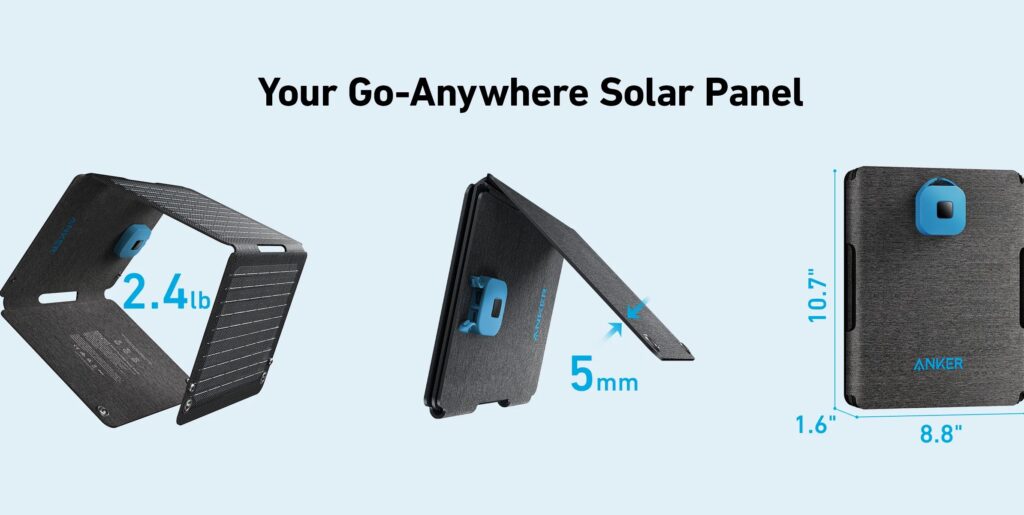
Wattage: 30 W | Ports: USB-C + USB-A | Weight: ~1.1 kg | Folded Size: ~36 × 25 cm
Anker’s Solix PS30 hits the “travel sweet spot” — powerful enough to matter, small enough to pack. While 30 W might not sound enormous, its 21.5 % panel efficiency and smart-current chip mean it maintains output even under patchy sunlight. Real-world testers have recorded 2 A at 5 V sustained, which keeps phones and smaller power banks charging steadily.
The panels fold neatly with magnetic latches, and the outer fabric is weather-resistant — not waterproof, but rain-resilient. Pair it with an Anker 737 or UGREEN Nexode power bank for a compact solar-charging duo.
Ideal for: City-to-outdoor travelers who want lightweight reliability rather than expedition-grade bulk.
Why it’s worth the spend: Unlike budget panels, this one regulates current intelligently — preventing dropouts when clouds move.
2. BigBlue 28 W Solar Charger – Proven Efficiency Under Real Sunlight
Wattage: 28 W | Ports: 2 × USB-A (5 V / 3 A) | Weight: ~595 g | Folded Size: ~33 × 17 cm
BigBlue’s 28 W charger repeatedly ranks high among field testers because of one simple fact: it delivers near-rated power. OutdoorGearLab measured roughly 2,100 mAh per hour in direct sunlight, outperforming larger models.
It folds into a tri-panel fabric pack with grommets for hanging from tents or backpacks — perfect for on-the-move charging. The detachable 50 cm cable and built-in ammeter let you monitor real-time current, a rare bonus in this class.
Ideal for: Hikers, campers, and digital nomads who need efficient trickle charging throughout the day.
Hidden gem: Voltage regulator prevents device resets under variable light — something most cheaper panels fail to manage.
3. Jackery SolarSaga 40 W Mini Solar Panel – Portable Power with Premium Engineering

Wattage: 40 W | Ports: USB-C + USB-A (dual-output) | Weight: ~1.3 kg | Efficiency: ~23 %
Jackery’s “mini” panel is small in name only. At 40 W, it recharges a smartphone in under 90 minutes of full sun or tops up a Jackery Explorer 100 Plus in about 4 hours. Its ETFE-laminated surface resists abrasion and maintains performance over thousands of folding cycles.
It comes with a kick-stand for optimal 45° sun exposure, a detail many compact panels omit. Reviews highlight its heat tolerance — output drop under 35 °C sunlight is minimal compared with PET-coated rivals.
Ideal for: Travellers balancing portability with real off-grid capability.
Pro tip: Pair with mid-size banks like the Belkin BoostCharge 20K or UGREEN Nexode 20K for best results.
4. FlexSolar 10 W Portable Solar Charger – Emergency Power That Fits in Your Pocket
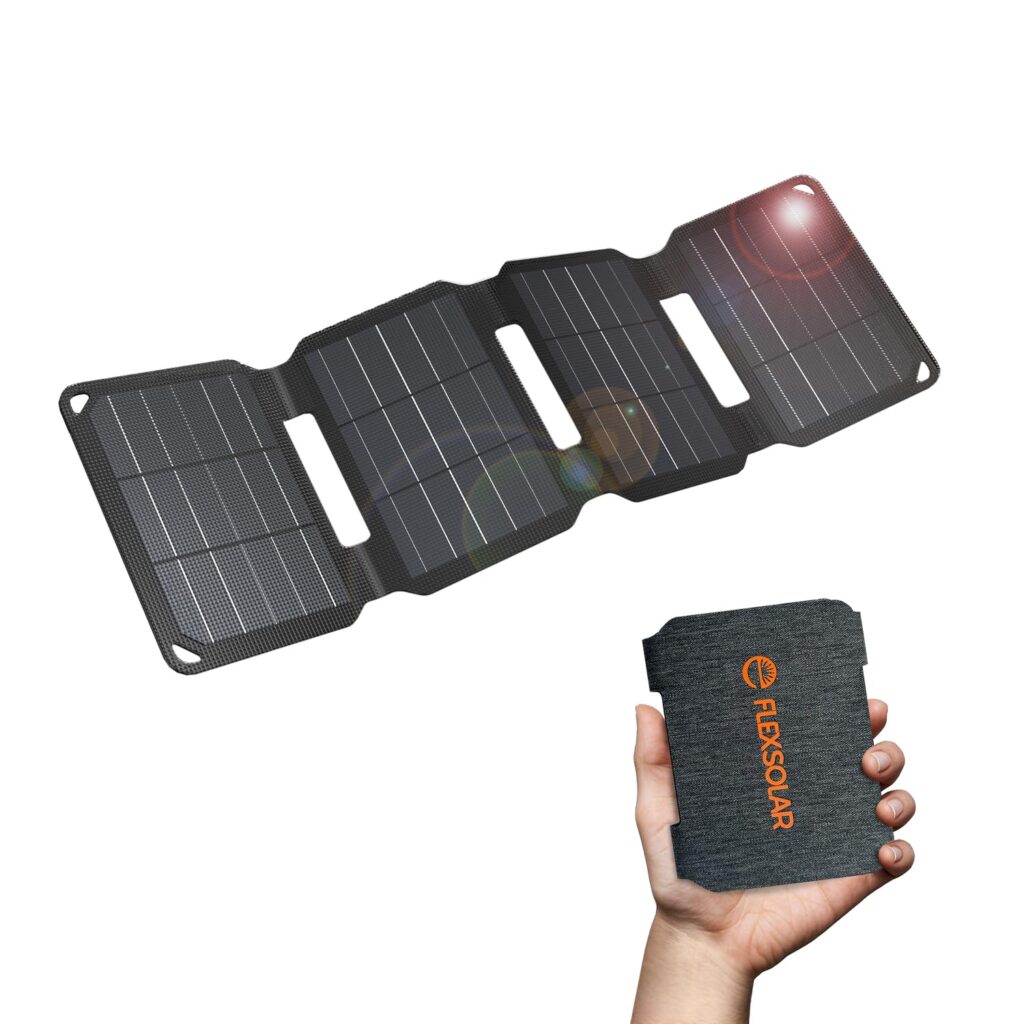
Wattage: 10 W | Ports: USB-A (5 V / 2 A) | Weight: ~300 g | Panel Efficiency: ~19 %
FlexSolar’s 10 W unit is the minimalist traveler’s fallback — small, inexpensive, and decent for emergencies. It’s not fast, but it works. Real-user reports show it can push 1,000–1,200 mAh per hour in strong sunlight — enough to trickle-charge a phone or GPS.
It includes a built-in microcontroller that halts charging if the device overheats — an under-discussed but critical safety detail. Its IP64 splash resistance and compact tri-fold design make it ideal for backpack exteriors.
Ideal for: Light packers and short trips where weight beats speed.
When to save: Perfect affordable backup; splurging on higher wattage isn’t needed unless you’re power-hungry.
5. Jackery SolarSaga 100 W Panel – For the Digital Nomad & Van-Life Crowd
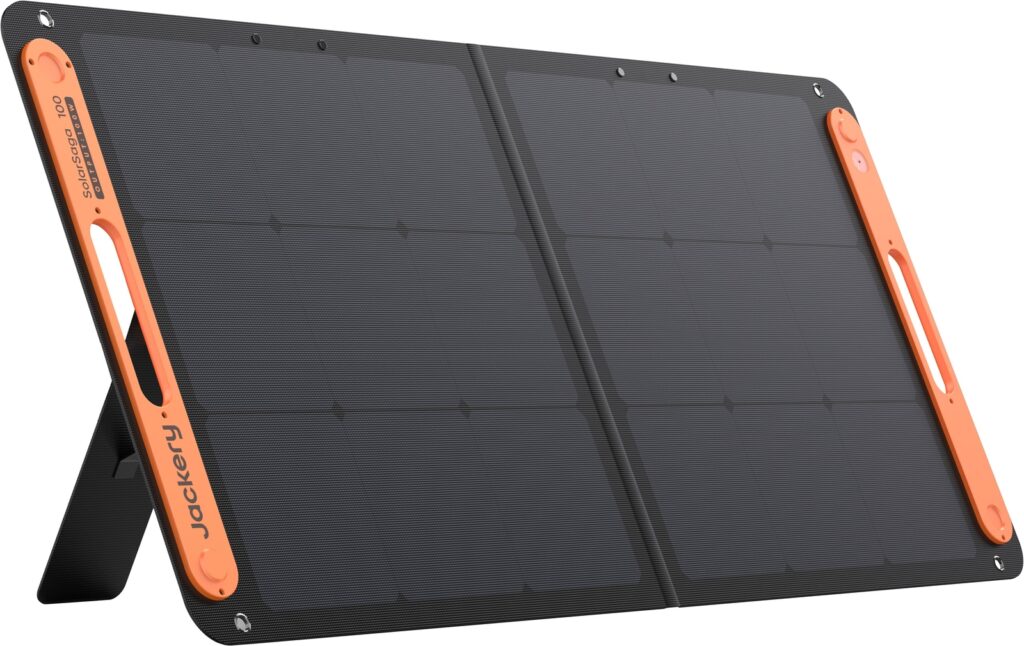
Wattage: 100 W | Ports: USB-C (5 V / 9 V / 12 V / 15 V PD 60 W) + DC 5521 | Weight: ~4 kg | Unfolded Size: 122 × 54 cm
This is the heavyweight of travel solar — literally and figuratively. The 100 W SolarSaga powers laptops, cameras, drones, and full power stations like the Jackery Explorer 100 Plus. It integrates monocrystalline cells with 24.3 % efficiency, one of the highest in class.
Real-world users report 80 W sustained output in ideal light and durable ETFE coating that resists UV degradation far longer than PET films. It folds into a briefcase-style shell with magnetic handles — portable, though not pocketable.
Ideal for: Long expeditions, overlanders, and creators who edit or shoot remotely.
Why it’s a splurge worth making: Delivers near-station power in the field; it’s reliability when “off-grid” actually means off everything.
What to Watch For
When evaluating any solar charger, guide readers to look beyond wattage.
- Conversion efficiency (%) — tells how much sunlight becomes usable power.
- Real-world current stability — does output drop when clouds pass?
- Material & coating — ETFE lasts longer and resists heat better than PET.
- Integrated regulation — protects connected devices from voltage swings.
- Folded size and weight — practical for packing and air travel.
Portable Power & Solar Charger Comparison 2025
Product Name | Capacity / Wattage | Ports & Output | Weight & Size | Key Features | Ideal For | Price Range
Anker MagGo Power Bank
| 10,000 mAh | USB-C + MagSafe wireless (15 W / 27 W) | 220 g – ultra-slim | Magnetic snap, strong build, intelligent temperature control | Everyday travellers, smartphone users | £69.99
Anker Nano Power Bank
| 10,000 mAh | USB-C (up to 45 W PD) + USB-A | 200 g – pocket size | Built-in cable, fast recharge (PD 3.0), scratch-resistant shell | City breaks, minimal packers | £19.99
Belkin BoostCharge 20K
| 20,000 mAh | USB-C PD 65 W + dual USB-A 12 W | 420 g – compact rectangular | LCD indicator, multi-device charge, certified flight-safe | Multi-device users, digital workers | £79.99
UGREEN Nexode Power Bank
| 20,000 mAh | USB-C PD 100 W + USB-A 22.5 W | 410 g – aluminium shell | PPS support, rapid laptop charging, GaN-powered circuitry | Laptop & camera travellers | £49.98
Jackery Explorer 100 Plus Station
| ≈ 100 Wh (26,000 mAh+) | AC 100 W + USB-C PD 60 W + USB-A | 1.2 kg – mini station | Built-in inverter, safe LiFePO4 cells, handle for carry | Van-life, drone, and film-crew travellers | £75–£99
Anker SOLIX PS30 Solar Panel
| 30 W | USB-C + USB-A (5 V 3 A) | 1.1 kg – foldable 36 × 25 cm | 21.5 % efficiency, smart-current chip, weather-resistant | Hybrid city/outdoor users | £69.00
BigBlue 28 W Solar Charger
| 28 W | Dual USB-A (5 V 3 A) + ammeter | 595 g – foldable 33 × 17 cm | Auto-reset voltage, grommet mounts, top field efficiency | Hikers, campers, digital nomads | £68.99
Jackery SolarSaga 40 W Mini
| 40 W | USB-C + USB-A dual | 1.3 kg – foldable 40 × 30 cm | ETFE coating, heat-tolerant cells, kick-stand | Off-grid weekenders | £94.00
FlexSolar 10 W Charger
| 10 W | USB-A (5 V 2 A) | 300 g – pocket-fold | IP64 splash-resistant, auto shut-off regulator | Emergency backup, ultra-light travellers | £22.80
Jackery SolarSaga 100 W
| 100 W | USB-C PD 60 W + DC 5521 | 4 kg – folds 122 × 54 cm | 24.3 % efficiency, ETFE coating, briefcase design | Long expeditions, van-life setups | £152.00
Reading the Table: What Matters Most
- Capacity / Wattage: mAh = stored energy; W = real charging or solar capture speed.
- Ports & Output: Look for USB-C PD 45 W+ for laptops; USB-A 12 W+ for phones.
- Weight & Size: Decide your mobility tolerance — 200 g fits a pocket, 4 kg powers a campsite.
- Key Features: Materials, safety controls, and solar efficiency matter as much as numbers.
- Airline Safety Tip: Stay under 100 Wh (≈ 27,000 mAh @ 3.7 V) for carry-on approval.
Usage Comparison — Matching Power to Purpose
Choosing a power bank or solar charger isn’t about chasing the biggest number on a box. It’s about understanding how you travel, what you carry, and how often you go off the grid. A weekend city trip has different energy rhythms than a 10-day hike or a digital-nomad stint in Bali.
Here’s how to match power to purpose — and where to save or splurge.
1. The City Explorer — Lightweight, Fast, Always Moving

For travelers who spend more time navigating metros than mountains, weight and recharge speed matter most.
A slim 10,000 mAh bank like the Anker MagGo or Anker Nano slips into a jacket pocket, topping up your phone two to three times. Look for USB-C PD 25–45 W output — enough for phones, tablets, and even a quick camera charge.
Avoid over-capacity here; you’ll end up carrying half a kilo for energy you’ll never use.
Specs that matter:
- 10,000 mAh capacity ≈ two full phone charges.
- 25–45 W PD output = fast top-ups during layovers.
- Under 250 g weight = effortless portability.
Best picks: Anker MagGo Power Bank, Belkin 10K Power Bank.
Save vs Splurge: Save — mid-range models perform nearly as well as premium here.
2. The Weekend Photographer — Multi-Device but Mobile

You shoot, edit, post — and your devices drain quickly. You need mid-capacity banks (15–20 k mAh) with multi-port output so your camera, phone, and LED light can run simultaneously.
The Belkin BoostCharge 20K or UGREEN Nexode 20K deliver serious 65–100 W PD output — ideal for charging mirrorless cameras or even lightweight laptops.
Specs that matter:
- 20,000 mAh ≈ 5–6 phone charges or 1 laptop top-up.
- 65–100 W PD output = camera + phone + tablet charging.
- Dual-port or tri-port design = less swapping cables.
Best picks: UGREEN Nexode 20K (100 W PD), Belkin BoostCharge 20K.
Save vs Splurge: Splurge moderately — output power and port quality make or break a shooting day.
3. The Backpack Adventurer — Power When the Grid Disappears

When you’re hiking through valleys or camping overnight, wall outlets don’t exist. Pairing a high-efficiency solar charger with a reliable power bank creates a closed energy loop.
The BigBlue 28 W or Anker SOLIX PS30 panels feed a bank like the Belkin BoostCharge 20K, recharging during the day while you trek. Under ideal sun, expect ~2 A steady output (10 W–12 W) — enough to replenish a 10,000 mAh bank in ~4 hours.
Specs that matter:
- 25–35 W solar output = consistent trickle-charge on sunny days.
- 20 k mAh bank = overnight energy buffer.
- Durable, weather-resistant materials = survival-proof gear.
Best picks: BigBlue 28 W Solar Charger + Belkin BoostCharge 20K combo.
Save vs Splurge: Splurge on solar panel quality; cheap panels fail under clouds or shade.
4. The Digital Nomad — Laptop, Wi-Fi Router, Everything Mobile

For remote workers, battery drain equals lost productivity. You need high-output PD 100 W and at least 20,000 mAh capacity.
The UGREEN Nexode handles most ultrabooks, while the Jackery Explorer 100 Plus extends runtime for cameras, routers, and even portable monitors. Pair either with a Jackery SolarSaga 40 W Mini to maintain charge during café-to-van transitions.
Specs that matter:
- 100 W PD = true laptop compatibility.
- 100 Wh battery = airline-safe upper limit.
- Fast recharge = full bank in ~90 minutes via 65 W PD input.
Best picks: UGREEN Nexode Power Bank, Jackery Explorer 100 Plus Station + SolarSaga 40 W Mini.
Save vs Splurge: Splurge — reliable output and safety features protect expensive tech.
5. The Off-Grid Explorer — True Energy Independence

For overlanders, van-lifers, and expedition crews, portability yields to power.
The Jackery SolarSaga 100 W paired with the Jackery Explorer 100 Plus forms a small-scale off-grid ecosystem — recharging cameras, drones, even small appliances. Expect ~80 W sustained output in full sun, enough to replenish a 100 Wh station in ~90 minutes.
Specs that matter:
- 100 W panel = power-station compatibility.
- ETFE coating = long life under harsh UV.
- DC 5521 port = versatile output for non-USB gear.
Best picks: Jackery SolarSaga 100 W + Explorer 100 Plus.
Save vs Splurge: Splurge confidently — durability and output stability are worth every pound in remote terrain.
6. The Minimalist Traveler — Carry Less, Stress Less

Not every trip demands big wattage. If you carry one phone, a smartwatch, and earbuds, 5–10 k mAh banks like the Anker Nano or GOJI 5K are enough.
They weigh under 200 g and recharge overnight with a simple 10 W input. The goal isn’t endless autonomy — it’s peace of mind in a slim pocket.
Specs that matter:
- 5–10 k mAh = day-trip resilience.
- ≤ 200 g = fits anywhere.
- 15–20 W output = steady, safe charge speed.
Best picks: Anker Nano, GOJI 5K Power Bank.
Save vs Splurge: Save — you’re paying for convenience, not endurance.
The Takeaway
Portable power is about rhythm, not rivalry. It’s how you translate capacity, wattage, and weight into confidence. Whether that means a slim pocket-bank for daily commutes or a solar-fed mini station that keeps a camera rolling in Patagonia, your gear should match your pace — not slow it.
Buying Guide — What to Look For in 2025
Buying a power bank or solar charger shouldn’t feel like reading an electrical engineering manual.
Yet, beneath the glossy marketing lies a world of small details — voltage, cells, chipsets, coatings — that decide whether your devices stay alive or die when you need them most.
Here’s what truly matters in 2025, simplified and demystified for modern travelers.
1. Capacity (mAh) vs Energy (Wh)
We’re all used to hearing about milliamp-hours — 10,000 mAh, 20,000 mAh, 30,000 mAh — but that number alone doesn’t tell the full story.
The real measure of usable energy is watt-hours (Wh), because airlines and device safety standards use Wh to judge how much charge a battery holds.
To convert:
Wh = (mAh ÷ 1000) × 3.7 V.
So, a 20,000 mAh bank equals roughly 74 Wh — comfortably within the 100 Wh airline carry-on limit.
Any higher, and you’ll face restrictions at airport security.
What to prioritize:
- For phones and tablets: 5,000–10,000 mAh.
- For multi-device users: 15,000–20,000 mAh.
- For cameras/laptops: 25,000 mAh (≈ 90 Wh max).
2. Output Power (Watts) — How Fast It Charges
Charging speed depends on output wattage. More watts = faster charging.
- 15 W = basic smartphone charge.
- 30 W = fast-charging for phones/tablets.
- 60–100 W = laptop-level PD (Power Delivery) output.
Newer banks support USB-C PD 3.1 and PPS (Programmable Power Supply) — technologies that adapt voltage dynamically to your device.
The result: cooler batteries, faster charging, and longer device lifespan.
2025 insight:
GaN-powered chips (used in UGREEN Nexode and Anker Series 7) deliver high power output without overheating — a major leap from older lithium-only designs.
3. Input Power — How Fast It Recharges Itself
A big battery means nothing if it takes 12 hours to refill. Look for PD input wattage — ideally 45 W or more.
Some banks, like the UGREEN Nexode 20K, fully recharge in under 90 minutes via a 65 W USB-C wall adapter.
For solar users, input speed translates to sunlight capture.
A 30 W solar panel might take 6–8 hours to replenish a 10,000 mAh bank under ideal light, or 12+ hours in cloudy weather.
That’s why pairing efficient panels with PD-capable banks matters — they balance output and input beautifully.
4. Port Types & Compatibility
USB ports are not all equal.
Here’s what to look for:
- USB-C PD (Power Delivery): The modern standard. Handles 15 W to 140 W with reversible plugs.
- USB-A QC (Quick Charge): Still common; good for older devices.
- DC 5521: For larger solar panels and power stations.
- Wireless / MagSafe: For convenience, not speed — typically capped at 15 W.
Pro tip: If you travel with laptops or cameras, ensure your power bank supports PD 65 W+ output and PD input on the same port. That way, one cable does both.
5. Battery Type & Build Quality
Not all lithium cells are created equal.
Most modern premium banks now use Lithium Polymer (Li-Po) or LiFePO₄ batteries instead of older Li-Ion types.
- Li-Po: Thinner, lighter, and safer under heat — perfect for portable banks.
- LiFePO₄: Found in premium power stations like Jackery Explorer — much longer life (up to 3,000 cycles) and more stable at high temperatures.
Pay attention to shell materials too — aluminium or reinforced polycarbonate protect against heat and drops better than generic plastic.
6. Solar Efficiency & Panel Technology
If you’re buying a solar charger, look past wattage and focus on cell efficiency and coating material.
- Monocrystalline cells: More efficient (up to 25 %) and durable than polycrystalline.
- ETFE coating: Resists UV degradation and heat better than PET plastic.
- Integrated smart regulator: Prevents voltage dips when clouds pass — keeps devices charging consistently.
Why it matters: Real-world output is often 30–40 % below advertised wattage due to angle, heat, or light variability. A well-built panel compensates intelligently.
7. Safety Features (Often Overlooked, Always Critical)
Premium chargers cost more because they’re safer.
Look for:
- Temperature Control: Prevents overheating under direct sunlight or while fast-charging.
- Short-Circuit Protection: Stops dangerous surges during storms or cable faults.
- Over-Voltage/Over-Current Shields: Regulates flow to sensitive electronics.
- Certification Labels: CE, FCC, RoHS, and UN38.3 (airline safety).
Budget models often skip these — the hidden reason why some cheap banks fail after a few months or swell under stress
8. Weight, Portability & Durability
Your gear should travel like you do.
A good 10 k mAh bank should weigh under 250 g, while high-capacity stations might reach 1–1.5 kg.
Solar panels should fold into a compact, fabric-sealed pack with reinforced seams and kick-stands for angling toward the sun.
For long-term use, check hinge quality, waterproof rating (IP64+), and cable flexibility.
These small mechanical details separate “works once” from “works for years.”
9. Smart Charging & Pass-Through
The most underrated feature in 2025 is pass-through charging — the ability to charge your devices while the bank itself is being charged.
It’s a lifesaver for digital nomads who need uninterrupted power loops.
Just ensure your model has heat management for pass-through — cheaper ones tend to overheat when handling both flows simultaneously.
10. Brand Integrity & Warranty
Finally, consider longevity. Reliable manufacturers like Anker, UGREEN, Belkin, and Jackery back their products with 18–24-month warranties and accessible service centers.
Unknown brands may boast big specs but often exaggerate capacity by 20–40 %. In the long run, premium build and verified capacity save you from the hidden cost of early failure.
FAQs — Real Questions Travelers Are Asking in 2025
Q1: How many phone charges will I get from a 10,000 mAh power bank?
Roughly 2 to 3 full charges for a modern smartphone, depending on battery size and energy loss (typically 15–20%).
A 10,000 mAh bank equals around 37 Wh of usable energy. Phones like the iPhone 15 Pro (≈12 Wh battery) can recharge twice comfortably, while smaller devices — earbuds, smartwatches — barely dent its capacity.
Pro tip: Always look at Wh (watt-hours) if you travel by air. It’s the metric airlines recognize, not mAh.
Q2: Can I carry a power bank on an airplane?
Yes — but with limits.
- Under 100 Wh: Always allowed in carry-on luggage.
- 100–160 Wh: Requires airline approval (some allow up to two units).
- Above 160 Wh: Prohibited on commercial flights.
That’s why most travel-oriented models (like UGREEN Nexode or Jackery Explorer 100 Plus) are built right below the 100 Wh threshold — maximum energy, zero airport hassle.
Q3: What’s the difference between PD, QC, and PPS charging?
These are fast-charging protocols — the “languages” your charger speaks to your device.
- PD (Power Delivery): The universal USB-C standard, up to 240 W for laptops.
- QC (Quick Charge): Qualcomm’s older system for Androids; less common now.
- PPS (Programmable Power Supply): The 2025 gold standard. It adjusts voltage in real-time, giving smoother, cooler charging — especially for Samsung and Pixel devices.
If you’re buying new in 2025, look for PD 3.1 or PD + PPS compatibility for the best efficiency across all devices.
Q4: Can solar panels charge power banks directly?
Yes — if the voltage and current match:
Modern panels like Anker SOLIX PS30 or BigBlue 28W have built-in regulators that safely feed 5V/3A USB-C or USB-A outputs directly into power banks.
Without this regulation, voltage fluctuations under shifting sunlight can damage batteries.
Pro tip: Pair solar panels with high-efficiency PD banks (e.g., UGREEN, Anker) — they manage fluctuating input far better than cheap no-brand ones.
Q5: How long does it take to charge a phone via solar panel?
In full sunlight, a 30 W solar panel can charge a smartphone in 1.5–2 hours — roughly equivalent to a standard wall charger.
However, real-world times vary based on:
- Sun angle and cloud cover
- Cable quality
- Panel cleanliness and temperature
If conditions worsen, charging slows drastically. That’s why experienced travelers use a solar panel → power bank → phone setup, allowing the bank to buffer inconsistent sunlight.
Q6: Do fast chargers harm batteries over time?
Not anymore — at least not modern ones.
Today’s GaN (Gallium Nitride) chips regulate heat far better than older silicon-based circuits, maintaining safe temperatures even at 100 W output.
Still, avoid covering or insulating your power bank while in use — heat buildup, not wattage, is the real enemy of battery longevity.
Q7: What’s the ideal combo for long outdoor trips?
A 20,000 mAh power bank + 30–40 W solar panel strikes the best balance between capacity, portability, and reliability.
This combo easily powers:
- 1 smartphone
- 1 camera or GoPro
- 1 small tablet or drone controller
for 3–4 days of use without mains electricity.
For extended van-life setups, move up to Jackery Explorer 100 Plus + SolarSaga 100W — small enough for carry yet capable of supporting a mini workstation.
Q8: What’s the real difference between cheap and premium power banks?
Beyond the logo, it’s about energy stability, temperature management, and component quality.
Premium units from Anker, Belkin, and UGREEN use advanced battery management systems (BMS) that prevent overcharging, while cheaper models often inflate their capacity ratings or skip essential safety circuits.
In essence:
- Cheap banks deliver more energy loss (up to 30%) and degrade after ~300 cycles.
- Premium banks retain over 85% capacity even after 1,000+ cycles — meaning they’ll last three to four times longer.
Q9: Do solar chargers work on cloudy days?
Partially.
Even under 50% sunlight, high-efficiency monocrystalline panels like the BigBlue 28W can maintain trickle output (~1A).
But expect charging speeds to slow drastically.
For true all-weather travel, rely on solar to top up your bank — not as your only source.
Q10: Is it safe to leave my power bank charging overnight?
Yes, if it’s a certified, modern unit (CE, FCC, RoHS approved).
Brands like Anker and UGREEN have built-in cutoff chips that stop current flow once fully charged.
However, avoid leaving it in hot environments — like a tent in direct sunlight — as high heat accelerates lithium degradation.
Bonus: What’s the smartest way to pack your charging gear for travel?
- Keep all banks and panels in carry-on, never checked baggage.
- Use short, high-quality PD cables (under 1 meter) to reduce voltage loss.
- Store everything in a fire-resistant pouch (many come with LiPo-safe lining).
- Keep ports dust-free — solar panels lose efficiency from grime more than you’d think.
The Future of Portable Power — Freedom That Fits in Your Hand
In every great journey, there’s a moment when silence meets electricity — the instant you plug in your phone at a remote café, power your camera on a mountain trail, or light your tent under a moonless sky. That quiet reassurance — knowing your devices will work — has become the new definition of freedom.
The story of portable power has evolved from bulky backup bricks to elegant, intelligent energy companions. 2025 isn’t just about higher capacity or faster charging; it’s about efficiency, safety, and sustainability. Power banks now think for themselves — adapting voltage, managing heat, and conserving energy with surgical precision. Solar chargers, once clumsy novelties, have matured into compact ecosystems that harvest the sun with near-scientific grace.
The line between “affordable” and “premium” has blurred, too. The difference isn’t about luxury anymore — it’s about longevity. A well-engineered 100 W GaN charger that lasts five years is the truer economy compared to a cheap plastic bank that fades after a few months. Travelers have learned this the way all technology lessons are learned — not through specs, but through experience.
And that’s the essence of portable power: it’s deeply personal.
For one traveler, it’s the confidence to film a sunrise without worrying about battery bars.
For another, it’s the security of knowing their phone can navigate them back from an unknown road.
In that sense, these devices are no longer “accessories” — they’re companions, quietly working behind the scenes to keep every story alive.
As technology continues to shrink and smarten, the next generation of chargers will likely merge solar, kinetic, and AI-driven power management — predicting your needs before you even plug in. But even then, one truth will remain: freedom runs on power, and the more intelligently we harness it, the further we can go.
So whether you travel light or live off-grid, remember — your power source isn’t just charging your gear; it’s charging your independence.