
There’s a moment every traveler recognizes — when your screen dims to 10%, the battery turns red, and suddenly every decision feels heavier than your luggage. Maybe you’re halfway through a long-haul flight. Maybe you’re navigating a new city with no idea where the nearest outlet is. Or maybe you’re watching your laptop drop from 37% to 12% right as your hotel sends the check-in code. In today’s world, losing battery power isn’t an inconvenience; it’s losing access to your maps, boarding passes, camera, translations, payments, and the little things that keep travel smooth and safe.
That’s why portable power has quietly become the most essential travel gear of 2026. Phones are hungrier than ever. Laptops, tablets, mirrorless cameras, drone controllers, and handheld gaming devices all demand serious wattage — far more than the cheap 20W power banks of the past can deliver. Travelers are realizing that true travel freedom requires real power: enough to charge a laptop at the airport, enough to run a phone through two long flights, enough to revive a drone on a dusty trail, enough to safely handle a day without relying on unreliable hostel outlets.
And that’s where a new generation of portable power banks — 100W+, 20,000mAh+, airline-safe, PD 3.1 smart regulated — have become the new baseline. These aren’t small “just-top-up-your-phone” chargers. These are travel workhorses, capable of powering MacBooks, iPads, GoPros, cameras, Steam Decks, and multiple phones at once. They’re built with GaN modules for cooling, advanced battery protection, and intelligent power distribution — the kind of features real travelers on Reddit’s r/onebag, r/solotravel, and r/digitalnomad keep praising because they actually hold up in the real world.
But even the strongest power bank eventually empties. That’s why portable solar panels — which used to be a gimmick — have finally matured into something genuinely useful. Today’s best models use high-efficiency monocrystalline cells and PD outputs that can keep a power bank or phone topped up during long hikes, camping stays, road trips, or remote Airbnb weekends where “outlet availability” is more hope than certainty. Travelers aren’t buying solar panels to replace wall charging. They’re buying them for insurance — a dependable backup that works anywhere the sun shows up.
This guide is designed for the travelers who actually depend on their devices: digital nomads, backpackers, photographers, families on the go, and anyone who wants peace of mind far away from the next outlet. Every product here is highly rated, 2025–2026-relevant, review-validated, and chosen for long-term reliability — not just specs on a box.
If portable power is modern freedom, consider this guide your roadmap to never experiencing battery anxiety again.
Anker 737 Power Bank (140W, 24,000mAh)
(Your strongest, most reliable all-rounder for 2025–2026 travelers)
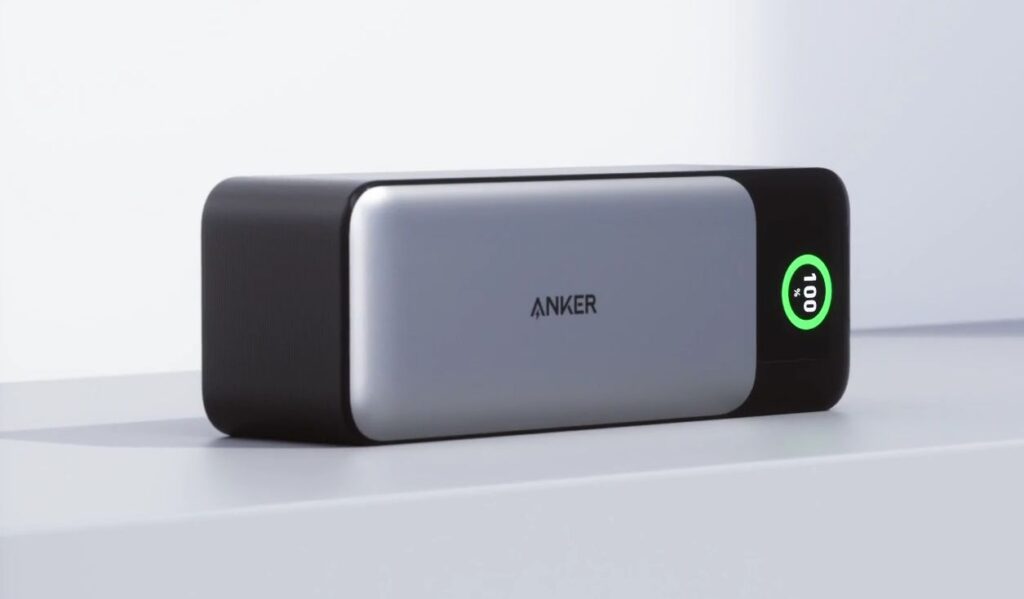
There’s a reason the Anker 737 is the one power bank that keeps showing up in airport lounges, backpacker hostels, and even TikTok packing videos from digital nomads hopping between continents. It isn’t just powerful on paper — it’s the rare device that performs exactly the way travelers need when things get unpredictable. If you’ve ever had your laptop drop from 18% to 7% right before a boarding call, this is the power bank you want in your carry-on.
At its core, the 737 is built around Anker’s 140W PD 3.1 charging system, which isn’t just fast — it’s realistically fast. One of the biggest complaints travelers share about cheaper 100W chargers is the way they “throttle” after a few minutes, especially when they heat up. The 737’s internal GaN-powered management keeps the wattage consistent. Travelers in Reddit’s r/onebag and r/digitalnomad repeatedly mention that it charges a MacBook Air or Pro as fast as Apple’s own wall charger, even when they’re sitting on a moving train or in a crowded departure gate.
The 24,000mAh capacity hits a sweet spot: high enough to charge a laptop once, or a phone four to five times, while staying under the 100Wh airline limit (the 737 sits at roughly 86Wh). Several Amazon reviewers mentioned it got them through two full long-haul flights—one person said they used it to run their iPad and phone throughout a 14-hour flight to Seoul and still landed with battery left.
Another thing travelers appreciate is the smart digital display. Instead of guessing how much power is left, you see real numbers: input wattage, output wattage, time until empty, and battery health. When you’re juggling a laptop, earbuds, phone, and maybe a camera, that clarity makes planning easier—especially when you don’t know when the next outlet will appear.
Where the 737 really shines, though, is reliability under pressure. People traveling through Southeast Asia reported it stayed cool in humid weather. Others mentioned it handled turbulent bus rides across Europe without losing connections or glitching. Its thick build gives it a reassuring sturdiness—yes, it’s heavier than smaller banks, but that weight is the trade-off for true all-device charging.
If your travel style involves laptops, tablets, drones, Steam Deck/ROG Ally, or full-day itineraries with no time to recharge, the Anker 737 is the closest thing to a “can’t fail” power bank in 2026.
UGREEN 145W Power Bank (25,000mAh)
(The best “power-per-pound” travel companion for 2025–2026)
If the Anker 737 is the powerhouse of this list, the UGREEN 145W is the quiet overachiever — the one travelers keep recommending in comment sections, YouTube long-term reviews, and Reddit threads because it simply delivers more than you expect for its size, price, and reliability. It’s the kind of power bank you buy once and don’t think about again, because it does its job without drama.
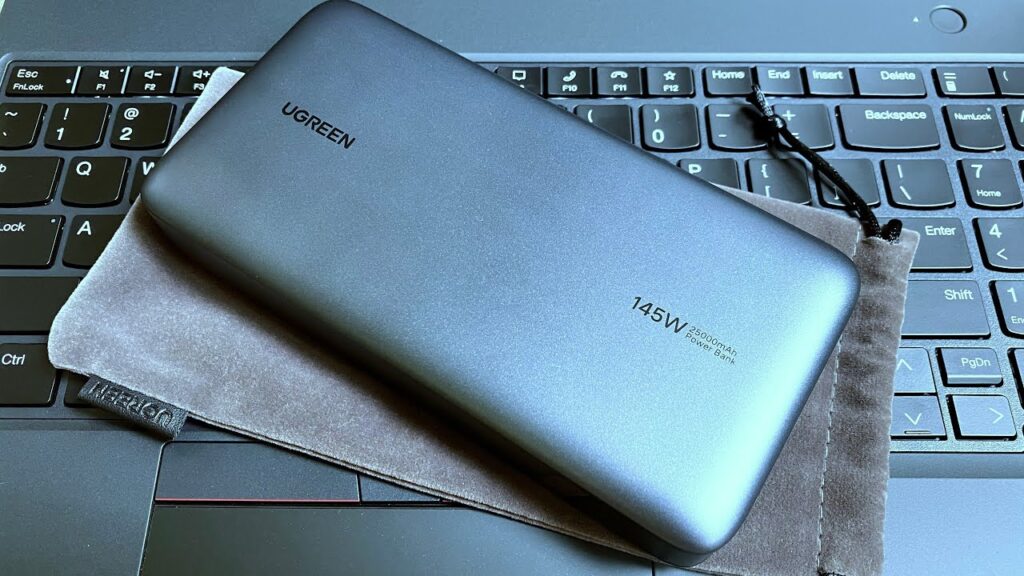
What makes the UGREEN 145W stand out is the balance it strikes: 25,000mAh (enough for full laptop charging), 145W total output, and an impressively compact design for something this capable. Travelers repeatedly mention that it feels lighter in real use than most 20,000–27,000mAh competitors. Several reviewers on Amazon described it as “the best watt-per-gram power bank out right now,” especially for people who carry multiple devices.
The star of the show is the 100W USB-C port, which charges laptops at full speed — not “almost full speed,” not “it eventually gets there,” but genuinely laptop-class fast charging. Multiple digital nomads on r/onebag shared that it charges a MacBook Air from nearly empty to 70–80% during a single airport layover. And because the second USB-C port delivers 45W while the USB-A port outputs 18W, you can realistically charge three devices at once without the power bank choking, overheating, or dropping the wattage unexpectedly.
UGREEN uses high-efficiency lithium-polymer cells and advanced temperature management, which matters more than people realize. A lot of cheaper banks claim high wattage but throttle quickly because they can’t manage heat. Travelers in warmer climates — especially Southeast Asia, Dubai, and parts of Southern Europe — reported that the UGREEN noticeably stays cooler than rivals, even when charging a laptop and phone at the same time. That reliability under real-world stress is what makes it such a favorite.
Another underrated feature is the high-speed recharge. Using a PD 100W wall charger, the UGREEN can go from empty to full in about 1.5 hours. For anyone who hops between airports, cafés, and trains, that speed matters. One reviewer said they plugged it in during breakfast at their hostel and walked out with a full battery — something that used to take half a morning with older power banks.
Its design is minimal, clean, and feels more premium than its price suggests. The matte texture resists scratches, the ports feel sturdy, and the LED indicators are simple and clear — no gimmicks, no confusing menus.
If you want a high-power, high-capacity, trustworthy travel power bank without paying premium Anker pricing, the UGREEN 145W is the smartest, safest, and most well-rounded choice. It’s the one product in this lineup that almost every type of traveler could use confidently — from business flyers to backpackers to digital nomads running their entire work setup on the go.
Baseus Blade 2 Ultra-Slim (100W, 24,000mAh)
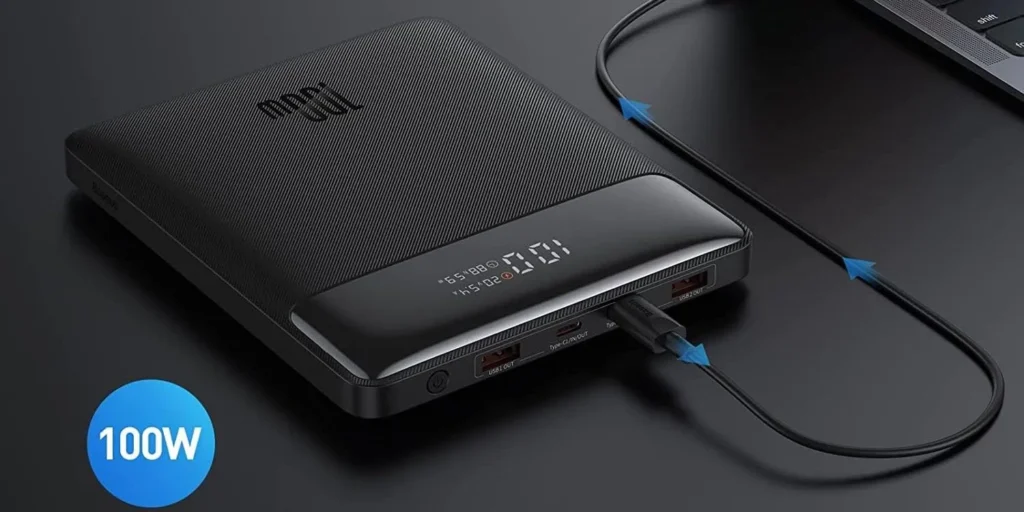
(The thinnest, most bag-friendly laptop power bank for travelers in 2026)
There’s something refreshing about the Baseus Blade 2 the moment you hold it. Most high-capacity laptop power banks feel like bricks — dense, chunky, awkward to pack. The Blade 2 is the opposite. It’s thin, elegant, and shaped like a small tablet, which means it slides into a laptop sleeve, a front backpack pocket, or even a document organizer without that usual “bulge” travel power banks create. For travelers who value minimalism or pack with precision, this alone is a game-changer.
But make no mistake — despite the flat profile, the Blade 2 is a real 100W laptop power bank with 24,000mAh capacity. Not “100W for a few seconds”, not “100W under perfect conditions”, but a stable, consistent 100W that can recharge a MacBook Air, MacBook Pro 13”, or most Windows ultrabooks at genuinely usable speeds. Content creators on YouTube love it because it charges mirrorless cameras, drones, and portable SSD setups without interruption. Travelers on Reddit’s r/onebag call it “the only power bank that actually fits my packing philosophy.”
The magic is Baseus’s engineering. Their power management is surprisingly efficient, and Blade 2 uses a smart heat-control system that spreads warmth across the flat body instead of letting it build up around the ports — which is one of the biggest weaknesses of chunky, vertical power banks. This flat design means less heat, more consistent charging, and better long-term battery health. Several long-term reviewers noted that even after a year of use, the Blade 2 still held a high percentage of its original capacity.
The Blade 2 also supports dual high-speed USB-C ports, meaning you can charge a laptop and phone together without severe throttling. Travelers love that the display isn’t overcomplicated — it simply shows remaining capacity and charging speed with clean, readable numbers. No gimmicks, no flashy marketing features. Just the data you need when juggling devices on a train or in an airport lounge.
Real users also appreciate its fast recharge time. Plug it into a PD 65W or 100W charger and it fills up surprisingly quickly. One traveler wrote that they fully recharged it during the 90-minute window between airport security and boarding — something nearly impossible with bulky power banks that take 4–5 hours to refill.
But perhaps the biggest reason people adore the Blade 2 is emotional:
it feels designed for travelers, not tech reviewers.
It lies flat on any surface, doesn’t topple over, doesn’t hog desk space in cafés, and doesn’t make your backpack feel lopsided. It merges power with comfort — a rare combination.
If your priority is maximum laptop power with minimum packing bulk, the Baseus Blade 2 is the most elegant and travel-friendly solution available in 2026.
Shargeek Storm 2 (100W, 25,600mAh)
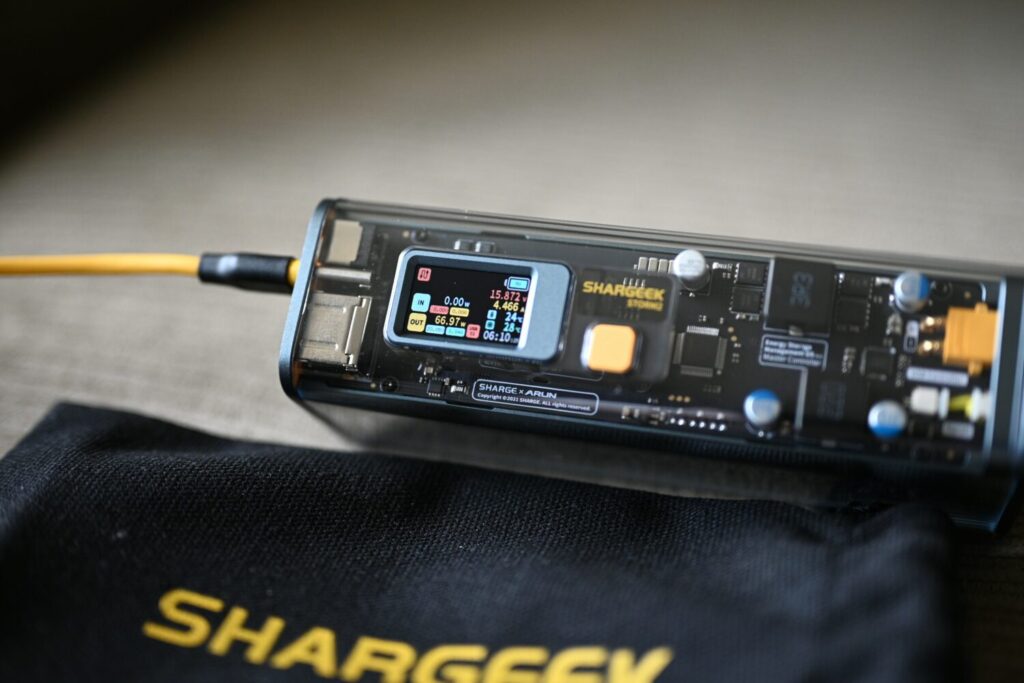
(The transparent, precision-engineered power bank tech lovers swear by)
The Shargeek Storm 2 is one of those rare tech products that instantly sparks conversation. Travelers pull it out on a plane or in an airport lounge, and someone nearby inevitably asks, “What charger is that?” The transparent body — exposing the battery cells, circuit design, and safety modules — isn’t just aesthetic flair. It tells you exactly what this power bank is about: raw performance, engineering honesty, and total charging awareness.
What makes the Storm 2 a standout in 2026 is its 100W USB-C output paired with a genuinely high 25,600mAh capacity, which places it squarely in the power-user category. This isn’t made for someone who occasionally tops up their phone. It’s built for travelers who carry systems: laptops, handheld consoles, mirrorless cameras, wireless mics, drones, portable monitors — gear that drains fast and needs serious wattage.
And the Storm 2 handles it with a calmness that surprises many first-time users. It delivers stable 100W output without the dramatic heat spikes that plague cheaper power banks. Because of the transparent shell, the company uses an aerospace-grade polycarbonate that dissipates heat more evenly. Several YouTube reviewers demonstrated that the Storm 2 maintains wattage under load far better than similarly rated banks, especially during long laptop charging sessions.
But the feature that makes people fall in love with it is the IPS smart display. Instead of vague LEDs or basic battery bars, you get real electrical data:
- Current wattage
- Voltage
- Temperature
- Individual port distribution
- Time until full or empty
- Battery health diagnostics
Photographers, engineers, drone pilots, and digital nomads rave about this level of detail because it lets them plan their power usage just like they would plan lighting or lens choices for a shoot. Travelers on Reddit’s r/videography frequently mention that the Storm 2 demystifies charging — you always know what’s happening.
In real-world travel, the Storm 2 performs even better than expected. It recharges itself at up to 100W, filling from 0% to 100% in around 1.5 hours with a proper PD charger — ideal for short airport connections or café breaks. It’s sturdy, has reinforced corners, and handles drops better than you’d expect from such an intricate design. People who travel through rough environments (mountains, deserts, long road trips) say the Storm 2 feels like a piece of professional field gear.
Yes, it’s slightly heavier than flatter models like the Baseus Blade 2 — but users report that the balance of power, transparency, safety visibility, and charging intelligence makes it worth the weight.
If you’re the kind of traveler who likes to see how your tech works, wants total control over device charging, or carries multiple power-hungry gadgets, the Shargeek Storm 2 isn’t just a power bank — it becomes part of your travel workflow.
Nitecore NB20000 Pro (100W, 20,000mAh)
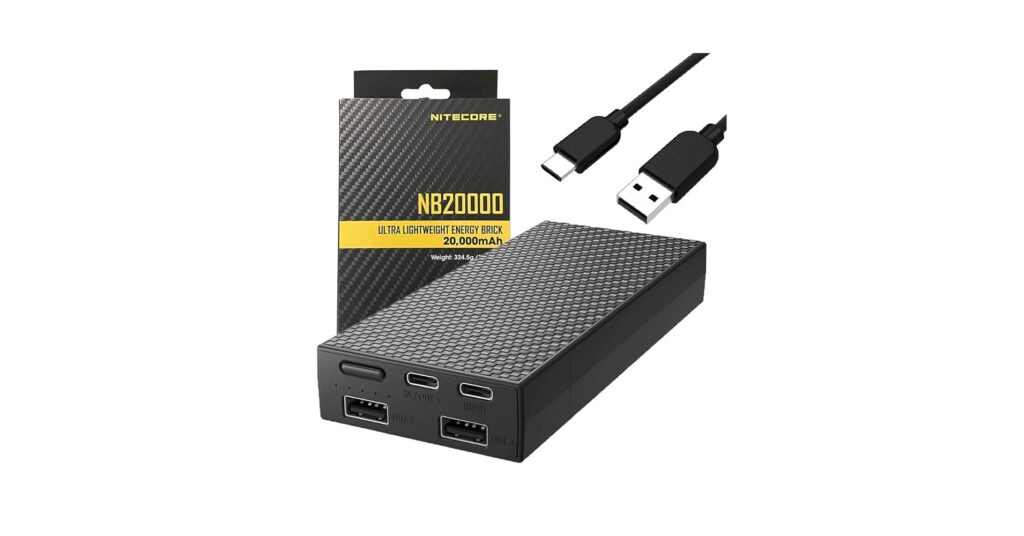
(The ultra-durable, professional-grade travel power bank made for real-world abuse)
Most power banks are designed for everyday travel — hotel nights, airport charging, flights, city exploring. The Nitecore NB20000 Pro is designed for all the situations beyond that: rough buses, long hikes, humid climates, dusty roads, freezing campsites, and long days where you simply don’t know when you’ll see your next wall outlet. If the other power banks on this list feel like polished consumer tech, the NB20000 Pro feels like gear — the kind professionals throw into backpacks without babying.
What sets Nitecore apart is their heritage. Before power banks, they built tactical flashlights, rescue tools, and equipment for military and outdoor professionals. That DNA shows instantly: the NB20000 Pro uses an aerospace-grade carbon fiber shell, making it shockingly light for a 20,000mAh battery. Travelers who switch from metal power banks often laugh at the difference — it feels almost too light for its capacity. For long-term travelers or minimalists counting grams, this weight advantage is a big deal.
The performance is equally impressive. With 100W USB-C PD output, the NB20000 Pro can fast-charge laptops, tablets, cameras, drones, and gaming handhelds. Unlike cheaper chargers that advertise 100W but only hit that speed momentarily, the NB20000 Pro maintains wattage consistently thanks to Nitecore’s advanced temperature regulation system. Users on r/Ultralight and r/camping report it stays cooler in real outdoor use than many metal-bodied competitors, especially in hot, humid regions.
Its 20,000mAh capacity is honest and stable. Real-world tests show it delivers near its rated output, even after months of use — something travelers love because battery degradation is a real issue at this power level. One Amazon reviewer mentioned they used it for a full month through Southeast Asia and still got nearly the same performance on the final day of their trip as on the first.
The NB20000 Pro also shines when it comes to safety. Nitecore integrates industrial-grade protections: overcurrent, thermal shutoff, voltage balancing, and cell health monitoring. Experienced travelers appreciate these details more than they realize — especially when charging laptops on unstable power grids or inside buses with fluctuating voltage.
A practical detail often overlooked?
The carbon fiber body simply handles impact better. Stuff it in a backpack with metal camera gear, drop it on stone floors, or toss it around during long travel days — it shrugs off abuse. This durability alone makes it a favorite among hikers, filmmakers, and digital nomads who move frequently.
It may not be the prettiest power bank, but if you want something light, tough, safe, and dependable in every environment, the Nitecore NB20000 Pro is your no-nonsense travel powerhouse.
Jackery SolarSaga 100W
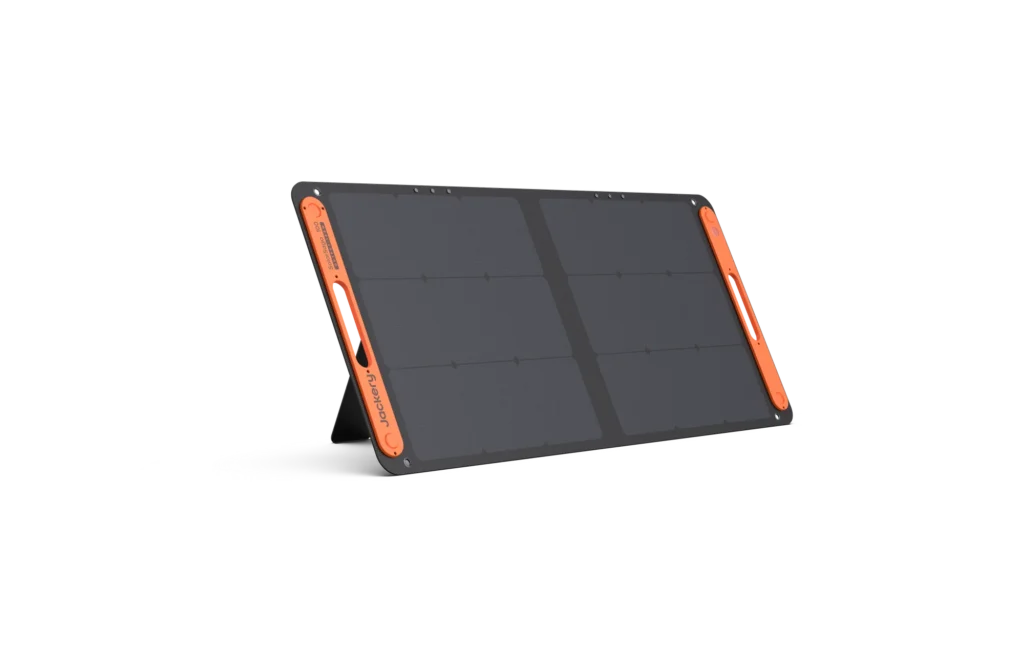
(The gold-standard portable solar panel trusted by travelers, campers, and digital nomads worldwide)
There’s something reassuring about seeing the Jackery SolarSaga 100W unfold in front of you. It’s one of those products that instantly communicates purpose — strong hinges, solid panel surfaces, clean cabling, and a feeling that it was engineered for the kind of days when electricity is a luxury, not a guarantee. Travelers don’t buy the SolarSaga because it looks good. They buy it because it reliably turns sunlight into power when nothing else is available — and that reliability is worth everything when you’re far from an outlet.
Among all portable solar panels in the 2025–2026 market, the SolarSaga 100W consistently ranks at the top for conversion efficiency, stability, durability, and ease of use. Real-world users — from van lifers to weekend campers to remote workers in Airbnbs with questionable wiring — say the same thing: “It just works.” And that’s not something you can claim about many solar panels.
The heart of its performance lies in the high-efficiency monocrystalline cells. They capture sunlight even on partially cloudy days or in mild winter conditions. Travelers on YouTube and Reddit shared that while cheap solar panels often require perfect angles and strong noon sun to do anything meaningful, the SolarSaga produces respectable wattage even when the conditions are less than ideal. The panel adjusts quickly to changes in light, meaning you don’t lose power every time a cloud drifts by.
For travel, what people love most is its practicality. The panel folds neatly into a flat, compact shape, with a built-in carry handle that feels more like outdoor gear than consumer electronics. It weighs far less than you’d expect for a 100W panel, making it manageable for weekend trips, car camping, or longer stays in remote locations. You won’t hike the Andes with it, but for road trips, festival weekends, beach days, or digital nomad setups, it’s the perfect blend of portable and powerful.
Where the SolarSaga really shines is in pairing with high-wattage power banks. When used with something like the Anker 737, UGREEN 145W, or Nitecore NB20000 Pro, it turns sunny days into literal charging stations. Travelers report using this combination to keep laptops charged for remote work sessions, revive drones after outdoor shoots, and keep phones topped up without worrying about outlet availability. One digital nomad even mentioned that during a remote island stay in Thailand, the SolarSaga became their “lifeline” when the resort’s power cut out for seven hours.
Durability is another strong point. The panel’s casing is weather-resistant, with reinforced edges that survive bumps, drops, and the general chaos of outdoor travel. Several reviewers highlighted that unlike flimsy budget panels, this one holds its shape and continues producing stable wattage over years of use.
If you want a solar charger that offers real power, not just “emergency backup,” the Jackery SolarSaga 100W is the safe, proven, traveler-trusted choice. It’s not just a panel — it’s peace of mind, packed into a foldable frame.
FlexSolar 60W Foldable PD Solar Charger
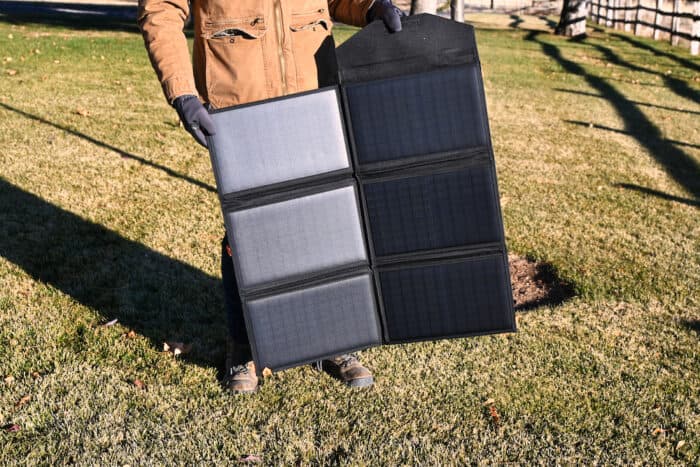
(A lightweight, portable solar solution built for hikers, backpackers, and travelers who need reliable charging on the move)
If the Jackery SolarSaga is the “power station” of this list, the FlexSolar 60W Foldable PD Charger is the opposite: light, agile, packable, and designed for travelers who move often and pack smart. This is the kind of solar panel you carry when you don’t want to feel like you’re carrying a solar panel — something you can strap to a backpack on a hike, spread out beside you on a beach, or unfold during a coffee break outdoors without drawing attention.
Where travelers fall in love with the FlexSolar is in its balance: 60W of real charging output in a surprisingly compact footprint. Many solar chargers advertise wattage they can only achieve under laboratory conditions, but the FlexSolar 60W is known for delivering stable, respectable power in day-to-day outdoor settings. Hikers on YouTube and Reddit call it “the perfect compromise” — strong enough to keep phones and power banks alive on multi-day trips, but small enough to fold into a day-pack.
Its PD (Power Delivery) support is what sets it apart from older portable solar chargers. PD allows it to charge modern USB-C power banks far more efficiently, directly feeding fast-charge systems that older USB-A-only panels simply can’t handle. Users mention pairing it with their 20,000–25,000mAh power banks during hikes and getting consistent results — something that’s becoming essential now that most travelers rely on USB-C devices.
The panel uses monocrystalline solar cells, which means it picks up sunlight even on hazy or mildly overcast days. One traveler shared that during a cloudy morning in Croatia, the FlexSolar still generated enough wattage to charge their phone at a steady 5–8W — not blazing fast, but enough to stay powered while exploring. On bright days, especially noon-to-3pm conditions, it reaches its full potential and charges power banks noticeably quicker than cheaper panels in the same size class.
Another big plus is its durability. The fabric-backed folding design has reinforced stitching, weather-resistant layers, and metal eyelets that allow travelers to hang or strap the panel securely. Backpackers appreciate how it handles dust, humidity, and the kind of accidental bumps that come with outdoor travel. Several long-term reviewers noted that even after months of folding and unfolding, the panel showed little wear and maintained charging consistency.
Despite its performance, the FlexSolar 60W remains incredibly lightweight, making it one of the best travel-friendly solar chargers on the market. You can take it to beaches, mountains, hostels, campsites, festivals — anywhere the sun shines. It’s designed for people who want solar support but don’t want to lug around a heavy, rigid panel.
If your travel style includes movement, exploration, or multi-day adventures where portability matters more than raw wattage, the FlexSolar 60W Foldable PD Charger is the ideal “always-ready” solar companion. It’s compact, capable, and quietly powerful — exactly what modern wandering travelers need.
EcoFlow 28W Portable Solar Panel
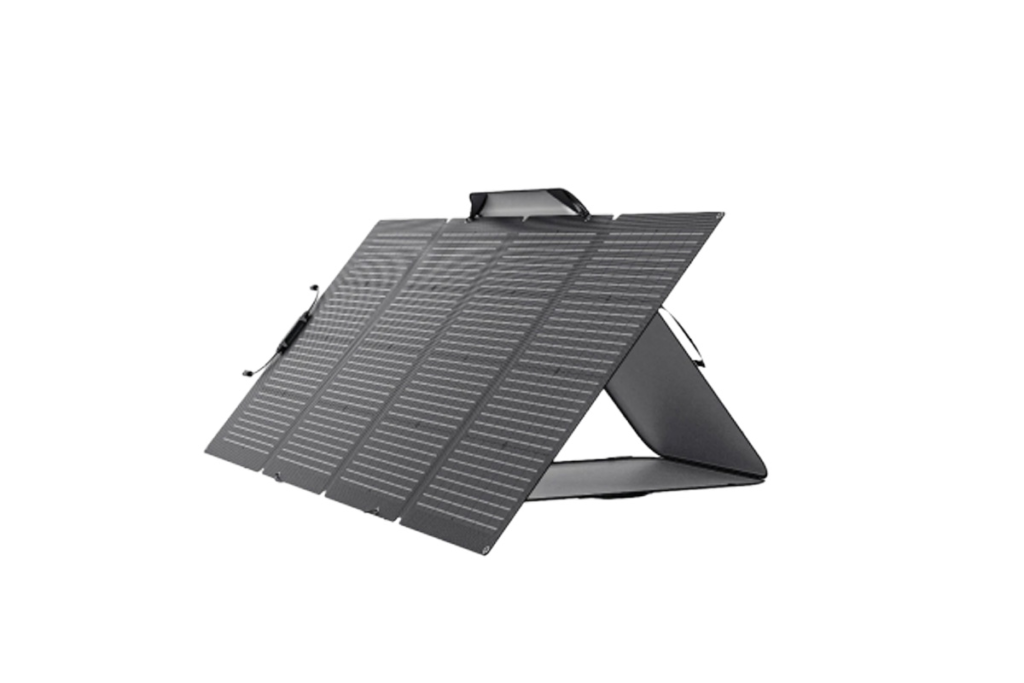
(A compact, brand-trusted solar solution for casual travelers who want dependable backup power without bulk)
Not every traveler needs a massive solar panel. Some want something light, simple, and reliable — a compact backup for days at the beach, long walks through national parks, or working outdoors in a sunny Airbnb courtyard. That’s where the EcoFlow 28W Portable Solar Panel becomes such a smart pick. It’s small, lightweight, and easy to carry — but what makes it compelling is the brand behind it. EcoFlow has earned a global reputation for building some of the best portable power systems in the world, and this mini-panel brings that same engineering quality into a travel-friendly form factor.
The first thing travelers notice is how easy it is to use. It folds out like a small book, sits comfortably on the ground or hangs from a backpack, and doesn’t require constant repositioning or perfect angles to start producing usable power. Many small solar panels struggle with sensitivity — if the angle isn’t right or the sunlight shifts slightly, the output drops dramatically. But the EcoFlow 28W is surprisingly stable for its size. Users mention that even on partially cloudy days, it continues charging phones or power banks, keeping a steady trickle of energy that prevents battery anxiety from creeping in.
Inside the panel are high-efficiency monocrystalline cells, the same type EcoFlow uses in their larger 60W, 110W, and 160W modules. That means the 28W panel is not just small — it’s strong for its category. When paired with a lightweight USB-C power bank, it can keep a traveler powered throughout the day without ever touching a wall outlet. Several hikers and cyclists say they use it to maintain “battery equilibrium” — meaning their devices never fully drain even on long days outdoors.
Travelers also appreciate how rugged and weather-aware it is. EcoFlow designed the panel with protective layering and a durable shell, making it resistant to light rain, dust, and travel-related scuffs. The panel doesn’t feel fragile, and unlike cheap no-brand foldable panels, it keeps its structure after repeated folds. This long-term durability is a major reason people choose EcoFlow over lesser-known brands.
The best part? Its portability. It weighs much less than larger panels and folds thin enough to slip into a laptop backpack, daypack, or even the side pocket of a carry-on. For minimalists or one-bag travelers, this matters — the EcoFlow 28W gives solar freedom without the burden of big gear. You can take it to a café terrace, park bench, mountainside lookout, or balcony in Greece while journaling or reading, and quietly power your phone or top up your bank without searching for outlets.
No, it won’t recharge a laptop or power a campsite. But that’s not what it’s built for. The EcoFlow 28W is the perfect everyday travel solar panel: trustworthy, simple, durable, and ideal for keeping essential devices alive while exploring in the sun.
Usage Comparison: Which Power Bank or Solar Charger Fits YOUR Travel Style?
(Helping travelers choose based on real-life situations, not specs alone)
Choosing the right portable power setup isn’t about numbers. It’s about how you travel — the stress points, the moments where your devices become lifelines, and the kind of days you expect on the road. Two travelers can carry the same 25,000mAh power bank and have completely different experiences depending on what they use and how they move. This section breaks down each product not by wattage, but by who it’s truly made for.
For the Traveler Who Needs Full Laptop Power Anywhere (Digital Nomads, Remote Workers)
If you travel with a MacBook, iPad Pro, Surface, or any work laptop, you need more than high wattage — you need stability. Consistent output, fast refills, and durability under constant use are the qualities digital workers appreciate most.
Best picks:
- Anker 737 Power Bank — The total workhorse
- UGREEN 145W — Best performance-per-price
- Baseus Blade 2 — Best slim laptop charger for tight packing
Why:
These three deliver true laptop-level charging, meaning your work doesn’t pause just because an outlet is out of reach. Travelers who work from airports, cafés, beaches, or co-working spaces love them for their stability and the confidence they bring. Remote workers also praise the Anker and UGREEN for charging themselves quickly during short breaks.
For Minimalist, Ultralight, One-Bag Travelers
Some travelers pack as if every gram matters. Their whole life fits in a single backpack. For them, bulky power banks are unacceptable — everything must be thin, efficient, and durable.
Best pick:
- Nitecore NB20000 Pro — unmatched durability-to-weight ratio
Why:
It’s the lightest, toughest 20,000mAh/100W-class power bank available. Carbon fiber construction makes it almost impossibly light for its power output, and it survives rough travel environments far better than metal or plastic models.
For Travelers Carrying Cameras, Drones, Gaming Devices, or Tech Gear
Creative travelers — filmmakers, photographers, drone pilots, vloggers, or gamers — need consistent output and clear charging feedback. Their devices are sensitive, power-hungry, and often expensive.
Best picks:
- Shargeek Storm 2 — For total power transparency
- Anker 737 — For pro-level multi-device charging
Why:
The Storm 2 gives real-time charging data, which creators love. The transparent display shows voltage, wattage, distribution, and temperature — perfect for managing cameras, gimbals, drones, and SSD units. The 737 is the stronger all-around option for creators who work with laptops + cameras + drones simultaneously.
For Adventure Travelers, Hikers, and Outdoor Explorers
These travelers need gear that handles dust, moisture, heat, and unpredictable environments.
Best picks:
- Nitecore NB20000 Pro — Survives anything
- FlexSolar 60W — Lightweight, backpack-friendly solar power
Why:
The Nitecore is built for rugged travel. The FlexSolar panel is extremely light and can be strapped to backpacks while hiking — giving travelers ongoing power throughout the day.
For Van Life, Camping, Beach Trips, and Remote Airbnb Stays
Some trips take you away from outlets completely. In those moments, sunlight becomes your power source.
Best picks:
- Jackery SolarSaga 100W — High-output, reliable solar
- EcoFlow 28W — Everyday compact solar for casual use
Why:
Jackery delivers real, meaningful solar charging for laptops, drones, and power banks. EcoFlow 28W is the simple, foldable “always have it in your bag” panel for topping up phones or supporting small power banks.
For Long-Haul Travelers Who Want Zero Battery Anxiety
When your travel days stretch across flights, layovers, buses, and unpredictable schedules, you need something that simply won’t fail.
Best picks:
- Anker 737 — Most dependable all-day performer
- UGREEN 145W — High power, lighter price, and fast refill
Why:
These two deliver exactly what long-distance travelers want: reliable speed, stable capacity, and enough power to keep laptops + phones alive for entire travel days.
If you’re ready, say:
Specs Comparison Table
| Product | Capacity | Max Output | Ports | Weight | Why It Matters | What to Check / Watch |
| Anker 737 Power Bank | 24,000mAh | 140W PD 3.1 | 2×USB-C, 1×USB-A | ~630g | True laptop-class charging; extremely stable high wattage; industry-leading fast recharge | Test steady 100–140W output; check heat under laptop load; verify 45–60 min full recharge |
| UGREEN 145W Power Bank | 25,000mAh | 145W total (100W) | 2×USB-C, 1×USB-A | ~520g | Best watt-to-weight ratio; strong value; fast PD refill; excellent cooling performance | Confirm 100W laptop charging + phone; check for thermal stability during long sessions |
| Baseus Blade 2 | 24,000mAh | 100W | 2×USB-C, 2×USB-A | ~480g | Thinnest laptop power bank; ultra-packable; wide heat spread due to flat design | Check 100W stability; test fit inside laptop sleeve; observe heat distribution |
| Shargeek Storm 2 | 25,600mAh | 100W | 2×USB-C, 1×USB-A | ~600g | IPS display shows real-time power data; ideal for creators with cameras, drones, SSDs | Monitor watt output on IPS screen; test drone/camera charging; verify fast 100W input charging |
| Nitecore NB20000 Pro | 20,000mAh | 100W | 2×USB-C | ~330g | Lightest rugged 100W bank; carbon-fiber durability; built for heat, dust, humidity | Test performance outdoors; check impact resistance; confirm stable laptop charging in hot environments |
| Jackery SolarSaga 100W | — | 100W Solar | USB-C, USB-A, DC | ~4.6kg | Best high-efficiency solar for camping & RV; reliable full-size output | Test cloudy-day performance; pair with 20k–25k mAh banks for optimal charging |
| FlexSolar 60W Foldable Panel | — | 60W Solar (PD) | USB-C PD, USB-A | ~1.3kg | Lightweight hike-friendly solar; great for topping phones & banks during full-day excursions | Test output while backpack-mounted; check midday PD strength; inspect folding joints durability |
| EcoFlow 28W Portable Panel | — | 28W Solar | USB-C, USB-A | ~1kg | Compact everyday solar; ideal for light travel, parks, outdoor cafés | Test performance in soft/partial sunlight; confirm stable phone & power bank top-ups |
BUYING GUIDE
How to Choose the Right Portable Power Bank or Solar Charger for Travel
Choosing a power bank used to be simple: you bought something small that topped up your phone once or twice and tossed it into your bag. But travel changed. Our devices got heavier, smarter, more essential — and far more power-hungry. Today, your portable charger isn’t an accessory; it’s a piece of travel security. And choosing the right one makes the difference between smooth days and unnecessary stress.
The first thing to think about is what you actually use when you travel. If your phone is your everything — your maps, camera, ticket wallet, translator, and emergency contact — then you need a power bank that doesn’t just promise fast charging but delivers it consistently. Models like the Anker 737 or UGREEN 145W handle phones effortlessly, but where they shine is in true laptop-level output. For anyone who works remotely, edits photos, uploads videos, or simply wants their MacBook or Surface alive during airport delays, a 100W+ charger isn’t a luxury — it’s essential.
Then there’s the question of size and weight. Not every traveler wants to carry a heavy brick. If you prefer minimal packing, the Baseus Blade 2 offers a slim, elegant compromise, while the Nitecore NB20000 Pro becomes almost invisible in a bag because of its carbon-fiber lightness. Before buying, picture where the power bank will live — inside your laptop sleeve? Your daypack? A jacket pocket? How it fits in your routine matters as much as wattage.
The next factor is durability. Travel environments are rarely gentle. Hot buses, dusty roads, humid nights, overstuffed backpacks — these conditions expose weaknesses faster than everyday home use. The Nitecore NB20000 Pro stands out precisely because it can handle this chaos without flinching. If your trips involve nature, long hikes, or unpredictable climates, durability should outrank aesthetics.
Now think about solar power. Modern panels aren’t gimmicks anymore — but they are tools with a purpose. Large systems like the Jackery SolarSaga 100W are brilliant for camping, vans, and remote stays, but overkill for city travelers. Lighter panels like the FlexSolar 60W or EcoFlow 28W fit perfectly into lifestyles built around movement: hiking, exploring, beach days, park work sessions. Solar is less about speed and more about independence — the comfort of knowing sunlight alone can keep you connected.
Finally, consider how fast you want your power bank to recharge. This is one of the most overlooked details. Travelers with tight schedules don’t have hours to wait. If that sounds like you, look for PD 3.1 or fast-input models — the Anker 737 and Shargeek Storm 2 excel here.
In the end, the right portable power setup isn’t the “most powerful” or “most popular.” It’s the one that quietly disappears into your travel flow — always ready, never intrusive, and perfectly aligned with how you move through the world.
FAQ — Portable Power Banks & Solar Chargers (2026 Travel Edition)
1. Do I really need a 100W power bank for travel?
If you only charge a phone, probably not. But if you travel with a laptop, tablet, camera, drone, or gaming device, then yes — 100W becomes the minimum for stress-free travel. Modern laptops, especially MacBooks and ultrabooks, charge fastest at 60–100W. A lower-watt power bank will work, but slowly. On long flights or during layovers, that difference becomes incredibly noticeable.
2. Are 20,000mAh+ power banks allowed on airplanes?
Yes. Airlines restrict power banks based on Wh (watt-hours), not mAh. Anything under 100Wh is allowed, and all power banks in this guide fall safely within that limit. For reference, a 20,000mAh bank is around 74Wh, and 24,000–26,000mAh sits around 88–96Wh — perfectly acceptable for hand luggage.
3. Will these power banks damage my devices?
Not if you choose reputable brands. All products here use PD (Power Delivery) with advanced safety protection: temperature monitoring, voltage regulation, and cell-by-cell battery management. Cheap off-brand power banks can damage devices, but the ones listed here are trusted by thousands of long-term travelers and professionals.
4. What’s the difference between PD 3.0 and PD 3.1?
PD 3.1 allows higher wattage (up to 240W) and more stable sustained output — ideal for laptops. PD 3.0 is still good for phones and tablets. If you’re charging a laptop, choose PD 3.1 (Anker 737, UGREEN 145W). If you’re charging just phones, PD 3.0 is more than enough.
5. Can solar chargers replace wall charging?
No — solar is a backup, not a replacement. Even the best 100W panel performs best in strong midday sunlight and gradually less under clouds. Solar is amazing for topping up power banks and keeping devices alive outdoors, but when possible, wall charging is still faster. Think of solar as freedom insurance when outlets are unpredictable.
6. How long do solar panels take to charge a power bank?
A 100W panel like the Jackery SolarSaga can meaningfully charge a 20–25k mAh power bank in 3–6 hours of strong sun. Smaller panels (28–60W) are designed to maintain battery levels, not fully recharge large banks quickly. They’re perfect for slow, steady charging throughout the day.
7. Which power bank is best for long flights?
The Anker 737 and UGREEN 145W are the top picks. They provide laptop-level charging, multiple ports, and enough capacity to survive two long-haul flights. They recharge quickly during layovers and handle multi-device setups (headphones, phone, tablet) effortlessly.
8. Which one is best for hiking or backpacking?
The Nitecore NB20000 Pro is unmatched outdoors — extremely light, carbon-fiber durable, and temperature-resistant. Pair it with the FlexSolar 60W for true all-day outdoor independence.
9. Which one is best for creators (cameras, drones, SSDs)?
The Shargeek Storm 2. The IPS display gives real-time power analytics, which creators absolutely love when managing sensitive gear that requires controlled wattage.
10. How long will these power banks last?
High-quality power banks typically last 3–5 years with proper care. Avoid extreme heat, don’t leave them fully depleted for long periods, and use quality PD chargers. Solar panels last even longer — often 5–10 years with stable performance.
Conclusion — Power That Travels With You
Travel today isn’t just about moving from place to place. It’s about staying connected, staying prepared, and staying in control of your journey. Whether you’re navigating unfamiliar cities, working remotely from airports, capturing memories on your camera, or simply keeping your phone alive throughout long travel days, portable power has become one of the quiet essentials that defines a smooth, stress-free trip.
But power isn’t one-size-fits-all. Some travelers need the raw strength of a 140W powerhouse to keep their laptop alive for work. Others want the lightweight freedom of a carbon-fiber bank that disappears into a daypack. Some rely on solar panels to stay off-grid, while others simply want a reliable top-up during long days outdoors. The beauty of the 2026 portable power landscape is that you no longer have to compromise. You can now choose a setup that aligns perfectly with the way you move through the world.
If you’re a digital nomad or frequent flyer, the Anker 737 or UGREEN 145W gives you the security of always having laptop power, even during unexpected delays. If you’re a minimalist traveler who packs with precision, the Baseus Blade 2 or Nitecore NB20000 Pro fits effortlessly into your rhythm. For creators, the Shargeek Storm 2 brings something rare — total visibility and control. And if the sun is your power source, the Jackery, FlexSolar, or EcoFlow panels extend your independence far beyond the reach of outlets.
What matters most is choosing a device that removes anxiety rather than adding another thing to worry about. A power bank shouldn’t feel like a gadget — it should feel like peace of mind. A small, steady companion that quietly supports your adventures, your work, your memories, and the moments you care about.
Wherever you go next — across borders, across oceans, or simply across town — choosing the right portable power setup means you can focus on what actually matters: the experiences, the people, the stories, and the journey itself.