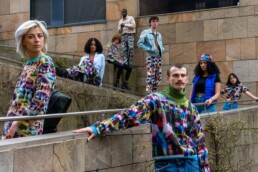

The Shift From Fast Fashion to Forever Pieces
Every season used to begin with a rush — new drops, flash sales, must-have colors, and silhouettes that promised to “redefine” your wardrobe.
By the next season, they’d already feel dated. The pieces that once thrilled us sat folded and forgotten, replaced by something even newer, cheaper, faster.
But in 2026, that rhythm feels different. Shoppers are tired of closets full of “nothing to wear.” They’re craving clothes that outlive the algorithm — pieces that feel personal, intentional, and worth it. The conversation has shifted from “What’s trending?” to “What’s lasting?”
After a decade dominated by fast-fashion hauls and micro-trends, we’ve reached what industry analysts call the “fashion fatigue era.” According to The Global Apparel Insight 2025 Report, 68 % of consumers now say they’d rather buy fewer, higher-quality garments that last multiple seasons. The resale and repair economy is booming — proof that longevity has become the new status symbol.
People aren’t rejecting fashion; they’re redefining their relationship with it.
Why the Change?
Three forces are driving the shift:
- Economic awareness — Consumers are realizing that “cheap” clothes often cost more in the long run. A $40 blazer replaced three times over five years isn’t a bargain compared to one $200 piece that endures.
- Environmental impact — The fashion industry still contributes nearly 10 % of global carbon emissions, and throwaway trends are the main culprit. Gen Z and millennial buyers, once the engines of fast fashion, now lead the call for sustainability and transparency.
- Emotional maturity — There’s a quiet confidence in timeless dressing. It’s not about chasing relevance; it’s about feeling at ease in your own aesthetic. People are discovering that style longevity often mirrors personal growth — the fewer trends you chase, the clearer your identity becomes.
The Rise of “Investment Dressing”
Investment fashion isn’t about luxury logos or high price tags — it’s about value per wear.
A perfectly tailored blazer that sharpens every outfit, a well-cut trench that survives a decade of weather, or a pair of shoes that still look elegant after a hundred walks — those are investments.
In 2026, consumers are applying the same thoughtfulness to clothing that they once reserved for tech or wellness purchases. They’re reading care labels, asking about fabric composition, and researching brand ethics. A rising trend called “quiet quality” — understated design, premium materials, visible craftsmanship — now defines aspirational fashion.
Platforms like Vestiaire Collective and The RealReal report record numbers of users buying and reselling timeless pieces: structured handbags, minimalist watches, trench coats, and denim with real longevity.
The market is speaking: durability has replaced novelty as the new luxury.
A New Kind of Confidence
There’s something liberating about owning fewer pieces that feel more “you.”
A neutral cashmere sweater that layers with everything.
A white button-up that looks better with age.
A structured bag that becomes your signature, not your accessory.
These aren’t just wardrobe items — they’re anchors of identity in a culture obsessed with change.
So in this guide, we’ll break down which 2026 fashion pieces are truly worth investing in — and which fleeting trends are best left on the rack.
Because fashion shouldn’t be about keeping up; it should be about holding on — to what fits, flatters, and lasts.
The Problem With Trend-Driven Fashion — The Hidden Cost of “Keeping Up”
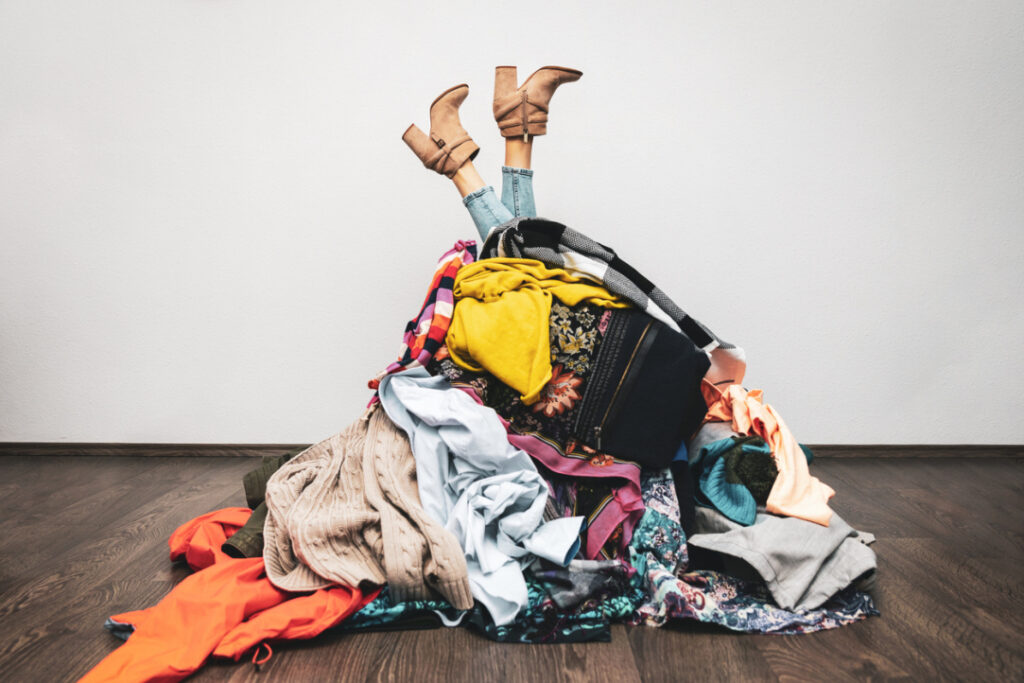
Fashion has always been about expression, but in the last decade, it became something else — a race. A never-ending cycle of drops, dupes, and discount codes that trained us to see clothing as disposable. What used to feel like art started to feel like anxiety.
We bought more, wore less, and somehow still felt like we had “nothing to wear.”
The rise of social media amplified that pressure. Platforms like TikTok turned closets into content. Influencers showcased hauls — dozens of items bought, unboxed, and replaced within weeks. In 2020, it felt exciting. By 2026, it feels exhausting.
A study by Fashion Revolution 2025 found that the average consumer now wears a garment only seven times before discarding it. Fast-fashion brands release over 10,000 new styles each month, engineered not for longevity but for clicks. That constant turnover erodes more than the environment — it erodes our sense of value.
The Emotional Cost
There’s an unspoken emptiness in trend-chasing. Each purchase promises reinvention, yet the satisfaction fades quickly — replaced by the urge for the next “it” item.
Clothes used to tell stories: the coat you wore through winters, the jeans that softened to your shape, the shoes that carried memories. Trend-driven fashion cuts that narrative short. It replaces nostalgia with novelty — and novelty, by nature, doesn’t last.
Many consumers in 2025 describe “fashion burnout” as an emotional fatigue. They feel overwhelmed by choice but underwhelmed by meaning. When everything is replaceable, nothing feels personal.
The Financial Cost
Fast fashion tricks you into thinking you’re saving money.
But the math tells a different story.
That $25 top you wear three times costs over $8 per wear. A $200 silk blouse you wear 50 times costs $4 per wear — and will still look elegant years later.
Cheap garments aren’t bargains; they’re short-term indulgences that accumulate into clutter and regret.
According to The Global Apparel Sustainability Index (2025), households that prioritize fast fashion spend 27 % more per year on clothing than those who buy fewer, higher-quality items. The difference isn’t in income — it’s in mindset.
The Environmental Cost
Every trend carries a footprint.
Polyester — the backbone of cheap fashion — is derived from fossil fuels and sheds microplastics with every wash. The dyes that create this season’s “hot pink” often end up in rivers. And when those clothes inevitably fall apart, they’re shipped by the ton to landfills across the Global South.
The fast-fashion system isn’t just unsustainable; it’s unsentimental. It leaves behind a trail of waste — and a generation of consumers craving something real again.
Trend-driven fashion isn’t just bad for your wallet or the planet — it’s bad for your relationship with yourself. It keeps you chasing an image instead of cultivating a style.
And that’s where the shift begins — when people start asking not “What’s trending?” but “What’s worth it?”
The Rise of Investment Fashion — Where Style Meets Substance

In 2026, fashion no longer moves at the speed of virality — it moves at the speed of meaning.
After years of fast-fashion fatigue and overconsumption, consumers have begun rewriting the rules of personal style. They’re no longer buying for the algorithm or the weekend trend; they’re buying for longevity.
Investment fashion has quietly become the new measure of taste — not because it’s expensive, but because it’s intentional.
The Meaning of “Investment” Has Changed
Not long ago, “investment piece” meant luxury — the kind of item that came with a designer label and a four-figure price tag. But in 2026, the term has evolved.
Now, an investment piece is simply something that lasts — in quality, comfort, and emotional connection.
It could be a perfectly tailored blazer from COS, a pair of hand-stitched loafers from a small British atelier, or a minimal white shirt from a sustainable brand like Everlane or Arket. What matters isn’t status — it’s staying power.
As The Fashion Future Index 2025 reports, 72% of global consumers now say they value durability and timelessness over trend alignment. Even luxury brands have noticed the shift — Prada, The Row, and Celine are toning down logos and leaning into minimal, enduring silhouettes. It’s no longer about being noticed; it’s about being remembered.
Capsule Wardrobes and the “Quiet Quality” Movement
The capsule wardrobe — once a niche concept for minimalists — has become a mainstream aspiration. People want smaller wardrobes filled with versatile staples that work across seasons and occasions. The guiding idea: buy less, choose better, love longer.
The “quiet luxury” trend that began in 2023 evolved into something deeper by 2026 — a cultural embrace of subtle craftsmanship. This “quiet quality” aesthetic prioritizes texture over flash, fit over hype. It’s reflected in the rise of brands like Totême, Aeyde, and Khaite — labels that whisper rather than shout.
Even younger audiences are participating. Gen Z — once synonymous with fast fashion — is now driving demand for pre-owned luxury and timeless silhouettes. Resale platforms like Vestiaire Collective and The RealReal report record engagement from 18–25-year-olds seeking heritage pieces over hauls.
The Emotional Shift
There’s something satisfying about a piece that grows with you — the denim that softens at the knees, the watch that holds stories, the jacket that becomes your second skin. These items develop a kind of patina of memory, gaining character with every wear.
In contrast, trendy pieces fade quickly — not just in color or quality, but in emotional value. They feel replaceable.
Investment pieces, on the other hand, become companions — tangible markers of your style evolution.
As one fashion journalist recently wrote:
“We’re not dressing for Instagram anymore; we’re dressing for our lives.”
That sentiment perfectly captures the spirit of 2026 fashion. It’s slower, wiser, and more personal. The modern wardrobe isn’t about chasing identity — it’s about curating one.
1. The Tailored Blazer — Confidence in Structure
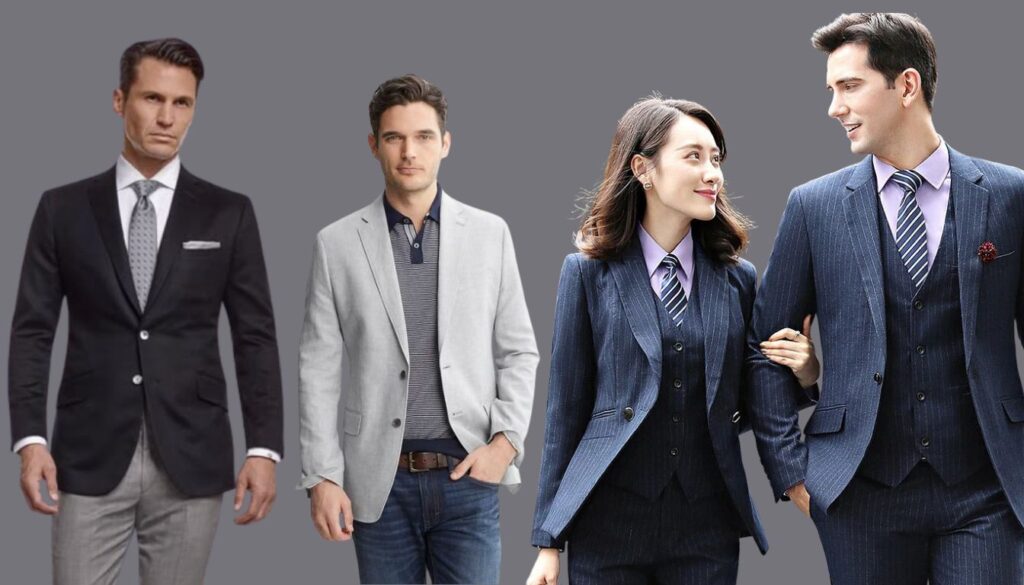
There’s something almost magical about slipping on a perfectly tailored blazer. It sharpens your silhouette, steadies your posture, and instantly changes how you carry yourself — not just physically, but emotionally.
The blazer isn’t just clothing; it’s presence.
In 2026, as fashion shifts toward timeless, seasonless dressing, the blazer remains one of the smartest investments you can make. It bridges professional and personal worlds effortlessly — worn with jeans and loafers for casual polish or over a silk dress for understated sophistication. Every generation seems to rediscover it, yet it never really left.
Why It’s Timeless
The blazer’s power lies in its duality — structured yet adaptable, formal yet fluid. It embodies what 2026 fashion values most: versatility and longevity.
A well-made blazer works in every climate, season, and mood. It looks intentional, even when thrown on in a rush.
The silhouette has evolved subtly with the years — wider shoulders, longer cuts, slightly oversized fits — but the essence remains the same. Whether you’re dressing for a client meeting or a weekend brunch, it has the ability to pull everything together with quiet authority.
As stylist Elizabeth von der Goltz said in Vogue Business (2025),
“If you want to invest in one thing this year, let it be a blazer that fits your life — not just your body.”
What Makes a Good Investment Blazer
- Fabric: Go for natural fibers like wool, linen, or a wool-silk blend — breathable, structured, and durable.
- Cut: Look for slightly padded shoulders, a cinched waist or straight-line silhouette that flatters your frame.
- Details: Quality stitching, inner lining, and sturdy buttons make all the difference.
- Color: Neutrals reign supreme — black, navy, camel, grey. But in 2026, deep olive and charcoal brown are the emerging “new neutrals.”
Best Brands to Buy in 2026
- The Row — minimal perfection, luxurious Italian wool, impeccable tailoring.
- Sandro Paris — balanced between structure and movement, ideal for day-to-night looks.
- Reformation — eco-conscious tailoring made from deadstock fabrics.
- COS — clean lines, architectural fit, and a price point that makes timelessness accessible.
- Everlane — transparent pricing, ethically produced wool-blend blazers perfect for everyday wear.
Each of these brands has built a loyal 2026 audience around quality, comfort, and conscious production — proving that elegance and ethics can coexist.
How It Fits Into Modern Life
A good blazer does more than complete an outfit; it becomes a personal uniform. People wear them not to look impressive, but to feel grounded.
It’s the piece that says, “I’ve got this,” even on days you don’t feel like you do.
One Reddit user on r/femalefashionadvice summed it up perfectly:
“My blazer is like my armor — but made of soft wool instead of metal.”
That’s exactly why it endures. Fashion trends may shout, but a blazer whispers — and still gets heard.
2. The White Button-Up Shirt — Effortless Precision

There are few garments that hold as much quiet power as a crisp white button-up shirt. It’s simple, clean, and endlessly adaptable — the one piece that manages to look right everywhere, on everyone, every time.
In 2026, when minimalism and “quiet luxury” have replaced logo-heavy trends, the white shirt has reclaimed its position as the backbone of a timeless wardrobe.
It’s the anchor of confidence — not because it’s flashy, but because it never tries too hard.
Why It’s Timeless
The white button-up has been worn by artists, architects, executives, and everyday dreamers for over a century. Coco Chanel reimagined it for women. Audrey Hepburn made it romantic. Princess Diana made it rebellious. And today’s generation has made it personal.
In an age of constant visual noise, its appeal is purity — clean lines, breathable fabric, and adaptability across decades and aesthetics.
It works equally well tucked into high-waisted denim, layered under a blazer, or worn oversized with rolled sleeves on a Sunday morning.
A 2025 Global Wardrobe Insights survey found that the average person reaches for their favorite white shirt at least once a week, making it one of the most-worn wardrobe investments of the decade.
It’s not a trend — it’s a language of simplicity.
What Makes a Great White Shirt
- Fabric: 100% cotton poplin, linen, or Tencel blend for comfort and structure. Avoid polyester — it dulls the elegance over time.
- Cut: Choose based on your personal rhythm — structured for polish, oversized for ease, cropped for modern layering.
- Collar & Buttons: These small details determine character — a pointed collar reads classic, while a band collar feels contemporary.
- Transparency: Slight sheerness is natural, but high-quality weaves remain crisp and opaque for years.
The best shirts get better with age — softening slightly but keeping their shape, like a garment that grows up with you.
Top Brands to Buy in 2026
- Sezane (France): Timeless Parisian tailoring in organic cotton; ethically produced.
- Everlane (USA): Known for precision seams and wrinkle-resistant poplin.
- COS (Sweden): Architectural simplicity, slightly oversized cuts, unisex appeal.
- Arket (Nordic): Everyday elegance with Scandinavian crispness.
- Frank & Eileen (Italy/USA): Luxury cotton fabrics and relaxed tailoring — the perfect “lived-in” look.
Each brand focuses on fabric integrity and craftsmanship — ensuring that what you buy once stays with you for years.
Why It Still Matters in 2026
The white button-up is the wardrobe’s pause button. It calms down loud pieces, balances trends, and works in every version of your life — from meetings to markets to late-night flights.
It’s also genderless, ageless, and borderless — a piece that feels modern no matter the decade.
As one Reddit user on r/minimalism said,
“Whenever I don’t know what to wear, I reach for my white shirt. It never fails me — it just fits my day.”
That’s its power: it doesn’t demand attention, it earns it quietly. In a world obsessed with more, the white shirt proves that enough is still the most elegant choice.
3. Quality Denim Jeans — The Fabric That Never Forgets You
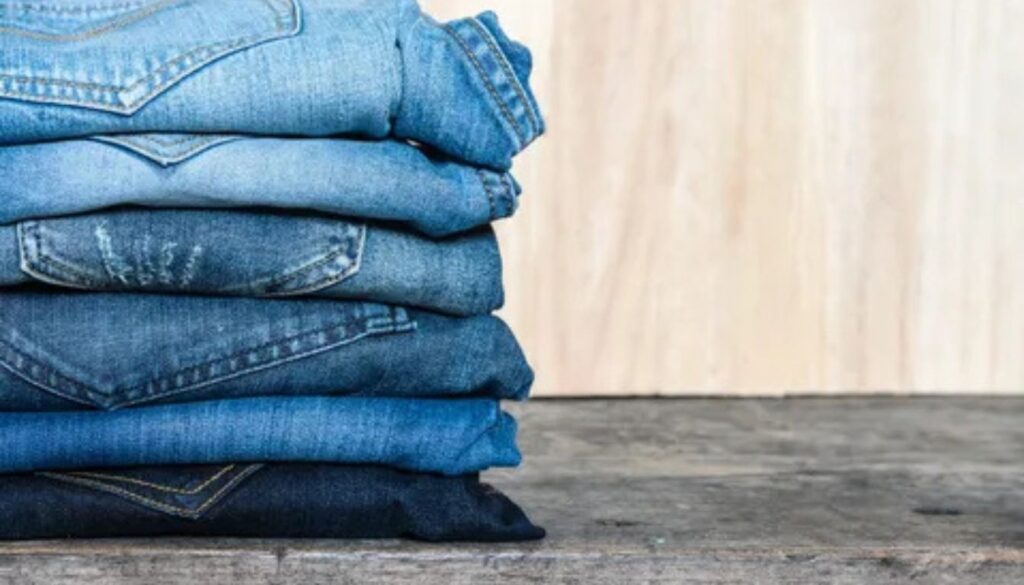
Denim is one of the few fabrics that truly tells a story. Every crease, every fade, every soft edge holds a memory of movement — a record of the life you’ve lived in them. No two pairs age alike.
And that’s exactly why in 2026, quality denim has reclaimed its place as a wardrobe essential worth investing in.
Fast fashion once turned jeans into cheap, forgettable basics — mass-produced, stretched thin, and designed to be replaced. But the new denim revival isn’t about novelty; it’s about craftsmanship, durability, and the quiet magic of wearing something that gets better with time.
Why It’s Timeless
Good denim doesn’t just fit your body — it becomes part of it.
Over time, premium jeans mold to your shape, soften at the knees, and fade in all the right places. That lived-in comfort can’t be replicated by pre-distressed or synthetic blends.
As The Denim Report 2025 notes, 76% of consumers now say they prefer heavier, longer-lasting denim over stretchy, fast-fashion options. The shift is clear: people are rediscovering the joy of jeans that feel real — substantial, sustainable, and soulful.
Denim’s versatility also cements its timelessness. A well-cut pair can move from day to night, office to weekend, and even season to season without ever feeling out of place.
What Makes a Great Pair of Jeans
- Fabric Weight: Look for 12–16 oz raw or selvedge denim — durable yet breathable.
- Fit: The best investment fits your natural lines — straight, slim, or relaxed. 2026’s enduring favorites are high-rise straight-leg and ’90s-inspired relaxed cuts.
- Wash: Dark indigo and classic mid-wash are the most versatile, with minimal distressing.
- Stitching: Double-stitched seams and reinforced rivets add years of wear.
A pair of good jeans can last over a decade — fading gracefully instead of wearing out.
Top Denim Brands to Invest in (2026)
- Levi’s Made & Crafted: Classic heritage, responsibly sourced cotton, built to last.
- AGOLDE: Eco-conscious denim with premium fits; beloved by stylists and minimalists alike.
- Reformation Denim: Recycled materials and water-saving production.
- Nudie Jeans (Sweden): Free repairs for life — a brand built on the philosophy that “repair is the new luxury.”
- P.C. (France): Known for raw denim that molds uniquely to the wearer.
These brands blend tradition with technology, proving that sustainability doesn’t mean sacrificing fit or flair.
The Emotional Payoff
There’s something deeply grounding about owning a pair of jeans that age with you. They remind you of who you were and who you’re becoming — a kind of wearable journal.
One user on r/rawdenim said it best:
“Every fade on my jeans is a story. You can’t buy that — you earn it.”
And that’s the real beauty of timeless denim: it never stays new, but it never grows old either.
4. The Trench Coat — Elegance That Outlasts Weather and Time
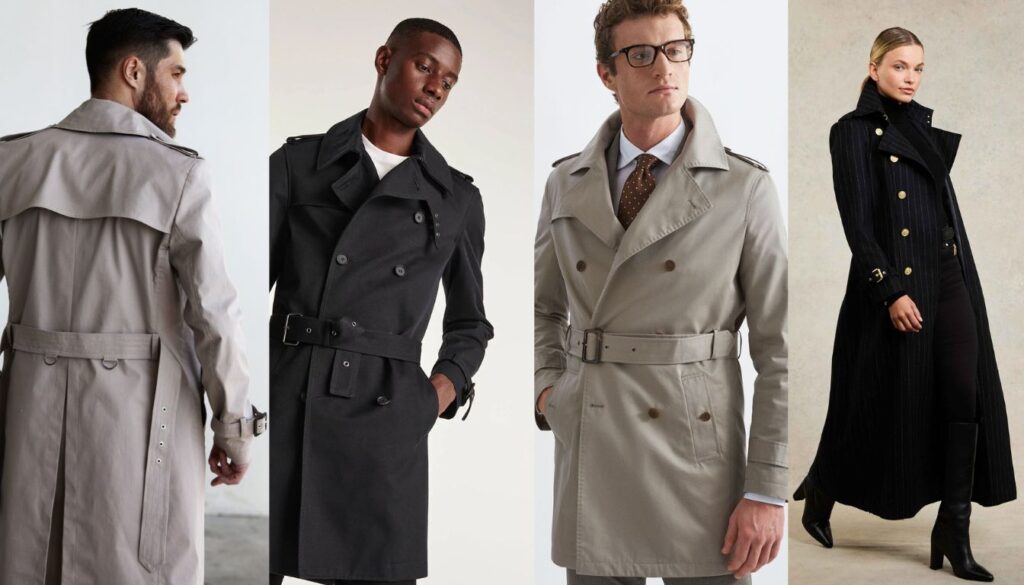
Few garments command quiet authority like the trench coat. It’s the outerwear equivalent of poetry — graceful, structured, endlessly adaptable, and somehow cinematic no matter where you wear it.
When you walk down the street in a well-fitted trench, it doesn’t shout style; it suggests it.
In 2025, when fashion has become as much about emotional sustainability as material durability, the trench coat remains one of the most enduring wardrobe investments you can make.
Why It’s Timeless
The trench coat has survived world wars, runway revolutions, and generational rebranding.
It’s both protective and expressive — practical enough to shield you from the rain, yet elegant enough to walk into a boardroom or an art gallery without missing a beat.
Its genius lies in structure and flow — a cinched waist, storm flaps, and draped shoulders that create balance. Whether it’s thrown over jeans and sneakers or draped over eveningwear, it transforms everything beneath it.
According to The Global Fashion Durability Index 2025, trench coats rank among the top three most-reworn outerwear items in urban wardrobes, with an average lifespan of 8–12 years. That’s not just sustainability — it’s design intelligence.
What to Look For in a Good Trench
- Material: Go for cotton gabardine, waxed cotton, or lightweight wool-blends — breathable, rain-resistant, and structured.
- Fit: A tailored silhouette with adjustable belt and cuff straps gives versatility for layering.
- Color: Neutrals like beige, camel, navy, and khaki remain timeless. In 2026, deep taupe and olive are modern updates that still read classic.
- Length: Mid-calf or slightly below the knee offers proportion and polish for most body types.
A true investment trench won’t cling to trends like oversized lapels or exaggerated cuts — it will quietly outlive them.
Top Trench Coat Brands to Buy in 2026
- Burberry (UK): The original icon — waterproof gabardine heritage with modern tailoring.
- Mackintosh (Scotland): Handcrafted rainwear, each piece made to endure decades.
- COS (Sweden): Minimalist, architectural trenches in recycled fabrics.
- Everlane (USA): Ethically produced modern trenches, affordable but built to last.
- Uniqlo U (Japan): Function meets refinement; lightweight yet structured for everyday wear.
Each of these brands carries the same philosophy: build once, wear forever.
The Emotional Element
There’s something about a trench coat that makes you feel ready.
Ready for rain. Ready for meetings. Ready for change.
It’s a garment that gives composure — not just protection.
One user on r/fashionreps wrote,
“My trench coat feels like a part of my character — like it remembers every city I’ve walked through.”
That’s why it remains timeless. It’s not just a coat — it’s a companion.
The kind of piece that doesn’t just keep you dry; it keeps you dignified.
5. Leather Loafers & Classic Sneakers — The Foundation of Modern Elegance
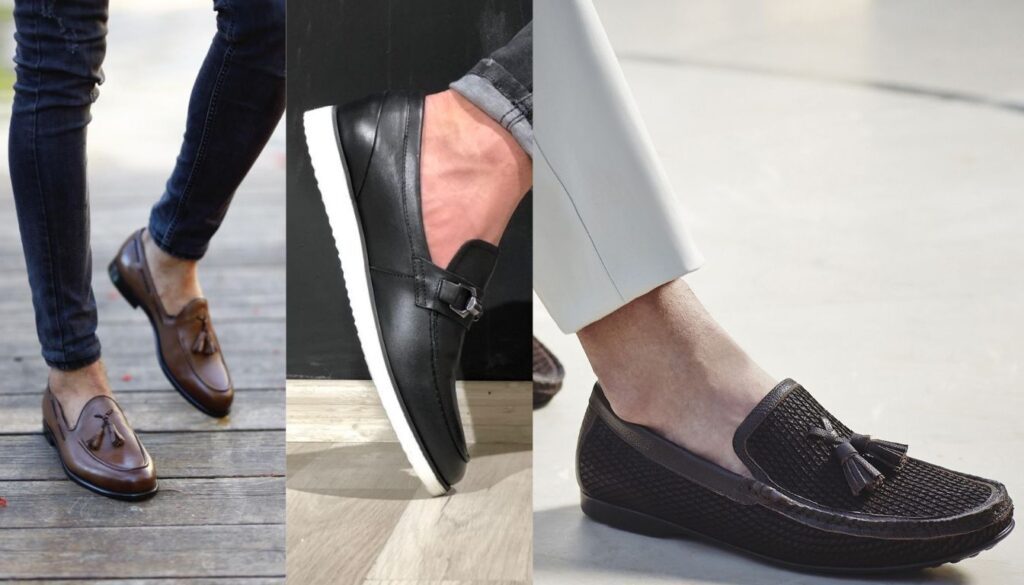
Every timeless wardrobe begins at the ground level — with shoes that carry you through seasons, years, and moods.
In 2026, when fast-fashion footwear has flooded the market with styles that barely survive a few months, leather loafers and classic sneakers stand as symbols of endurance, refinement, and self-assurance.
They are the pieces that don’t need a trend to be relevant. They simply belong.
Why They’re Timeless
Shoes tell stories before words do. The right pair grounds you — literally and stylistically.
A pair of well-crafted leather loafers can elevate denim, balance tailoring, and add subtle polish to even the simplest outfit. Similarly, a clean, minimalist sneaker bridges work, travel, and leisure with effortless ease.
The reason these two styles endure is their universality. They adapt to personal style rather than dictate it.
As The Global Footwear Review 2025 reports, 81% of consumers now choose quality materials and repairability over “newness.” Comfort, craftsmanship, and versatility have become the new luxury trifecta.
What to Look For
For Loafers:
- Material: Full-grain or vegetable-tanned leather — supple, durable, and designed to age beautifully.
- Sole: Stitched or Goodyear welted, not glued; it’s the mark of shoes made to last decades.
- Fit: Snug but not tight — the leather should mold to your foot with wear.
- Color: Black, tan, and oxblood remain perennial favorites, while deep espresso and sand suede lead 2026’s neutrals.
For Classic Sneakers:
- Design: Minimal branding, clean lines — the goal is timeless, not trendy.
- Material: Organic cotton canvas, chrome-free leather, or recycled rubber soles.
- Durability: Double stitching and reinforced heels for longevity.
Both styles thrive on simplicity. They don’t shout; they endure.
Top Brands to Invest in (2026)
Loafers:
- Church’s (UK): Handcrafted heritage footwear since 1873 — timeless silhouettes.
- Gucci (Italy): The iconic horsebit loafer that remains a staple in capsule wardrobes worldwide.
- Gemi (Italy): Artisan-made modern loafers with sustainability at heart.
- Nisolo (USA): Ethically sourced, comfort-focused leather footwear that ages gracefully.
Sneakers:
- Veja (France): Eco-conscious icon; organic cotton, wild rubber soles, minimal design.
- Common Projects (Italy/USA): The cult minimalist sneaker — numbered, not logoed.
- Adidas Stan Smith Forever: Now made with recycled materials; a 2026 update of the classic.
- Cariuma (Brazil): Comfortable, carbon-neutral sneakers gaining massive traction in 2026.
Why They Matter
Good footwear changes how you move through the world.
There’s a psychological comfort in shoes that fit well, last long, and look refined without effort. They create continuity — between work and leisure, seasons and years.
One Reddit user on r/malefashionadvice summed it up perfectly:
“I stopped buying cheap sneakers when I realized my feet were worth more than a trend.”
Loafers and clean sneakers represent the same philosophy: invest in what carries you — physically and emotionally. Because when your shoes are built to last, so is your confidence.
6. The Little Black Dress — Elegance Evolved for the Modern Era
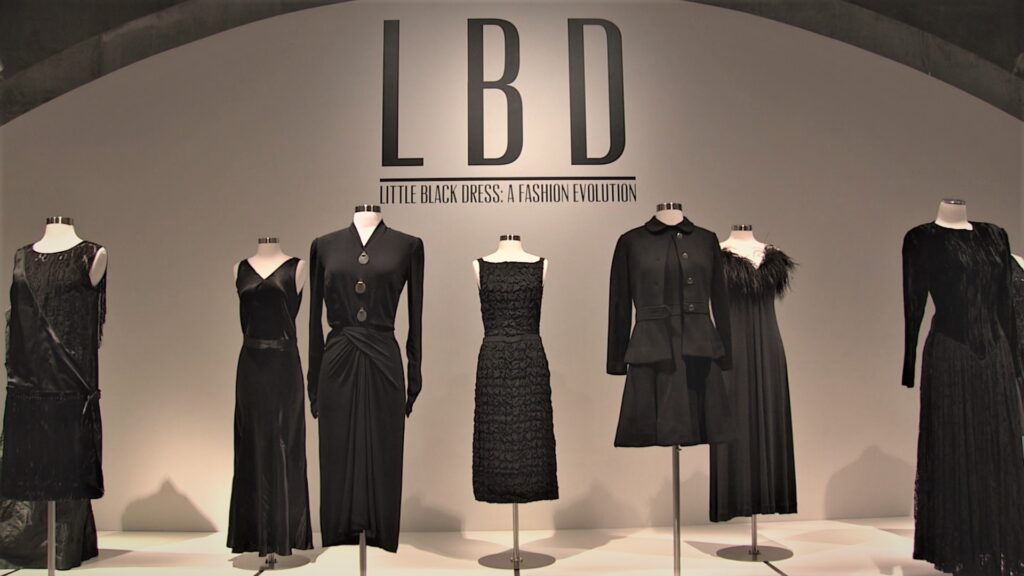
There’s a reason the little black dress (LBD) has survived every fashion cycle since the 1920s. It’s not just a garment — it’s an attitude. A promise of effortlessness. A quiet kind of confidence that never feels out of place.
In 2026, however, the LBD has evolved. It’s no longer just a cocktail dress hanging in the back of a closet, waiting for a rare event. It’s become a symbol of versatile femininity — simple, adaptable, and inclusive. Whether it’s a sleek midi you wear to dinner, a structured knit you layer for work, or a flowy silhouette that transitions from day to night, the modern black dress is about longevity — not limitation.
Why It’s Timeless
Coco Chanel’s original vision in 1926 was revolutionary: a dress that freed women from excess, allowing them to express elegance through simplicity.
Nearly a century later, that ethos feels more relevant than ever. In a world obsessed with constant reinvention, the black dress remains still.
The 2026 version embodies three things: fit, fabric, and flexibility. It’s not about revealing or concealing — it’s about belonging. The same piece that feels appropriate at a boardroom dinner can feel sensual at an evening out. That adaptability is what makes it eternal.
A Vogue Insights 2025 study found that 84% of women who invest in one high-quality black dress wear it for seven years or more. That’s not just fashion; that’s emotional return on investment.
What to Look For
- Silhouette: Choose a cut that mirrors your lifestyle. A-line for ease, sheath for power, wrap or slip for versatility.
- Fabric: Natural fibers like silk, wool crepe, or organic cotton blends for year-round comfort.
- Length: Midi and knee-length designs remain the most timeless; minis or maxis shift faster with trends.
- Detailing: Minimal seams, clean structure — avoid heavy embellishments or overt branding.
The best black dresses carry no timestamp. They adapt — to age, body, and context.
Top Brands to Invest in (2026)
- The Row (USA): Sculptural minimalism and exquisite tailoring — the ultimate investment dress.
- Reformation (USA): Sustainable, flattering cuts for real bodies, crafted from low-impact fabrics.
- Totême (Sweden): Understated silhouettes that exude quiet sophistication.
- COS (Sweden): Sharp lines, accessible pricing, and modern architectural fits.
- Aje (Australia): Feminine energy with structure — perfect for day-to-night wear.
Each brand embodies the new meaning of timelessness: intentional simplicity.
Why It Still Matters in 2026
The LBD endures because it’s deeply human. It doesn’t change with trends; it changes with you.
It can hold memory — the dress you wore for your first major job interview, your favorite dinner, or that night when everything in life finally clicked.
One Quora user wrote,
“My black dress is 10 years old. Every time I wear it, it reminds me that I’ve grown, but it still fits — in more ways than one.”
That’s the truth of timeless fashion: it grows with you.
And that’s why the little black dress — or its modern, minimalist successor — will never really leave the stage. It just keeps learning new ways to belong.
7. The Wool or Cashmere Sweater — The Comfort That Lasts Beyond Seasons
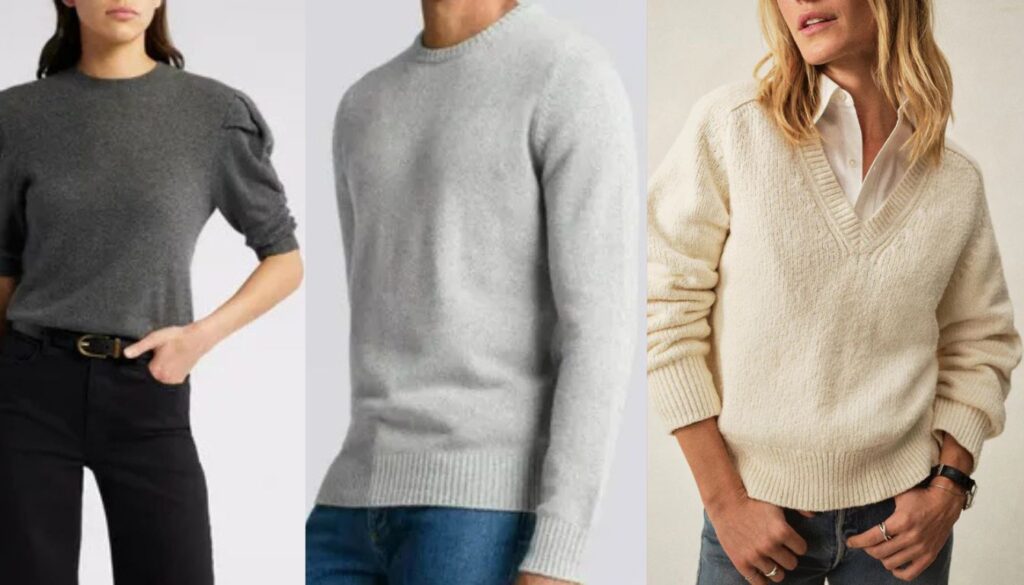
Some clothes make a statement. Others make you feel.
The wool or cashmere sweater does the latter — not with logos or silhouettes, but with texture, warmth, and quiet luxury. It’s that one piece you instinctively reach for when you need comfort but still want to look composed.
In 2026, as fast fashion continues to saturate the market with synthetics that pill and lose shape after a few washes, the return to natural fibers marks a turning point. People are learning again to value the feeling of quality — that subtle weight in the fabric, the way the material breathes, the softness that endures.
Why It’s Timeless
A good sweater isn’t about the trend of the season — it’s about the relationship it forms with its wearer. It softens with time, molds to your body, and becomes part of your personal rhythm.
Wool and cashmere are naturally insulating, odor-resistant, and long-lasting when cared for properly. Unlike synthetics, they don’t trap heat or degrade quickly.
They represent a kind of sustainable luxury — not wasteful, not flashy, just enduring.
As The Textile Sustainability Report 2025 notes, demand for natural knitwear has surged by 40% in the last three years, driven by consumers seeking emotional comfort in tactile materials. It’s not just warmth people are buying — it’s reassurance.
What to Look For
- Material: 100% merino wool, lambswool, or Grade-A Mongolian cashmere. Blends with 10–20% nylon are fine for durability, but avoid acrylic-heavy fabrics.
- Gauge: Fine-gauge for layering and refinement; chunky-knit for texture and comfort.
- Care: Hand wash or dry clean only. Quality knitwear rewards patience.
- Colors: Camel, heather grey, cream, and navy remain timeless; muted moss and stone are 2026’s enduring neutrals.
Well-made sweaters rarely age — they mature.
Top Knitwear Brands to Invest in (2026)
- Everlane (USA): Transparent pricing, ethically sourced cashmere and merino.
- Naadam (Mongolia/USA): Direct trade cashmere, traceable from herd to home.
- COS (Sweden): Modern silhouettes and sustainable merino blends.
- Loro Piana (Italy): The gold standard of craftsmanship — pure, enduring elegance.
- Arket (Nordic): Balanced quality and affordability with minimal design.
Each of these brands reflects a wider truth: timeless fashion begins with honest materials.
The Emotional Value
The right sweater carries something no trend can replicate — familiarity.
It’s the garment you put on when you’re traveling, working late, or just need to feel safe. It doesn’t demand attention; it gives comfort.
One Reddit user on r/BuyItForLife wrote:
“My Loro Piana sweater is seven years old. It’s softer now, somehow kinder. I’ll repair it forever.”
That’s what timeless pieces do — they age gracefully, alongside you.
The wool or cashmere sweater isn’t about luxury; it’s about longevity. It’s proof that elegance can be quiet — and warmth can be an investment.
8. The Structured Handbag — Function That Ages Like Art

There’s a quiet kind of luxury that doesn’t come from trends, logos, or price tags — it comes from structure. From the way a handbag holds its shape, its promise, and your essentials without faltering.
A structured handbag isn’t just an accessory — it’s the architectural heart of a wardrobe.
In 2026, as fast-fashion handbags flood marketplaces with short lifespans and peeling finishes, consumers have turned back toward craftsmanship — pieces made to last decades, not seasons. A good bag, like good design, is timeless because it never asks to be relevant. It simply is.
Why It’s Timeless
The best handbags share one universal quality: dependability.
They hold your life’s fragments — keys, notebooks, perfume, confidence — and carry them with dignity. They withstand commutes, travel, and time itself.
Structured silhouettes — boxy, trapeze, or satchel-shaped — age beautifully. They don’t sag or collapse. Their leather softens while keeping form, developing a patina that feels more personal with every year.
A Luxury Consumer Insight 2026 report found that 64% of high-end bag buyers now choose classic structure over novelty designs, valuing longevity and resale potential over fleeting popularity. The shift is emotional as much as practical — people are investing in reliability, not reinvention.
What to Look For
- Material: Full-grain or vegetable-tanned leather — durable and richens with age.
- Shape: Choose a structured silhouette with reinforced corners and a flat base.
- Hardware: Solid metal zips, magnetic clasps, and clean stitching indicate craftsmanship.
- Color: Neutral tones — black, tan, taupe, or deep burgundy — anchor any outfit.
- Size: Medium bags (10–12 inches wide) offer balance between elegance and function.
A truly timeless handbag is both practical and poetic — useful without ever feeling utilitarian.
Top Handbag Brands to Invest in (2026)
- Celine (France): The Classic Box remains a symbol of quiet luxury and enduring design.
- Polène (France): Handcrafted leather artistry — sculptural yet minimal.
- Strathberry (UK): Known for structured shapes and signature metal bar detail.
- Mansur Gavriel (USA): Vegetable-tanned Italian leather, understated perfection.
- Senreve (USA): Tech-friendly bags balancing structure, compartments, and sustainability.
Each of these brands builds handbags like heirlooms — beautiful now, even more meaningful later.
The Emotional Value
A structured handbag carries something beyond its contents — it carries assurance.
It’s the piece you take everywhere: job interviews, airports, new beginnings. It becomes a part of your identity, a small symbol of being put-together even when life feels anything but.
As one Reddit user on r/femalefashionadvice wrote,
“My Polène bag is four years old. It’s not just my favorite bag — it’s a diary of every place I’ve taken it.”
And that’s what timeless fashion does — it holds your story.
A great bag doesn’t just match your outfit; it matches your evolution.
9. The Minimalist Watch & Timeless Jewelry — Symbols of Stillness in a Fast World

There’s a certain grace in accessories that outlast technology.
In an age where smartwatches buzz, phones chime, and trends reset every 30 days, a classic timepiece or a piece of timeless jewelry feels almost rebellious — a quiet statement that says, I’m not rushing.
The minimalist watch and simple jewelry are no longer about wealth or status. They’ve become emblems of presence — reminders that beauty doesn’t need to blink or update.
Why It’s Timeless
A good watch or a piece of refined jewelry anchors an outfit the way a heartbeat anchors a moment — subtle, steady, and reassuring.
Minimalist watches, with clean dials and no-nonsense craftsmanship, transcend fashion. They work in boardrooms and beach towns, on wrists that value intention over noise. Likewise, simple jewelry — a gold chain, pearl studs, or a signet ring — carries emotional continuity.
In 2026, consumers are gravitating back toward meaningful adornment.
According to Global Accessories Insight 2025, 71% of buyers now prefer understated, heirloom-quality designs over seasonal statement pieces. These items are not “bought” — they’re chosen, often with emotional weight behind them.
What to Look For
For Watches:
- Design: Minimal dials, neutral straps, no unnecessary complications.
- Material: Stainless steel, titanium, or recycled gold for longevity.
- Movement: Swiss or Japanese quartz/mechanical movements for reliability.
- Color: Silver, gold, and muted tones — finishes that age gracefully.
For Jewelry:
- Material: 14k–18k gold, sterling silver, or recycled metals.
- Design: Streamlined — hoops, chains, or simple pendants that layer well.
- Craftsmanship: Hand-finished details ensure decades of wear.
- Ethics: Look for conflict-free or lab-grown stones; sustainability has become the new prestige.
These pieces hold their value not through fashion cycles, but through personal significance.
Top Investment Brands (2026 Favorites)
Watches:
- Daniel Wellington: Scandinavian minimalism — simple, sleek, and universally appealing.
- Junghans (Germany): Bauhaus-inspired design meets technical precision.
- Tissot (Switzerland): Quality heritage pieces with timeless silhouettes.
- Nomos Glashütte: Handmade mechanical watches, elegant and enduring.
Jewelry:
- Mejuri (Canada): Everyday fine jewelry, designed to be lived in.
- Monica Vinader (UK): Sustainably sourced, refined essentials.
- Missoma (UK): Modern femininity meets ethical production.
- Cartier (France): Heritage craftsmanship — a century of design that never dates.
Each of these brands champions intentional design — the idea that adornment should enhance, not distract.
The Emotional Value
A minimalist watch or a simple gold ring doesn’t age; it accumulates meaning.
It’s what you wear when you fall in love, change jobs, or board a flight to somewhere new. It doesn’t scream “fashion” — it whispers memory.
One user on r/MaleFashionAdvice wrote:
“My Nomos watch isn’t flashy, but every scratch tells a story. It’s mine, not a logo.”
That’s the essence of timeless accessories: they outlast applause, trends, and even relevance — becoming personal relics of who you were and who you’re becoming.
Trend Pieces That Might Be Worth Buying
Not every trend deserves skepticism.
In 2026, the line between “trendy” and “timeless” has softened — thanks to smarter design, better materials, and a shift in consumer mindset. Some trends aren’t about novelty anymore; they’re about evolution.
When a trend is built on functionality, sustainability, or emotional resonance, it’s not just a passing phase — it’s a preview of what timeless might look like in the future.
Here are the few 2026 trends that are proving their staying power.
1. Tailored Denim & Utility Silhouettes
Denim has gone from fast-fashion staple to slow-fashion investment. In 2026, tailored denim jackets, belted shirt dresses, and utility trousers are dominating wardrobes — not because they’re “in,” but because they work.
Made from heavier, recycled cotton blends and designed with clean lines, these pieces combine durability and polish.
Brands like Citizens of Humanity, Reformation, and Nudie Jeans are leading this wave — creating denim that’s refined enough for the office and resilient enough for travel.
This is one of the few modern “trends” that feel inevitable — functional, flattering, and future-proof.
2. Sustainable Statement Bags
Gone are the days when luxury meant excess. In 2026, consumers want statement bags that tell a sustainability story — made from apple leather, mushroom mycelium, or recycled ocean plastics.
Labels like Stella McCartney, Pangaia, and Cuyana are redefining what status means: not scarcity, but responsibility. These materials don’t just make bags eco-friendly — they make them conversation pieces.
A 2025 Ethical Fashion Market Report found that 63% of consumers are willing to pay more for accessories made from non-animal, circular materials that maintain the elegance of leather.
So while the trend looks modern, its roots are deeply timeless: craftsmanship and conscience.
3. Modular Footwear
Footwear has entered its “transformer” era — not in gimmick, but in function.
Think modular sneakers with removable soles or interchangeable uppers, designed to adapt to seasons or outfits. Brands like ON Running, Allbirds, and Zellerfeld (with 3D-printed silhouettes) are pioneering customizable designs that reduce waste and extend product life.
This is a rare case where tech meets timeless logic — fewer shoes, more adaptability.
4. Relaxed Power Dressing
2026’s tailoring trend is softer, more human. The sharp lines of the 2010s have eased into fluid suiting — relaxed blazers, wide-leg trousers, and lightweight fabrics that blur gender and occasion.
It’s still power dressing, just without the armor.
Brands like Totême, COS, and The Frankie Shop are championing this approach — structured enough for confidence, soft enough for comfort.
Fashion psychologists call this shift “comfort as authority.” The idea that when you feel at ease, you command more presence.
5. Statement Minimalism
Ironically, one of the strongest “trends” in 2026 is minimalism itself — but with personality.
Instead of plain basics, people are investing in architectural cuts, sculptural jewelry, and monochrome layers that hold shape and identity.
It’s not anti-trend — it’s a refinement of taste.
These trends endure because they don’t scream for attention — they earn it. They’re built on ideas that outlive fashion: comfort, purpose, craftsmanship, and emotional connection.
In other words, they’re not trends — they’re future classics in disguise.
How to Tell if a Fashion Piece Is Worth Investing In
In a world full of “must-haves,” it’s easy to lose sight of what’s worth having.
Between social media recommendations and endless online drops, modern consumers are surrounded by noise — but the best wardrobes are built in quiet moments of discernment.
In 2026, where conscious shopping has become both an ethical and emotional practice, knowing how to evaluate an investment piece matters more than ever.
Here’s how to tell if that jacket, dress, or pair of shoes will stay with you — not just through the season, but through life’s chapters.
1. The Fabric Test — Touch Before You Trust
A timeless wardrobe starts with what you can feel.
Run your hand over the fabric. Does it feel heavy, breathable, substantial? Or thin, synthetic, and lifeless?
Natural fibers like wool, cotton, silk, and linen not only age better but often look better after years of wear. They develop personality. Synthetic blends might appear perfect at first, but they lose shape, trap heat, and deteriorate fast.
The general rule: if it feels luxurious before you buy it, it will probably stay that way.
2. The Cost-per-Wear Formula
Price tags don’t define investment — wearability does.
Before buying, ask yourself: How many times will I actually wear this?
Divide the price by that number.
A $250 coat worn 200 times costs just $1.25 per wear — less than your morning coffee. A $50 impulse buy worn twice costs $25 per wear — and probably ends up donated within a year.
Smart shoppers in 2026 don’t just budget by dollars; they budget by longevity.
3. The Mirror Test — Is It You, or Is It the Moment?
Truly timeless fashion doesn’t disguise you; it refines you.
When you try something on, ask: Would I still wear this in five years?
If the answer feels uncertain, it’s not the right piece.
A genuine investment complements your existing wardrobe and feels like it was always meant to be there. The trend-driven piece makes you feel momentarily exciting — then awkward when the algorithm moves on.
The right clothing should make you exhale, not overthink.
4. The Care Commitment
Investment means maintenance.
If you’re unwilling to hand-wash, condition leather, or store wool properly, the piece won’t last — no matter the brand.
Timeless fashion is a relationship; it rewards care. As Elle Sustainability 2026 notes, regular maintenance can extend a garment’s lifespan by up to 70%. A little effort — a sweater comb, a shoetree, a tailor — can turn “buy” into “keep.”
5. The Emotional Check
Finally, ask yourself the simplest question: Does this piece make me feel more like myself?
If it does, it’s worth every cent.
Truly timeless pieces carry emotional resonance — the kind that makes you reach for them again and again, without hesitation. They become part of your story, not your clutter.
The art of investing in fashion isn’t about restraint — it’s about recognition.
Recognizing quality. Recognizing value. Recognizing yourself in what you wear.
Because when fashion fits your life — not just your size — it never goes out of style.
The Role of Resale and Circular Fashion — Where Timelessness Finds Its Second Life
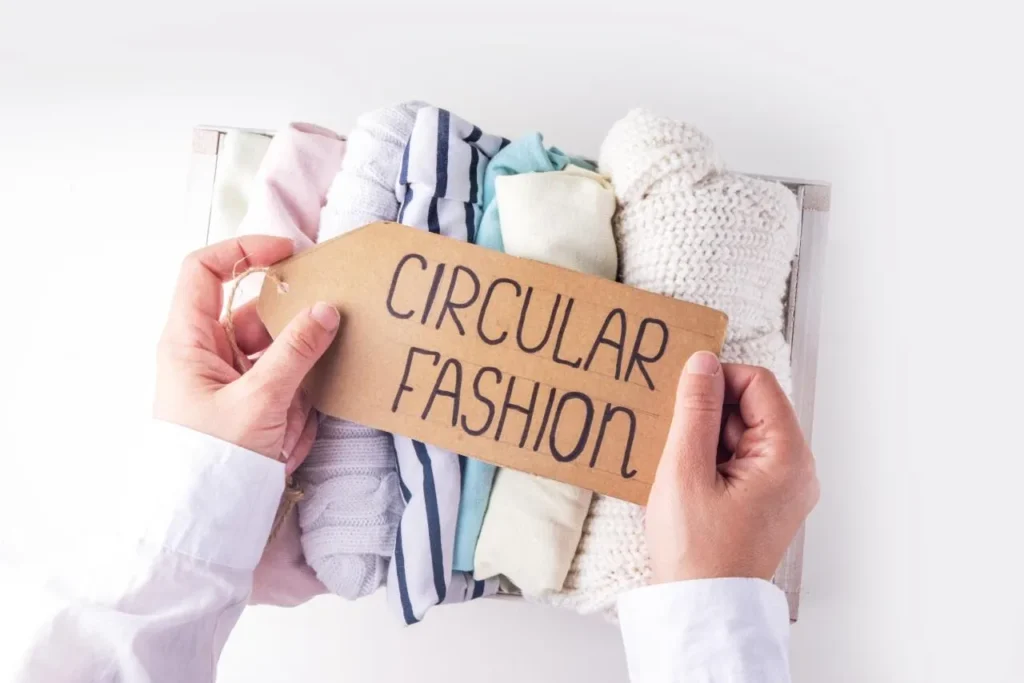
Once upon a time, “secondhand” meant compromise. Today, it means consciousness.
In 2026, buying pre-owned or reselling fashion isn’t just a budget decision — it’s a value statement. It’s a reflection of a new cultural truth: nothing truly beautiful ever becomes obsolete.
Circular fashion — the practice of extending a garment’s life through resale, repair, and recycling — has evolved from niche sustainability talk into the foundation of modern fashion economics. And consumers are leading the charge.
A Shift in Perception
The stigma around secondhand fashion has dissolved. What used to feel like “someone else’s old clothes” now feels like a chance to participate in a garment’s story.
As The Resale Market Report 2025 reveals, the global pre-owned luxury market grew 14% year-over-year, outpacing traditional retail for the fourth year in a row.
Platforms like The RealReal, Vestiaire Collective, and Depop have redefined ownership. They’ve given consumers the ability to buy, sell, and swap their wardrobes with transparency, authenticity checks, and ethical convenience.
In this new model, a handbag or blazer isn’t a disposable purchase — it’s a transferable asset. Something that holds both financial and emotional value over time.
The Emotional Logic of Resale
Fashion, at its heart, is emotional. When you invest in quality, you’re also investing in future connection.
That Reformation dress you once adored might become someone else’s favorite piece a year later. The trench coat that saw you through a milestone winter could become a stranger’s daily armor.
Resale culture gives fashion continuity — a life beyond one owner, one phase, one purpose.
It’s sustainability through sentiment, not just policy.
One Reddit user on r/SecondhandFashion captured it perfectly:
“When I buy secondhand, it feels like I’m rescuing a story — not just saving money.”
Why Circular Fashion Works
Circular fashion closes the loop that fast fashion breaks.
It prioritizes:
- Longevity: High-quality pieces stay in rotation longer.
- Transparency: Buyers know the garment’s origin and condition.
- Accessibility: Luxury and craftsmanship become attainable at lower costs.
According to Fashion Transparency Index 2025, shoppers who engage in resale practices reduce their annual fashion carbon footprint by over 30% — simply by keeping clothes in circulation.But beyond the data, it’s about meaning. People are tired of being passive consumers. They want to participate — to curate, trade, and contribute to something bigger than a closet.
Investment That Lives Twice
Buying secondhand doesn’t diminish value; it extends it.
A Celine bag bought pre-owned still carries elegance. A well-kept wool coat resold on Vestiaire still holds warmth — both literal and emotional.
Circular fashion reminds us that timelessness isn’t just about owning things that last — it’s about letting them last for someone else, too.
Section 7: FAQs — Real Questions About Timeless Fashion in 2026
The shift from trend-hunting to timeless dressing can feel freeing — but it also raises new questions.
What’s actually worth spending on? How do you care for pieces meant to last a decade? And how do you resist the urge to chase “new” when the world keeps changing so fast?
Here are honest answers to the questions people are really asking about investment fashion in 2026.
1. How do I know if a piece will actually last?
Longevity starts with materials and construction.
Look for natural fibers — wool, cotton, linen, silk — and well-stitched seams, lining, and reinforced hems. Quality garments feel substantial in the hand, not flimsy.
If it feels too light or stretchy to hold shape, it probably won’t.
A quick trick: flip the piece inside out. If it looks as good on the inside as the outside, it’s built to last.
2. Are sustainable brands always better quality?
Not always — sustainability and durability don’t automatically align.
Some “eco” labels focus on materials but cut corners on craftsmanship. Others combine both perfectly.
Brands like The Row, Arket, Everlane, and Nudie Jeans balance ethics and engineering. Always read beyond the marketing — check reviews, care instructions, and fabric composition before trusting the tag.
3. How can I maintain investment pieces for years?
Caring for timeless fashion is a quiet ritual.
- Sweaters: Fold, never hang; de-pill occasionally.
- Leather shoes or bags: Condition once every few months.
- Silk or wool: Store in breathable garment bags.
- Denim: Wash sparingly; air-dry for longevity.
A bit of maintenance transforms ownership into stewardship — the difference between buying clothes and keeping them.
4. Is it okay to mix trends with timeless pieces?
Absolutely — that’s how personal style evolves.
Trends add freshness; timeless pieces anchor them. Pair a classic trench with bold jewelry, or vintage denim with a trending color pop.
The key is balance. If your outfit feels overworked, let one timeless piece lead.
Fashion should feel alive, not static. A timeless wardrobe isn’t about freezing your look — it’s about having a stable foundation you can build on.
5. How do I know when to splurge and when to save?
Spend where touch, fit, and longevity matter: outerwear, shoes, bags, and tailoring.
Save on pieces that evolve quickly — prints, novelty accessories, or trend-driven colors.
If something lives close to your skin or defines your silhouette, it’s worth the investment. The rest can rotate.
6. Can resale value really make fashion an “investment”?
Yes — when done wisely.
High-quality, well-maintained pieces from brands like Celine, Chanel, or Totême can retain up to 70% of their retail value on platforms like The RealReal. Even mid-range brands hold value if cared for and sold thoughtfully.
But the truest return on investment isn’t resale — it’s rewear.
The real profit comes from owning fewer things that make you feel your best, over and over again.
7. What’s the single biggest sign something is timeless?
It doesn’t need to prove itself.
Timeless pieces feel familiar from the first wear — like something you’ve always owned, even if it’s brand new.
As one Reddit user put it:
“I stopped chasing trends when I realized my favorite clothes never needed a reason.”
That’s the heart of timeless fashion: confidence that lasts longer than the season.
Conclusion — Timeless Style as a Reflection of Self
Fashion, at its best, isn’t about trends — it’s about truth.
It’s how we express who we are when words fall short, how we find rhythm in chaos, and how we carry our stories through fabric and form.
In 2025, that truth feels clearer than ever.
People are no longer dressing to impress strangers; they’re dressing to reconnect with themselves. They’ve traded the thrill of the haul for the calm of intention — the quiet joy of a wardrobe that works, not because it’s full, but because it’s thoughtful.
The shift from trend to timeless isn’t just a change in taste. It’s a cultural and emotional recalibration.
It says: I want to buy things that mean something. I want to wear pieces that feel like me.
The Power of Fewer, Better
When you invest in timeless pieces — a tailored blazer, real denim, a structured bag, or a pair of shoes that actually fit your life — you invest in stability.
Each item becomes a companion through changing seasons, careers, and moods. It eliminates the noise and leaves space for confidence to take its place.
And ironically, that’s what real style has always been — not abundance, but alignment.
The clothes you wear every day quietly teach you something about value, care, and continuity. They make you slower to discard, faster to appreciate.
Timeless Fashion as Self-Respect
The most enduring fashion philosophy isn’t “buy less” — it’s choose with care.
Because when you choose well, you automatically consume less, waste less, and regret less.
You start to see your wardrobe not as a revolving door of purchases, but as a living archive of your evolution — the pieces that grew softer as you grew wiser.
One user on r/femalefashionadvice said it best:
“I stopped chasing trends when I realized that timeless style wasn’t about what I wore — it was about how I wanted to feel.”
And That’s the Point
In the end, timeless fashion isn’t about rejecting change — it’s about choosing what deserves to change with you.
Because style, when it’s honest, doesn’t age.
It endures — quietly, gracefully, and always in tune with who you’re becoming.