
The Quiet Revolution of Power
There was a time when charging your phone felt like a ritual of restraint.
You found the cable, untangled the knots, aligned the connector, and stood tethered to a wall while your device drank slowly from its corded lifeline. In that world, power meant stillness.
Then came MagSafe, and everything changed.
Apple’s magnetically aligned charging system didn’t just solve a technical problem — it reshaped a daily behavior. Suddenly, charging became effortless. You didn’t plug in; you simply placed. You didn’t have to think; it just worked. And once that happened, the conversation about power shifted forever.
By 2026, MagSafe isn’t a novelty — it’s a language of convenience spoken across brands. What started as a closed Apple innovation has inspired a global redesign of how energy flows into our devices. The new Qi2 wireless standard, built on MagSafe’s magnetic alignment, now unites Apple, Samsung, Google, and countless accessory makers under a single, more intelligent ecosystem.
This moment marks a quiet but profound shift: charging has stopped being an interruption. It’s becoming ambient — woven into our environments, hidden inside furniture, and soon, floating invisibly through the air.
But this evolution isn’t only about magnets and watts. It’s about what power represents: freedom. Freedom to move, to multitask, to forget where the charger even is because the world around you keeps your device alive.
From magnetic docks that organize your desk to next-generation wireless transmitters capable of powering devices across a room, charging in 2026 has entered a phase of quiet sophistication — one where efficiency, design, and intelligence merge into a seamless daily rhythm.
The question is no longer how fast your phone charges.
It’s how naturally it does so — how well the act of powering up fits into the flow of life itself.
Welcome to the future of mobile energy — MagSafe and beyond.
MagSafe & Qi2: The Present Standard of Smart Power
The charging revolution didn’t begin with speed — it began with alignment.
When Apple unveiled MagSafe for the iPhone 12, it didn’t just introduce a faster wireless charger; it created a perfectly placed connection that never missed. The magnetic click was as much psychological as technological — a sound of reassurance that power had found its mark.
Now, in 2026, that principle has matured into something larger — Qi2, the new global standard based directly on MagSafe’s architecture.
Qi2 brings the same magnetic precision and optimized 15 W efficiency across every major brand: Apple, Samsung, Google, Xiaomi, OnePlus. It’s the moment wireless charging finally became universal — not a feature, but an expectation.
The Technology Behind the Calm
Qi2 is built on what engineers call Magnetic Power Profile (MPP) — a coil alignment system that eliminates the inefficiencies of traditional pads.
The result?
- Faster charging with less heat.
- Smarter negotiation between devices and chargers.
- Universal magnetic locks that ensure perfect positioning, every time.
That means fewer wasted watts, longer battery life, and safer power delivery — all without cables.
But what truly defines Qi2 is what it removes: friction. You don’t have to aim, twist, or check if your phone’s charging. It’s the kind of design that feels invisible — the hallmark of modern innovation.
Leading Products Defining the Present Standard
1. Anker MagGo Qi2 15 W Wireless Charger
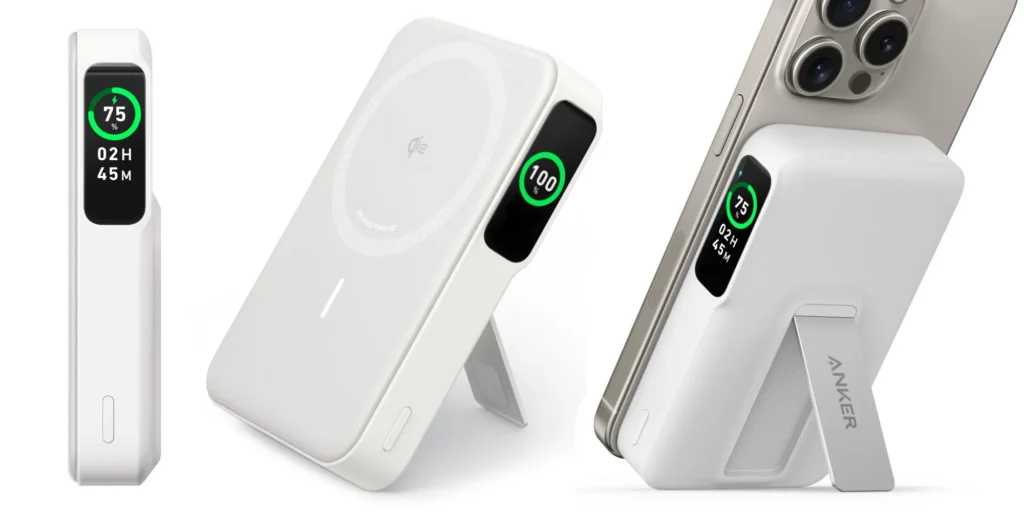
- Specs: Qi2-certified · 15 W output · Aluminum ring design · Built-in USB-C cable
- Why it matters: The MagGo combines Apple-grade precision with Anker’s reliability. It delivers MagSafe-level charging to both iPhones and Qi2 Android devices — a true cross-platform win.
- User sentiment: “It’s the first charger that looks good enough to leave on my desk,” one reviewer said — and that’s the new luxury: function disguised as calm.
2. ESR HaloLock 3-in-1 Qi2 Charging Station
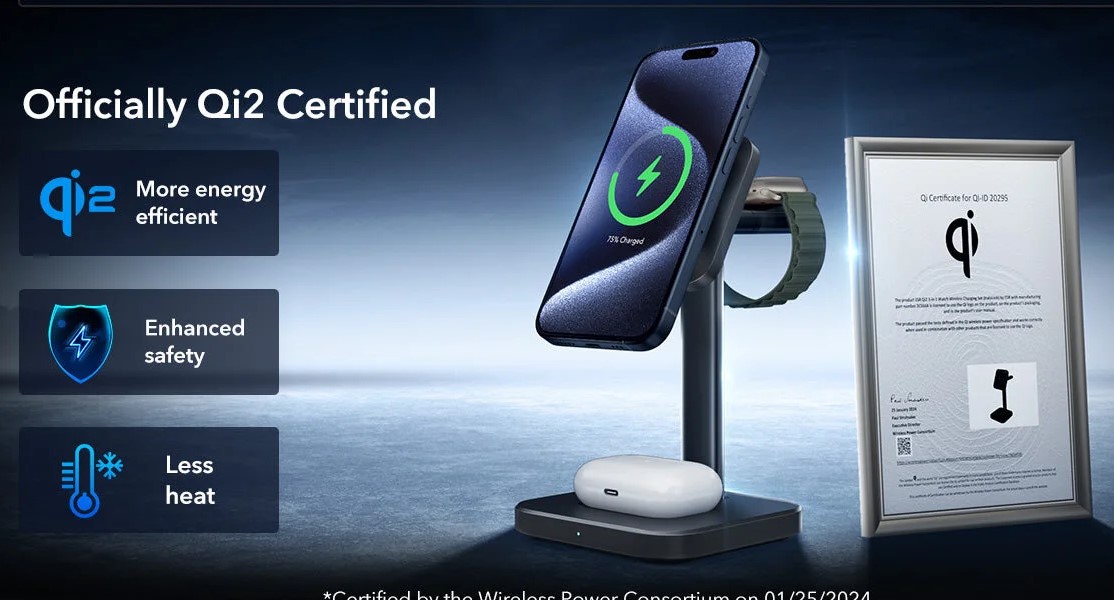
- Specs: Certified Qi2 magnetic pad · AirPods + Apple Watch docks · Adjustable viewing angle
- Why it matters: ESR helped democratize MagSafe-style charging for everyone. Its 3-in-1 HaloLock is one of the first verified Qi2 chargers to power multiple ecosystems side by side.
- Real-world impact: Hybrid households — iPhone + Galaxy users — finally share one charger without compromise.
3. Baseus Magnetic Stand Charger (Qi2 Edition)

- Specs: 15 W Qi2 wireless pad · Built-in cooling fan · Adjustable stand mode
- Why it matters: A design-driven charger that doubles as a video or call dock. It blurs the line between utility and display — powering your phone while turning it into a productivity hub.
- User feedback: “It makes my workspace feel intentional,” notes one review.
4. Belkin BoostCharge Pro 2-in-1 Qi2 Dock
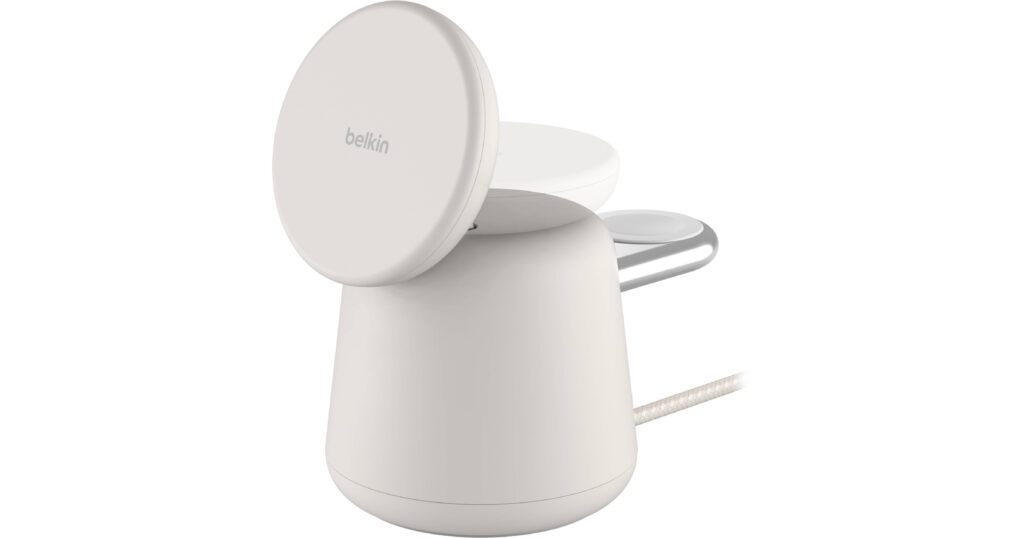
- Specs: Official MagSafe + Qi2 support · 15 W phone dock + 5 W earbuds base · Aluminum finish
- Why it matters: Belkin’s clean geometry and durability still make it the standard for premium home or office charging. It’s minimalist design meeting technical precision — Apple design philosophy extended to everyone.
The Meaning of MagSafe in 2026
MagSafe started as Apple’s convenience feature. Now it’s a shared language of alignment across the entire industry — a foundation for a frictionless future. Qi2-certified chargers don’t just compete; they cooperate. They signal a rare moment of unity in tech — where design harmony benefits everyone, not just one ecosystem And perhaps that’s what real innovation looks like in 2026: not more gadgets, but better collaboration between them.
The Rise of Universal Magnetic Ecosystems
The next phase of charging isn’t about cables or compatibility charts — it’s about coherence.
In 2026, your desk, your car, and even your nightstand are no longer isolated charging spots. They’re part of an expanding magnetic ecosystem — a seamless field where devices align, power, and connect with graceful precision.
What began as Apple’s proprietary vision has evolved into a design language shared across the tech world. The magnet is no longer a feature; it’s an interface.
From Closed System to Open Standard
For years, MagSafe lived in its own orbit. It was elegant but exclusive — a beautiful lock that only fit Apple’s key.
Then came Qi2, and with it, an invitation.
Now, accessory brands no longer build “for iPhone” or “for Android.” They build for both — because Qi2’s magnetic power profile ensures that alignment and wattage are consistent across platforms. It’s not just about wireless energy; it’s about design unity.
A Samsung Galaxy can now snap onto the same stand as an iPhone 15 Pro. A Pixel 9 can charge next to AirPods Pro 2.
It’s a quiet revolution — a single design principle creating harmony in a fragmented world.
Chargers That Define the Universal Era
1. UGREEN MagFlow 3-in-1 Qi2 Dock
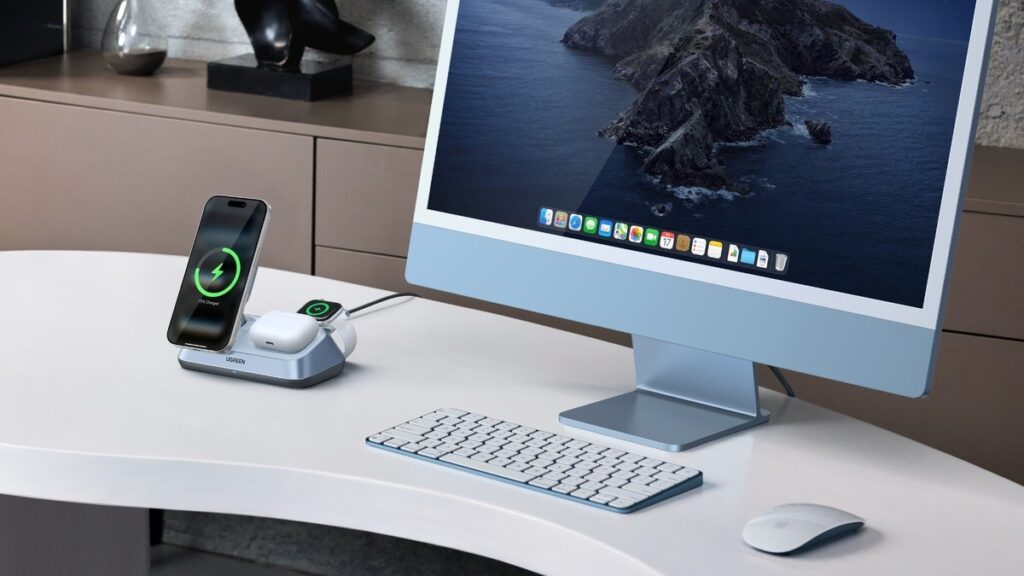
- Specs: Qi2-certified 15 W pad · Apple Watch + Earbuds base · Foldable hinge design
- Why it matters: The MagFlow redefines versatility. Fold it flat for travel or unfold it into a mini charging station — equally compatible with iPhone, Galaxy, and Pixel.
- Real-world sentiment: Reviewers love how “it finally ends the one-brand accessory trap.”
2. Nomad Base One Max (Qi2 Edition)
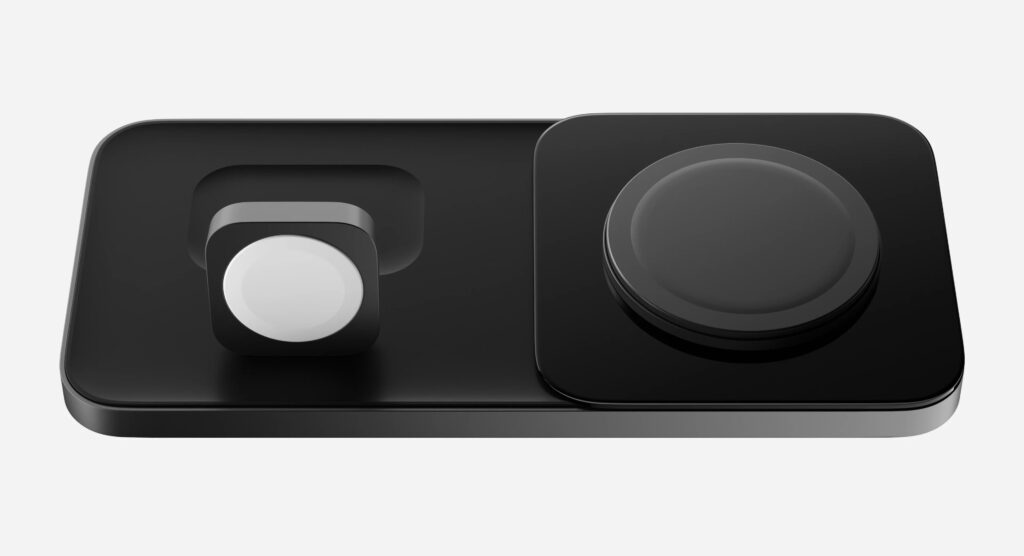
- Specs: CNC-machined aluminum body · 15 W Qi2 magnetic pad · Weighted design for single-hand pickup
- Why it matters: Proof that premium design and open technology can coexist. Nomad’s craftsmanship meets universal Qi2 certification — beauty that works for all devices, not just one ecosystem.
- User review: “It’s the kind of accessory that earns its space — solid, timeless, and smarter than it looks.”
3. Mophie Snap+ Wireless Vent Mount (Qi2 Ready)
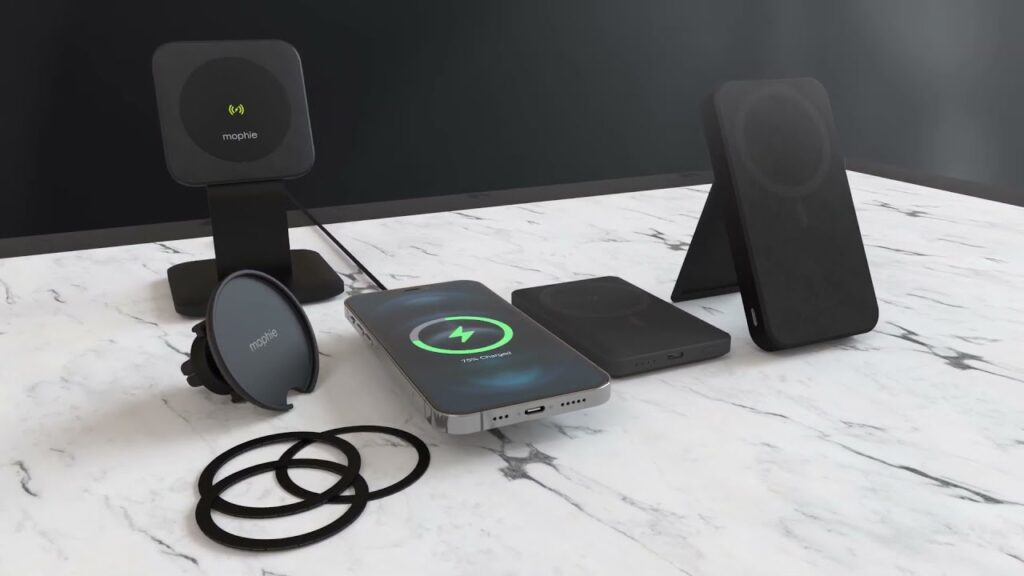
- Specs: 15 W Qi2 fast charge · Adjustable magnetic grip · Air-vent + dash mount kit
- Why it matters: Brings Qi2’s seamless magnetism into motion. One click in the car, and your phone locks, charges, and navigates — no cables, no fumbling.
- Real-world benefit: A driver’s quiet win — fewer distractions, more focus.
4. ESR HaloLock Geo Series (Qi2 Car Mount)
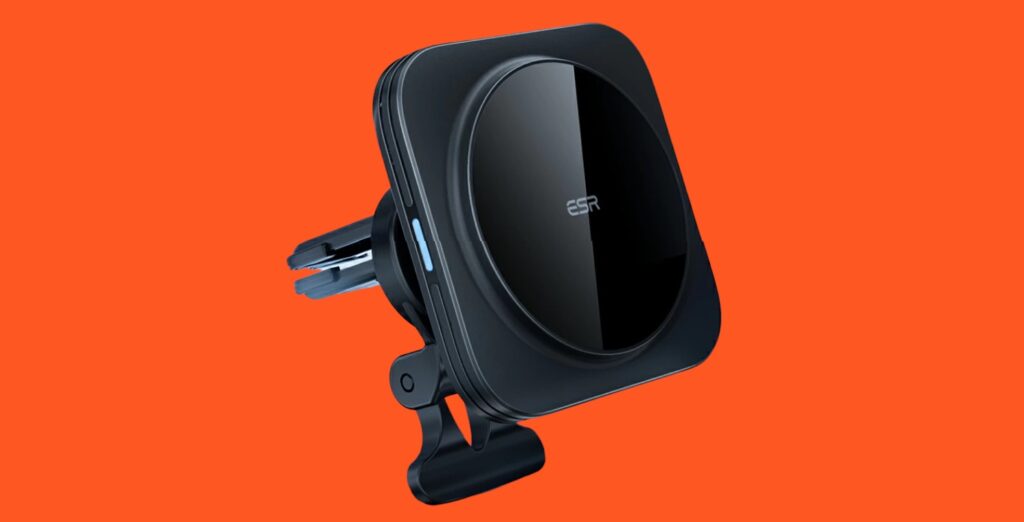
- Specs: Qi2-certified 15 W · Built-in GPS anti-drop chip · Secure vent clip design
- Why it matters: Combines wireless charging with smart safety. If your mount disconnects, you get an instant alert through the ESR app.
- User feedback: “It’s a MagSafe mount that actually thinks.”
The New Magnetic Architecture
We’re witnessing the rise of ecosystem design — furniture, cars, and accessories now built with magnetism at their core. IKEA’s latest Upplyst Charging Desk and Tesla’s Qi2 dashboard pad both use the same principle: surfaces that recognize and power your devices as naturally as setting them down.
Charging is no longer a product. It’s an environmental experience — invisible, integrated, and beautifully predictable.
The magnet, once a convenience, is now a connector.
It unites brands, spaces, and daily routines — proof that real progress isn’t always about power; sometimes, it’s about alignment.
True Wireless Power: Charging Through the Air
The magnetic revolution was only the beginning.
After the magnet comes the invisible — a future where power travels through air the same way Wi-Fi carries data.
For more than a decade, engineers have chased the dream of true wireless charging: energy that moves across space without contact, cables, or even alignment. In 2026, that vision is finally materializing. The prototypes are real, the first consumer pilots are live, and the age of ambient energy is closer than ever.
The Science of Distance Power
At the heart of this breakthrough is resonant RF and infrared transmission.
Instead of a coil-to-coil handshake, devices receive energy from a transmitter that turns power into a safe, directed beam — like an invisible spotlight for your gadgets.
Modern systems use sensors and narrow-band signals to ensure energy reaches the right receiver at the right intensity, adjusting dynamically for movement, obstacles, and distance.
What was once a sci-fi concept now lives quietly in airports, retail stores, and smart homes under pilot programs led by a handful of ambitious innovators.
The Companies Turning Air Into Power
1. Wi-Charge AirCord Pro
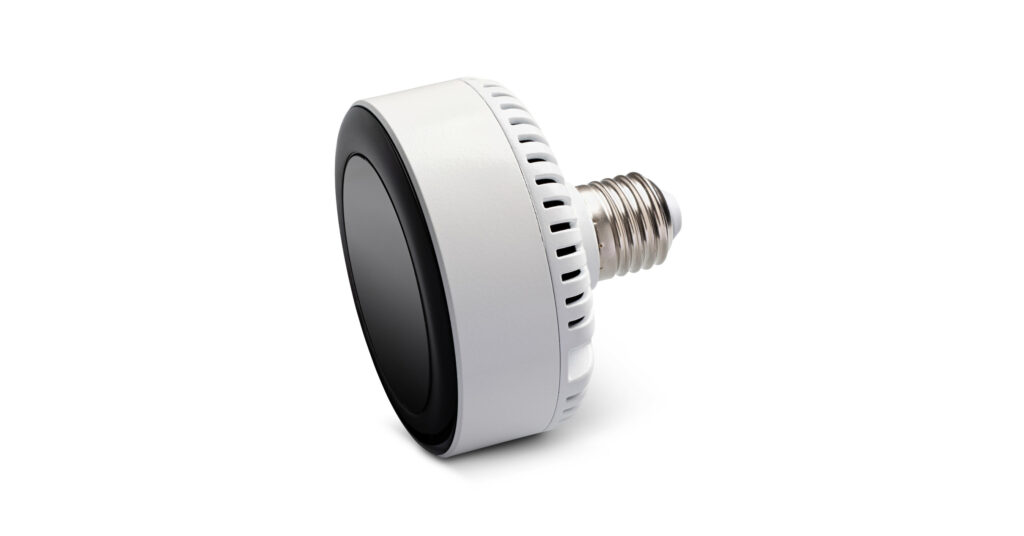
- Specs: Infrared beam transmission · Range 10 m · Up to 5 W per device · Multi-receiver support
- Why it matters: Wi-Charge’s ceiling-mounted modules are already lighting and powering smart locks and sensors in hotels and retail spaces.
- Real-world utility: Reviewers describe it as “wireless energy Wi-Fi.” Walk into the room, and devices begin charging without a thought.
2. Ossia Cota Forever Power System
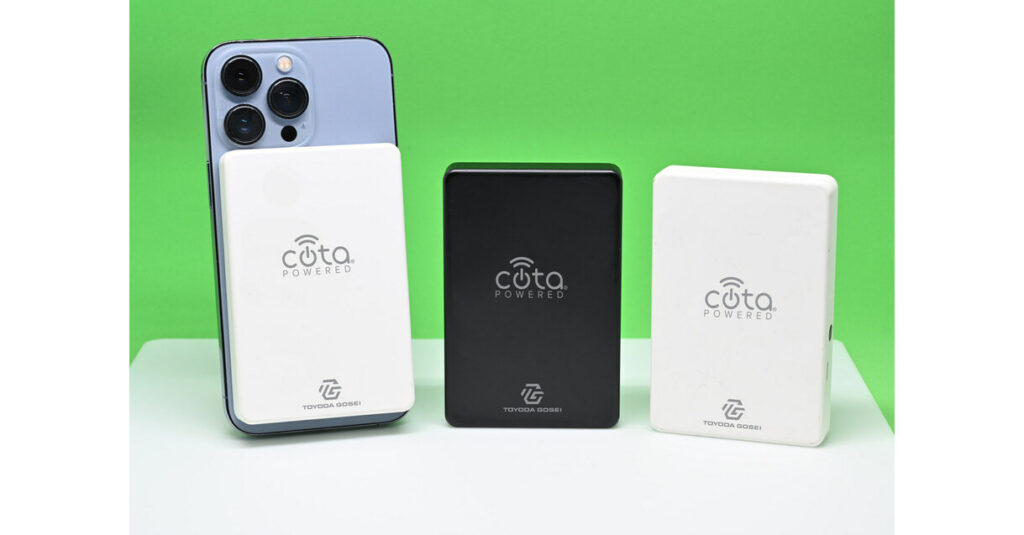
- Specs:4 GHz RF field · Up to 3 m radius · Smart energy mapping · Multi-device compatibility
- Why it matters: Ossia’s mesh transmitters form an overlapping network of low-power energy zones. Imagine your home as one continuous charging field.
- Use case: Retail sensors, wearables, and small IoT devices stay perpetually powered — no ports, no swaps, no downtime.
3. Energous PowerBridge Mesh
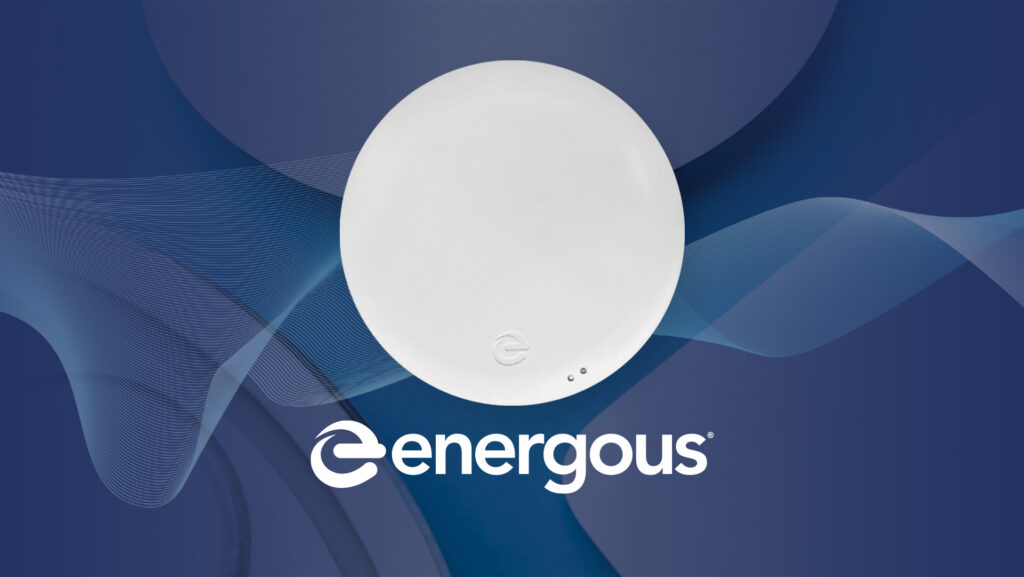
- Specs: RF smart-beam tech · Dynamic power routing · Certified for FCC Part 18 safety
- Why it matters: Energous leads the enterprise side — medical and industrial IoT — but its mesh architecture hints at how homes will work next.
- Real-world impact: Continuous trickle power for smart thermostats and trackers, reducing battery waste and maintenance.
4. Xiaomi Mi Air Charge 2026 Prototype
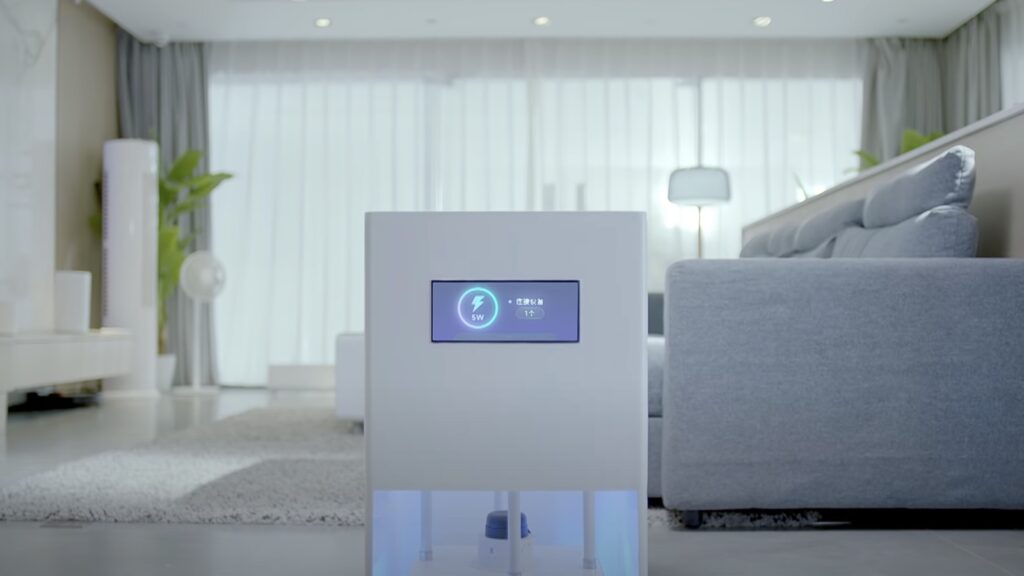
- Specs: 5 W RF directional charging · Range 5–6 m · Multi-device alignment via 2000 antenna array
- Why it matters: The first consumer-facing demo capable of charging a phone and earbuds simultaneously across a living room.
- Public reaction: “It feels like stepping into a sci-fi movie,” one early tester said, “but nothing’s plugged in.”
Why It Matters
True wireless power isn’t just convenience; it’s architecture.
It reshapes how we design homes, offices, and devices. Charging ports may vanish, cables may become relics, and “battery anxiety” — the silent stress of modern life — could finally end.
The dream is simple yet radical: your devices stay alive as long as you do.
In the years ahead, expect to see air-charging zones embedded in lamps, walls, and even cars. The question won’t be “Where’s my charger?” but rather “Where isn’t one?”
Because when energy becomes ambient, power stops being a task — it becomes an atmosphere.
Battery Intelligence & AI Optimization
Charging used to be a one-way exchange — you gave your device power, and that was the end of the story.
But in 2026, your device now gives something back: understanding.
Artificial intelligence has quietly entered one of the most overlooked corners of modern life — battery management. Every time you plug in, dock, or set your phone on a pad, invisible algorithms are learning: your habits, your sleep cycles, your daily rhythm. The result is a system that not only fills your battery faster but protects it smarter.
The Age of Predictive Charging
Instead of chasing raw speed, the smartest brands are teaching devices when not to charge.
AI-driven charging learns that you plug in overnight, or that you top up mid-afternoon, and adjusts voltage flow to preserve lithium health.
It stops pushing current once you reach 80%, resuming gently before you wake.
This is how energy becomes intelligent — not by racing, but by knowing.
The Pioneers of Battery Intelligence
1. Apple Optimized Battery Charging (A17 Bionic + MagSafe Integration)
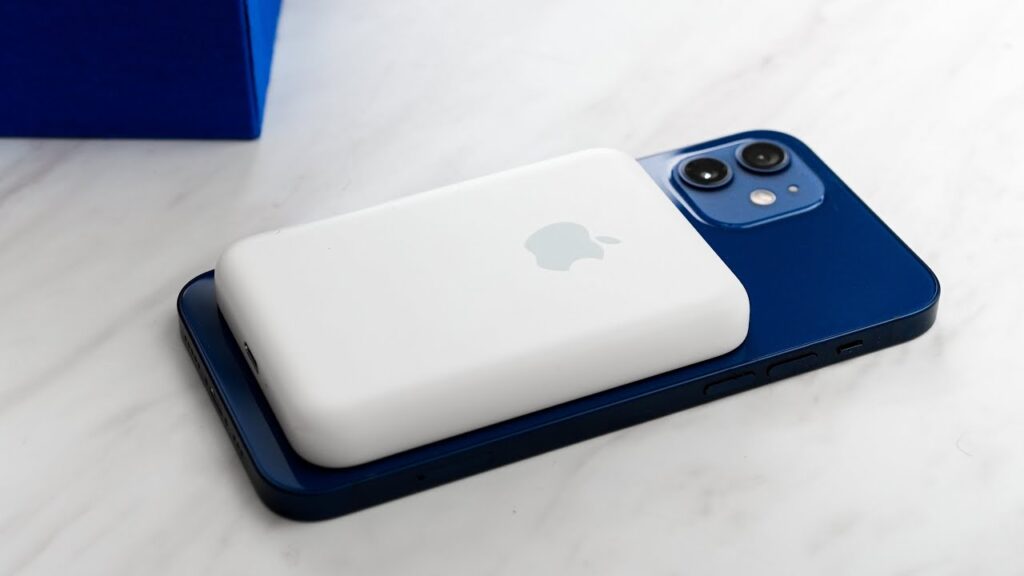
- How it works: Uses on-device machine learning and location data to time full charges around routine usage.
- New in 2026: Deeper MagSafe integration with Qi2 chargers, allowing accessories to communicate charging goals directly with iOS.
- User effect: Fewer heat cycles, better battery lifespan — phones that feel younger for longer.
2. Samsung Galaxy AI Charging Mode (One UI 7.1)
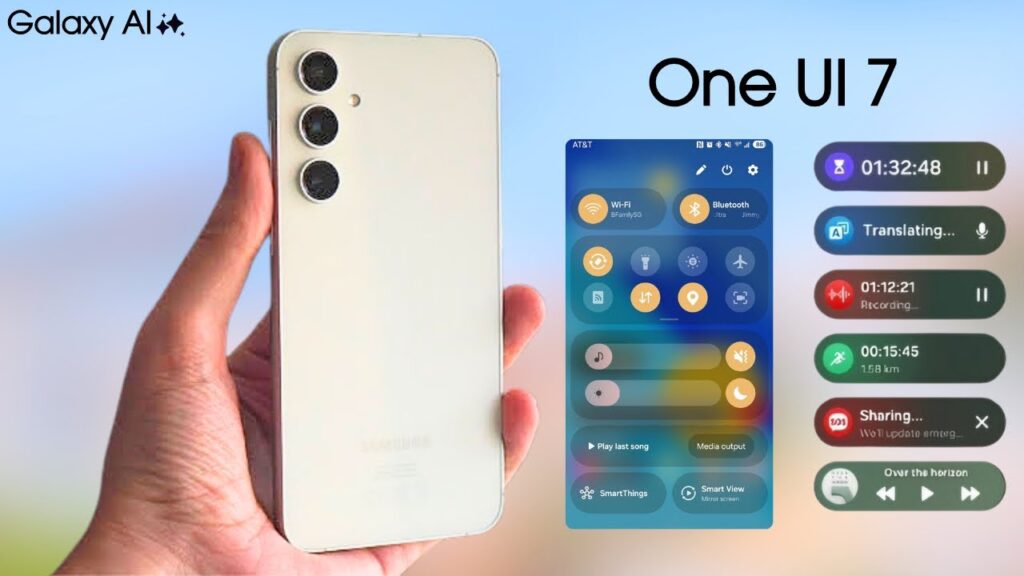
- How it works: Learns sleep and work schedules through Samsung Health data. Dynamically limits wattage at night and boosts speed when late for a commute.
- Why it matters: Power that understands urgency — a device that charges not just fast, but
3. Google Pixel Adaptive Charging

- How it works: Cross-references calendar events, alarms, and usage patterns. If your morning starts early, the Pixel finishes charging sooner; if not, it waits.
- Why it matters: A personal relationship between time and energy. Every charge session is different — tuned to how you actually live
4. OnePlus Smart Battery Health Engine
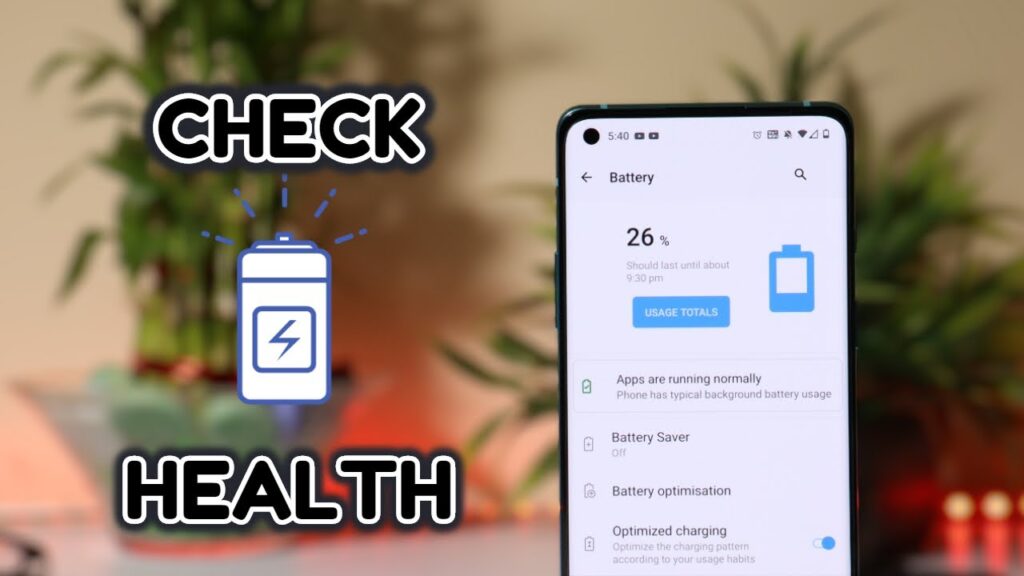
- How it works: Predictive AI re-routes power through microchannels to balance cell stress — a trick borrowed from electric vehicles.
- Why it matters: Ensures over 1,600 full cycles without degradation. It’s the smartphone equivalent of regenerative driving.
The Human Side of AI Power
Battery intelligence doesn’t exist to impress engineers — it exists to free users from micromanagement.
We no longer need to remember when to unplug, or worry if we’re “charging too much.” The device does that for us, invisibly, empathetically.
In 2026, charging feels less like a task and more like trust.
Power flows in harmony with you — not against you.
The next evolution of battery tech isn’t in chemistry; it’s in character. Devices that understand when to give, when to pause, and when to simply let you live.
Design Meets Function: The New Aesthetic of Power
Power used to look like clutter.
Cables snaked across desks, adapters sprawled under tables, and chargers glowed like tiny distractions in every corner of the room. But in 2026, design has reclaimed the narrative. Charging is no longer a separate object; it’s a seamless gesture woven into the rhythm of the spaces we live in.
The future of mobile energy isn’t industrial — it’s invisible.
The Disappearing Charger
Walk into a modern living room today and you might not even notice the charging points — but they’re there. Embedded in tables, tucked under lamp bases, built into walls and car dashboards.
It’s a quiet revolution led by brands that understand something timeless: technology should enhance a room, not dominate it.
Charging has become an ambient feature of design — an invisible layer of utility beneath clean lines and warm materials.
Objects That Embody Power with Grace
1. IKEA x Anker Upplyst Wireless Charging Desk

- Specs: Built-in Qi2 pad · USB-C port · Recyclable aluminum housing
- Why it matters: Turns the desk itself into a charging field. You simply rest your phone down — no pad, no clutter.
- Design note: Minimalist Scandinavian surface design with subtle LED cue that fades when charging completes.
2. Native Union Drop XL Qi2 Edition

- Specs: Qi2-certified pad · Soft fabric top · Dual-device support · Aluminum base
- Why it matters: A masterclass in restraint. Every edge, every texture feels intentional — power disguised as calm decor.
- User review: “It looks like it belongs in a design museum, not an office.”
3. Courant Catch:3 Classics (Qi2 Version)
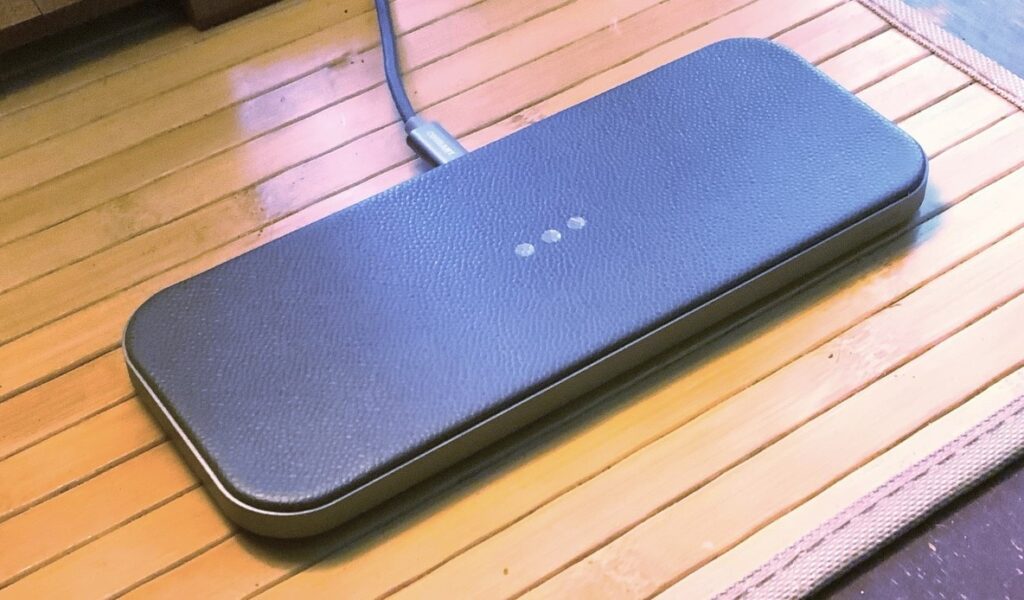
- Specs: Leather valet tray with integrated wireless charger · Fast charge up to 15 W · USB-C output
- Why it matters: Where luxury meets everyday practicality — your keys, watch, and phone all share one sculpted space.
- Design insight: A small ritual of order that feels personal and elegant.
4. Nomad Base One Max (2026 Finish Line Edition)
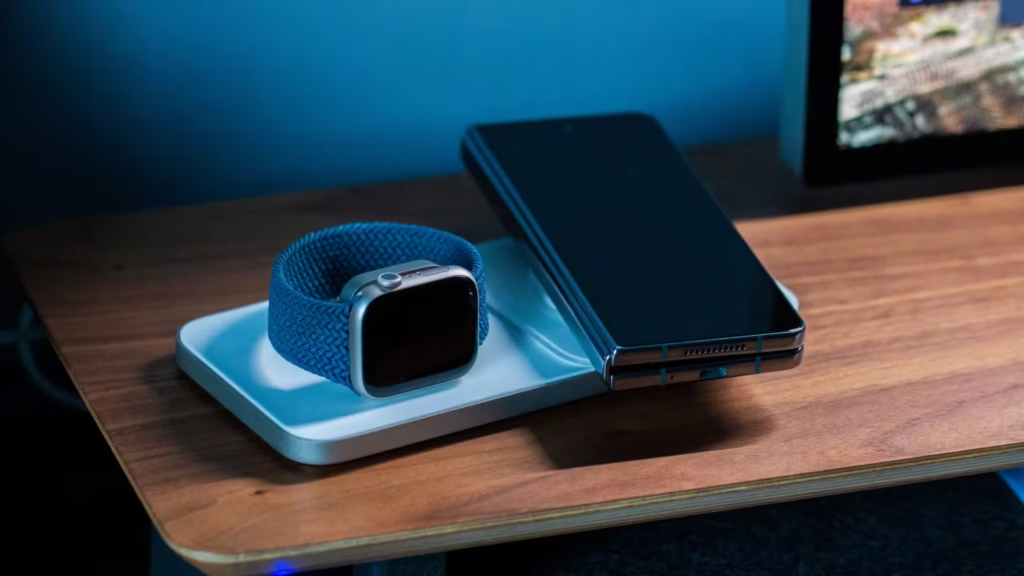
- Specs: CNC aluminum body · Glass top plate · Qi2 certified · 15 W magnetic charging
- Why it matters: Demonstrates how functional precision and visual minimalism can coexist.
- Aesthetic tone: Cool, weighted, balanced — a presence rather than a gadget.
5. Belkin BoostCharge Convertible Stand (Qi2 Pro)
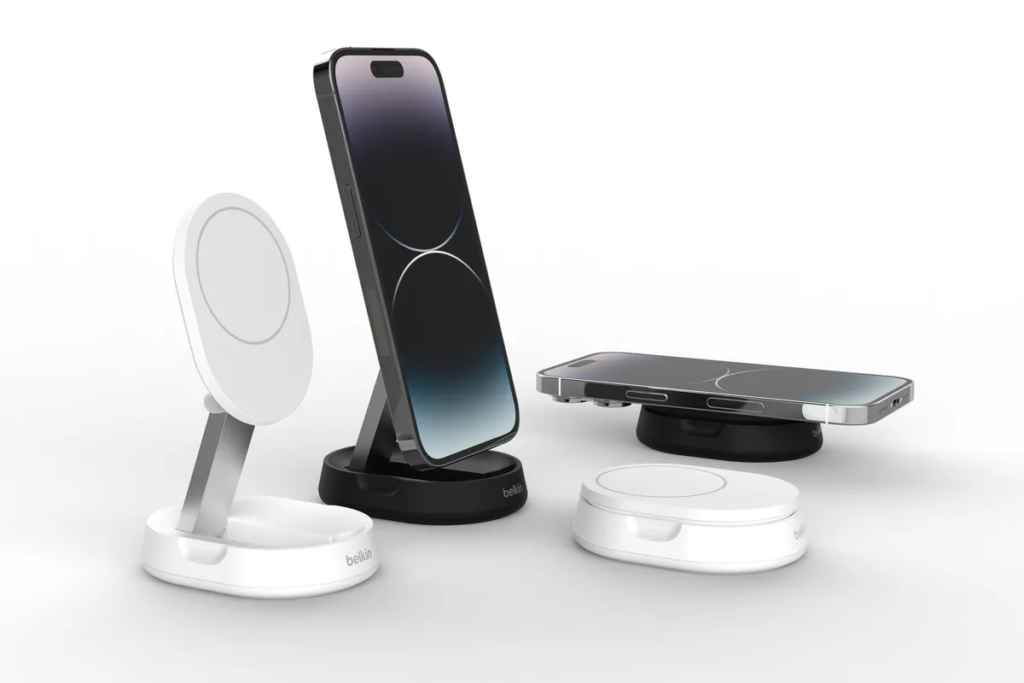
- Specs: Convertible from flat pad to upright dock · Weighted stainless base · Ambient LED edge
- Why it matters: A practical piece of art that adapts to your setup — horizontal for nightstand, vertical for video calls.
The Philosophy of Functional Beauty
What these objects share isn’t wattage or brand; it’s intent.
They’re designed not to draw attention, but to quietly upgrade your relationship with energy. The clutter is gone, but the connection remains — effortless, elegant, silent.
In 2026, power itself has become aesthetic. It hides in textures, glows gently in corners, and responds softly when needed. The best chargers today don’t show off—they blend in, reminding us that the future of technology is not louder, but quieter.
Because true sophistication isn’t in the things you see; it’s in the things that simply work.
Sustainability & Energy Efficiency: Power That Respects the Planet
For decades, “fast charging” was the ultimate bragging right.
But as our devices grew quicker, our planet grew tired. The race for watts came with hidden costs — wasted heat, short battery lives, and mountains of discarded plastic bricks.
In 2026, the question has shifted from “How fast can it charge?” to “How cleanly can it charge?”
The best charging technology no longer measures success in minutes saved, but in energy preserved, waste reduced, and design renewed.
The Efficiency Evolution
The leap began with GaN ( Gallium Nitride ) — the semiconductor that changed everything.
GaN chargers replaced bulky silicon, allowing higher power in smaller, cooler packages. Less heat means less energy loss — and longer component life.
By 2026, third-generation GaN+ chips from Anker, UGREEN, and Belkin deliver up to 240 W through ports that stay cool enough to touch. It’s silent progress — the kind that doesn’t announce itself, just performs better.
Eco-Smart Chargers Leading the Shift
1. Anker Nano GaN Prime 100 W (2026 Edition)
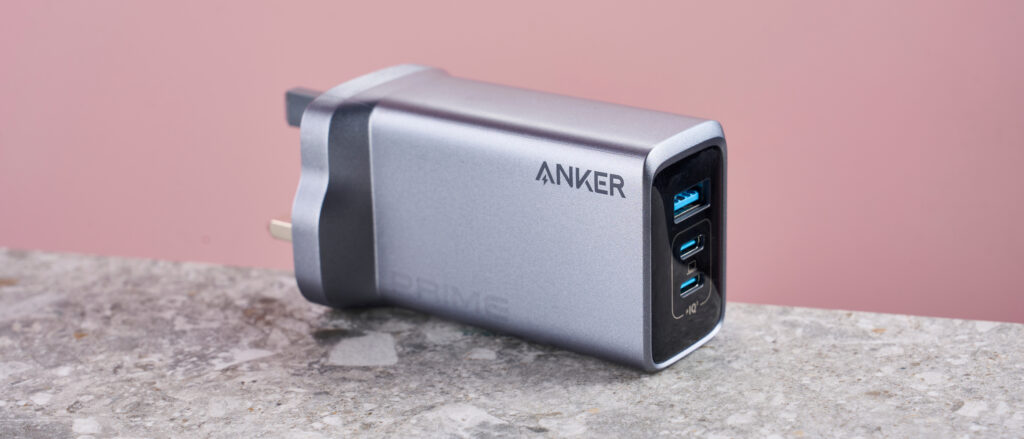
- Specs: 47 % smaller than older bricks · Active Power Management 2.0 · Recycled ABS housing
- Why it matters: Dynamically distributes power across multiple devices to prevent waste. A single adapter replaces four.
- Sustainability note: Each unit saves roughly 30 kWh annually compared to legacy chargers — enough to power an LED desk lamp for a month.
2. UGREEN Revo Hybrid Solar Power Bank
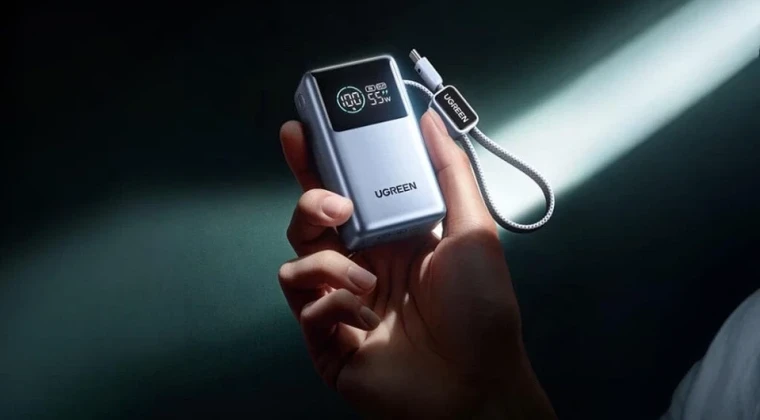
- Specs: 20 000 mAh LiFePO₄ cells · 45 W USB-C PD · Integrated foldable solar panel
- Why it matters: Perfect for hot, sunny regions — recharges from sunlight while you work outdoors.
- User insight: Travellers in Arizona & Dubai call it “energy independence in a backpack.”
3. Belkin BoostCharge Eco Pro Series
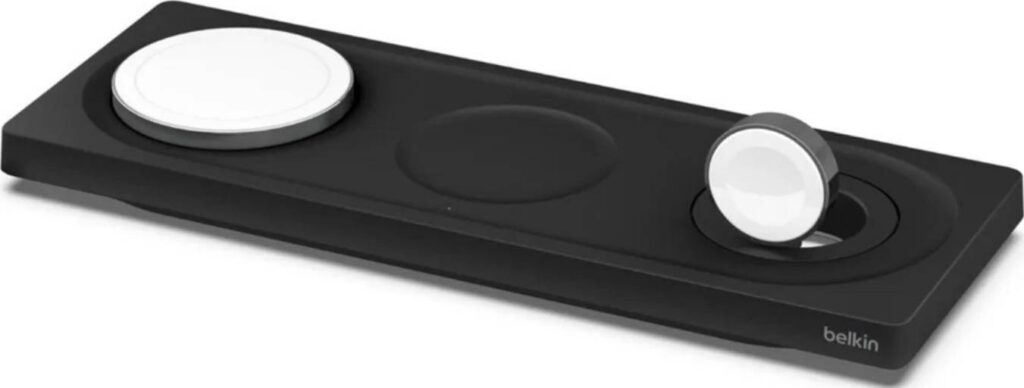
- Specs: 35 % post-consumer recycled plastic · Certified carbon-neutral packaging · GaN II chipset
- Why it matters: Proof that sustainability can feel premium — matte recycled texture, plant-based ink printing, biodegradable packaging.
4. Nimble Champ Pro (2026 Update)
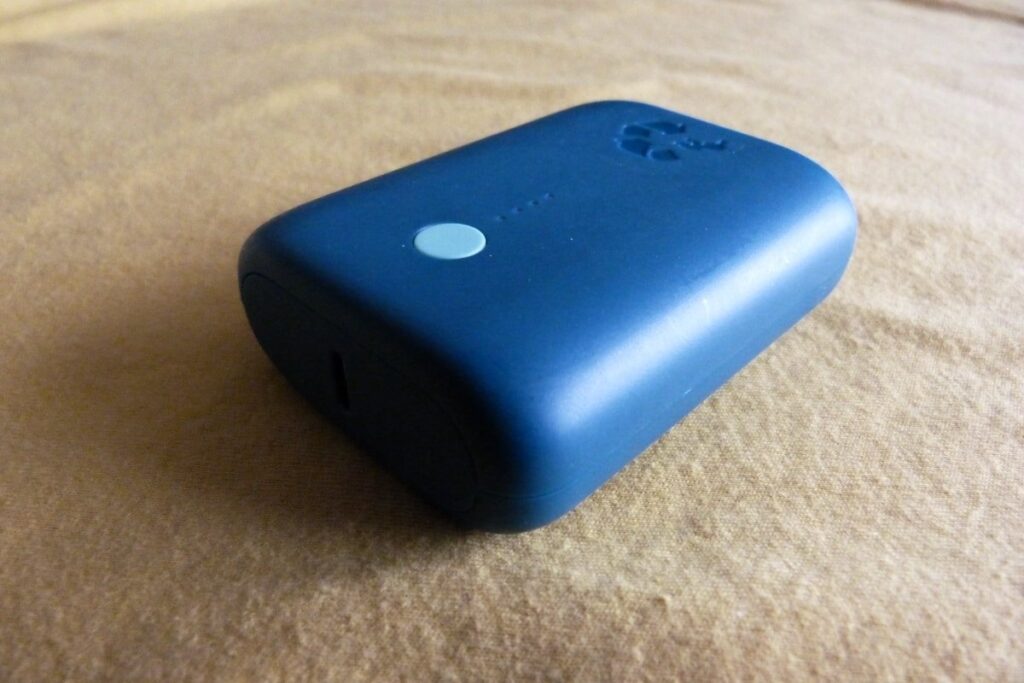
- Specs: PD 60 W + 15 W Qi2 wireless · Made from recycled aluminum & bioplastics · E-waste take-back program
- Why it matters: Every sale funds e-waste recycling for small tech items. Nimble’s motto — “Do Power Better” — feels more like a promise than a slogan.
Designing for Longevity
The most sustainable charger is the one you never have to replace.
Brands are finally engineering for the long game — detachable cables, repair-friendly shells, firmware updates that extend compatibility. Even Apple’s latest MagSafe Qi2 puck includes replaceable cords, while IKEA’s upcoming Upplyst 2.0 desk uses swappable charging modules to outlast trends.
What Comes Next: The Post-Plug Era
Every great technology eventually disappears.
Not because it fails, but because it becomes so effortless we stop noticing it. The plug — that humble piece of metal and plastic that’s connected us to power for over a century — is now approaching its quiet retirement.
In 2026, we stand on the edge of something extraordinary: charging without physical connection.
Not wireless as in “on a pad,” but wireless as in everywhere.
From Surfaces to Spaces
The next decade of power will be defined by integration, not addition.
Charging will no longer happen at a spot — it will happen within it. Picture homes where walls emit soft power fields, or vehicles that charge phones, watches, and earbuds simultaneously without a port or pad in sight.
Furniture companies are already designing energy-enabled materials — desks, coffee tables, and countertops embedded with Qi2 or near-field resonant transmitters.
In Japan and Scandinavia, hotels are piloting “charging floors,” where power silently flows through ceramic surfaces into devices placed anywhere on the table.
Soon, you won’t ask, “Where’s the charger?”
You’ll simply know — because every surface will be one.
Predictive Power Networks
The next evolution isn’t just physical; it’s cognitive.
AI-powered charging ecosystems will create personal energy maps, learning where you spend time and ensuring your devices remain topped up automatically.
Imagine walking into your office, and your phone begins charging at the perfect rate to reach 100 % just as your next meeting ends.
No plug, no app, no reminder — just quiet awareness.
Google’s Ambient Power Framework and Apple’s Energy Context API, both in pilot testing, are early signs of this future — where power adapts to people, not the other way around.
Goodbye to Ports (and Problems)
With energy flowing wirelessly and data moving entirely over Wi-Fi 7 and satellite links, the traditional charging port is becoming obsolete.
Manufacturers are already preparing for sealed, port-free phones — more water-resistant, dust-proof, and durable.
Apple’s rumored iPhone 17 Portless Edition and Samsung’s Galaxy Zero Concept show what’s coming: minimalist slabs of glass and composite that charge through touch, proximity, or simply presence.
Fewer ports mean fewer points of failure — and fewer cables in landfills.
It’s not just sleeker; it’s sustainable minimalism made practical.
Beyond Energy: Charging as Emotion
The disappearance of the plug is more than a technical milestone; it’s psychological.
It means freedom — from clutter, from waiting, from dependence on specific objects. Power becomes part of the environment, like light or air — something you trust to always be there.
The irony is that the more advanced our charging becomes, the less we’ll think about it.
And maybe that’s the final sign of true innovation: not when it draws attention, but when it dissolves into daily life.
We’re entering an era where our relationship with energy shifts from control to harmony.
No cables. No ports. No interruptions. Just a world quietly alive with charge.
The plug had a good century — but its time is over.
The future belongs to the power you never see.
Closing Reflection — Power Without Friction
Every technological era tells its story through what it removes.
The 1990s erased noise with noise-cancelling.
The 2000s erased wires with Wi-Fi.
And the 2020s — quietly, inevitably — are erasing friction.
Charging, once the most physical of rituals, has become something close to spiritual.
It’s no longer about plugging in; it’s about belonging to an ecosystem that understands when you need energy and provides it without question.
MagSafe was the spark — a magnet that brought simplicity back to complexity. Qi2 made it democratic. AI made it thoughtful. And now, as true wireless power and ambient energy begin to reshape our spaces, the idea of running out of charge starts to sound as outdated as dial-up internet.
Power, in 2026, has stopped being an act.
It’s become a presence.
Every surface, every device, every gesture — all part of one quiet choreography between design and need. The phone that aligns itself. The mug that warms itself. The charger that learns when to pause. The environment that hums gently with readiness.
The beauty of this evolution is not speed or spectacle — it’s grace.
The grace of a world where technology doesn’t interrupt, it anticipates.
Where every connection feels invisible yet deeply human.
We used to look for outlets. Now, we live in them.
The age of cords is ending, but the story of connection is only beginning —
and it starts with a charge you’ll never have to think about again.