

In 2025, sustainability isn’t just a buzzword like it was in the preceding years; it’s a daily reality and should we say, and thankfully so. With food prices rising, energy costs climbing, climate catastrophes peaking, and waste awareness at an all-time high, consumers everywhere are asking the same question: how can I live greener without spending more? The answer often starts in the most giving space of all — the kitchen.
The kitchen is where most household waste happens. It’s where food gets forgotten in the fridge, leftovers spoil, and single-use packaging piles up. But it’s also the room with the greatest potential for positive change, to many’s surprise. From reusable wraps to smart storage systems and countertop composters, a new generation of sustainable kitchen tools is helping families cut waste, save money, and cook with confidence.
Now, according to the UN Environment Programme, nearly one-third of all food produced globally is wasted! Yikes! And most of it in households. Here we thought we were doing everything right, but we’ve been wasting energy, resources, and money. In response, manufacturers and designers are rethinking how we store, cook, and clean. The result is a wave of tools built not just for convenience, but for conscious consumption.
Unlike the liberally labeled “eco” products of a decade ago, today’s sustainable kitchen tools are both stylish and high-performing. Glass storage containers rival plastic in durability; induction-compatible eco cookware reduces energy use; and composters like the Lomi 2.0 or Mill Kitchen Bin turn scraps into nutrient-rich soil overnight. Sustainability has become smarter, sleeker, and more rewarding than ever before.
But this shift isn’t just a technological one; it’s an emotional turn that has been years in the making. People are realizing that using less feels better. Reducing waste isn’t a sacrifice; it’s a form of self-care. A cleaner, more organized kitchen saves time and money while easing the guilt of throwing food away. As more consumers embrace minimalism and mindful living, the kitchen has become the testing ground for a new way of thinking about resources — one where every tool serves a purpose and nothing goes to waste.
Brands like OXO, Joseph Joseph, Tefal, and Zwilling are leading the charge, combining sustainable materials with intelligent design. Their products don’t just look good — they extend food life, reduce packaging reliance, and replace disposables that harm the planet.
In this guide, we’ll explore the best sustainable kitchen tools of 2025 — from smart storage systems that track freshness to composting devices that turn scraps into soil. You’ll see how small upgrades can make a big difference. We hope it’ll help you waste less, save more, and build a kitchen that’s as kind to your wallet as it is to the world. Because living sustainably isn’t about perfection. It’s about practical changes that make every meal, every container, and every choice count.
The Food Waste Crisis: How Smart Design Fixes It
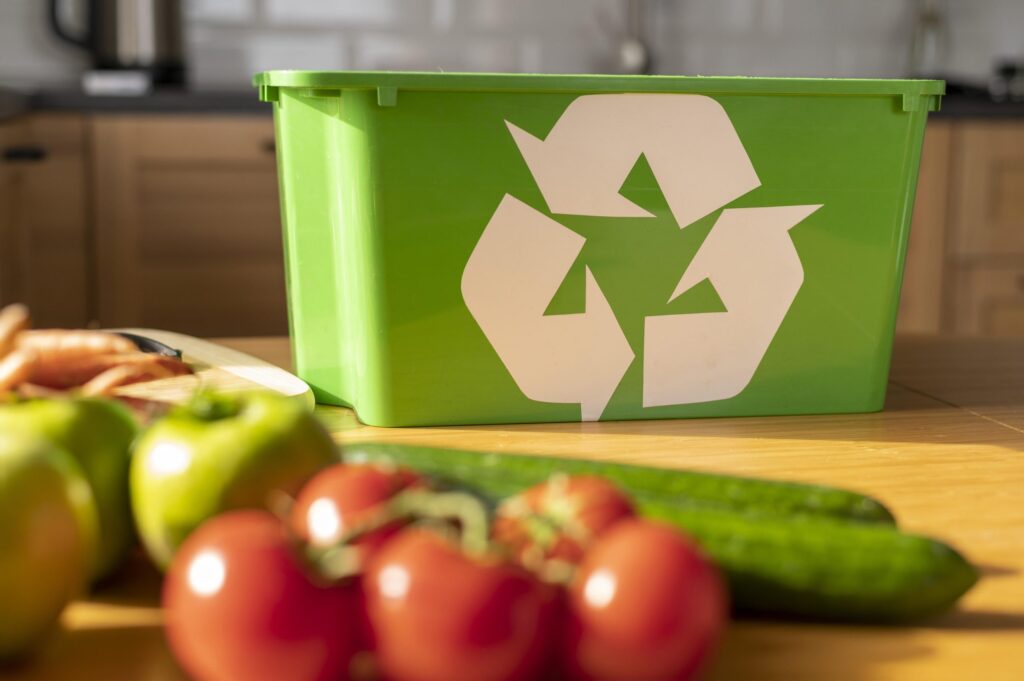
Every kitchen tells a story and, too often, it’s a story of waste. Wilted greens pushed to the back of the fridge, stale bread tossed after two days, forgotten leftovers sealed in mystery containers.
It’s not just frustrating; it’s expensive and unsustainable.
According to the UN Food Waste Index 2025, the average household discards nearly 80 kilograms of edible food each year. That’s hundreds of dollars — even thousands for families — literally going in the bin. On a global scale, food waste now accounts for 8–10% of total greenhouse gas emissions. That’s more than the aviation industry and its high-flying jets!
But here’s the hopeful part: most of that waste can be prevented. The difference lies not in radical lifestyle change, but in better tools and smarter design. Products that help food last longer, keep ingredients visible, and make it easy to use what you already have are the need of the Anthropocene century.
1. The Problem Beneath the Lid
Food waste doesn’t happen because people don’t care — it happens because of how our kitchens are built.
- Poor visibility: Opaque containers hide leftovers until it’s too late.
- Over-shopping: Without tracking what’s on hand, we buy duplicates.
- Improper storage: Produce loses moisture or absorbs excess humidity.
- Lack of planning: Busy schedules make it hard to organize meals or portions.
Traditional kitchen tools weren’t designed with these realities in mind. But the next generation is.
2. Smarter Design, Longer Life
Manufacturers in 2025 are addressing these everyday issues head-on with sustainability-led innovation.
- Glass storage containers with vacuum seals keep oxygen out, preserving freshness up to five times longer.
- Modular fridge organizers keep produce visible, reducing the “out of sight, out of mind” problem.
- Reusable wraps and collapsible containers replace disposable plastics and save drawer space.
- Smart composters convert unavoidable scraps into soil instead of landfill waste.
Each of these small improvements adds up to a massive impact over time. Studies by the World Resources Institute show that for every $1 invested in reducing household food waste, families save $7 or more in groceries annually.
Consumer takeaway: The key to sustainable cooking isn’t spending more — it’s using smarter tools to make the most of what you already buy.
3. The Rise of “Circular Design” in the Kitchen
Circular design — creating tools that reduce waste and reuse resources — is now shaping how the world’s leading kitchen brands think. So now, companies like Zwilling, Joseph Joseph, and Tefal are developing products made from recycled materials that are also built to last.
For instance, Zwilling’s glass vacuum containers double as serving bowls, and Joseph Joseph’s Nest Glass System replaces multiple disposable items with one compact, modular set.
Meanwhile, waste-conscious innovators like Lomi and Mill are reimagining food disposal. Their countertop composters process scraps in hours, turning waste into usable compost for gardens or community drop-offs — closing the loop from plate to planet.
4. Design That Encourages Mindfulness
Good design isn’t only meant to function — it is meant to change behavior. Transparent materials, modular organization, and intuitive shapes make it easier to see, save, and use what’s in your kitchen. Some tools even gamify sustainability: smart storage systems display freshness indicators or send reminders when produce is nearing its limit.
That sense of gentle accountability — paired with the satisfaction of saving — turns sustainability into something visible and rewarding. Consumers report feeling more in control and less guilty when they can see the tangible results of their effort.
5. Waste Less, Feel Better
Doesn’t sustainability often feel like an abstract idea? In the kitchen, it’s very real and deeply personal. Every item you save extends the value of your work, your groceries, and your time. Smart, sustainable kitchen tools give consumers the ability to reclaim that control — to align good habits with good design.
When sustainability feels easy, it becomes second nature, and that’s where real change begins.
2025’s Best Sustainable Kitchen Tools That Help You Waste Less (and Save More)
Not all sustainability tools are made equal. Some are gimmicks; others genuinely change the way you cook and store food. The following 10 products have earned their place in 2025 kitchens because they save money, reduce waste, and simplify life — without compromising style or performance.
1. FoodSaver EcoSeal Vacuum System
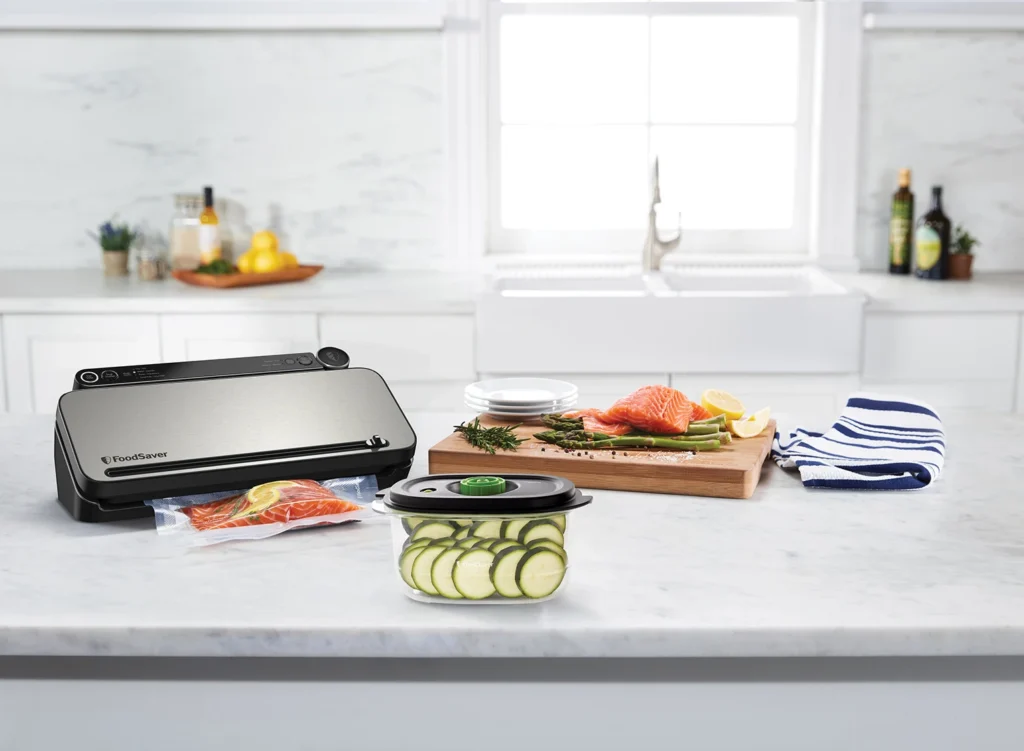
Best for: families and meal preppers
FoodSaver’s new EcoSeal series features reusable, compostable vacuum bags and a smaller, energy-efficient base unit. It removes 95% of air from bags, keeping food fresh up to five times longer.
- Savings: cuts annual food waste by an average of $400–$500 per household.
- Eco edge: BPA-free, recyclable materials; low-energy standby mode.
Tip: Batch-seal meats or leftovers on Sundays — it’s one of the fastest ways to reduce spoilage.
2. Zwilling Fresh & Save Glass Set

Best for: stylish, zero-waste storage
Zwilling’s vacuum-sealed glass containers are durable, dishwasher-safe, and free of plastic discoloration.
- Smart pump: battery-powered vacuum system preserves food flavor and texture for days.
- Sustainability: made from fully recyclable borosilicate glass.
Tip: Label each container by date with the Zwilling app — it sends freshness reminders straight to your phone.
3. Bee’s Wrap Plant-Based Wraps

Best for: replacing single-use plastic and foil
Made from organic cotton, plant oils, and vegan wax, Bee’s Wraps mold easily around bowls or cut fruit.
- Reusable up to 12 months.
- Compostable after use.
Tip: Warm them slightly with your hands to create a natural seal — perfect for sandwiches and cheese storage.
4. Lomi Smart Kitchen Composter 2.0
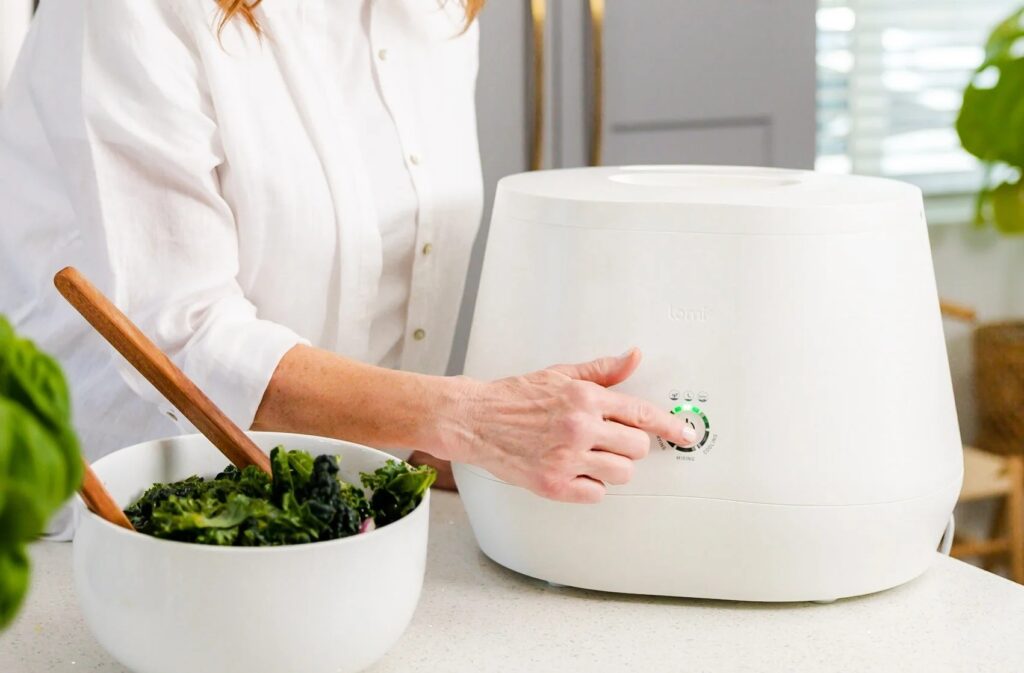
Best for: apartments and urban homes
The Lomi 2.0 converts food scraps into usable soil in under four hours.
- Upgraded carbon filters remove odors entirely.
- Smart App Integration: tracks how much waste you’ve diverted and your CO₂ savings.
Eco fact: Diverting one bin of kitchen waste per week prevents roughly 125 kg of CO₂ annually.
5. OXO GreenSaver Produce Keeper

Best for: fruit and vegetable lovers
OXO’s GreenSaver uses a carbon filter system to absorb ethylene gas — the chemical that causes produce to ripen (and rot) too quickly.
- Keeps produce fresh up to 50% longer.
- Available in stackable, fridge-friendly sizes.
Tip: Store delicate greens with the adjustable vent open to maintain airflow.
6. Smidge Compost Caddy
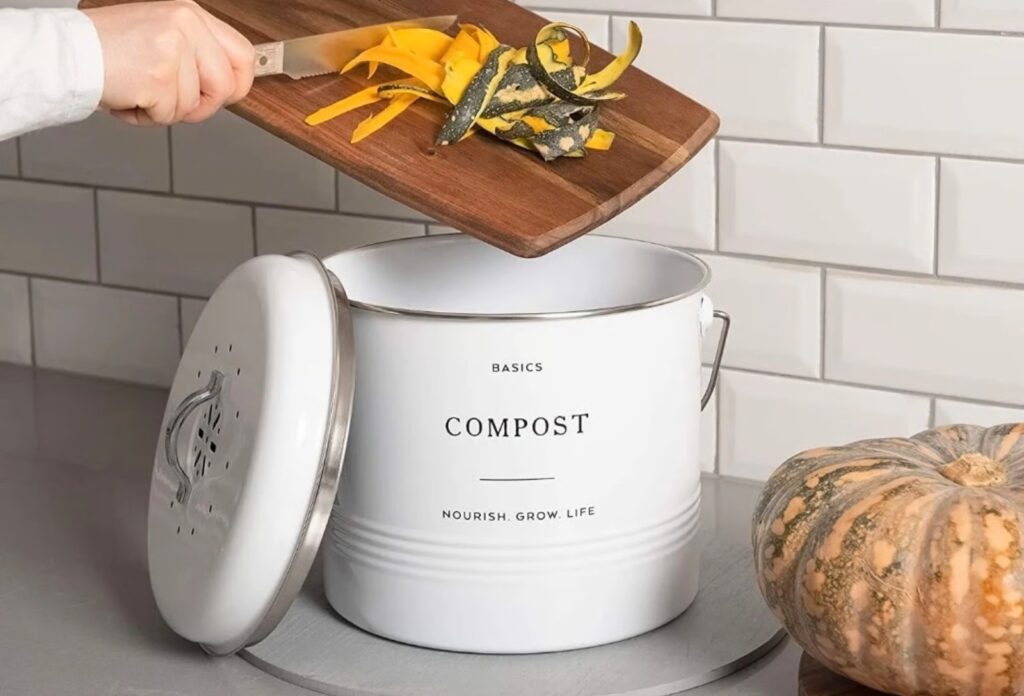
Best for: small households
Crafted from recycled, food-safe materials, Smidge’s caddy is odor-sealed and dishwasher-safe.
- Compact and stylish: perfect for countertops.
- Made from 100% post-consumer plastic.
Tip: Use compostable liners to make clean-up effortless.
7. Stojo Collapsible Bowls

Best for: meal prep and food on the go
Made from LFGB-certified silicone, Stojo bowls collapse flat when empty, saving space and replacing disposable containers.
- Microwave and dishwasher safe.
- Lasts for thousands of folds without degrading.
Eco benefit: replaces hundreds of single-use plastics per year.
8. Joseph Joseph Nest Glass Storage System

Best for: organization enthusiasts
This modular, nesting glass set combines multiple storage sizes in one compact system.
- Airtight bamboo lids, stackable design.
- Made from recycled glass and FSC-certified wood.
Tip: Store dry goods or leftovers — you’ll reduce clutter and packaging waste.
9. Tefal Eco Respect Cookware Range
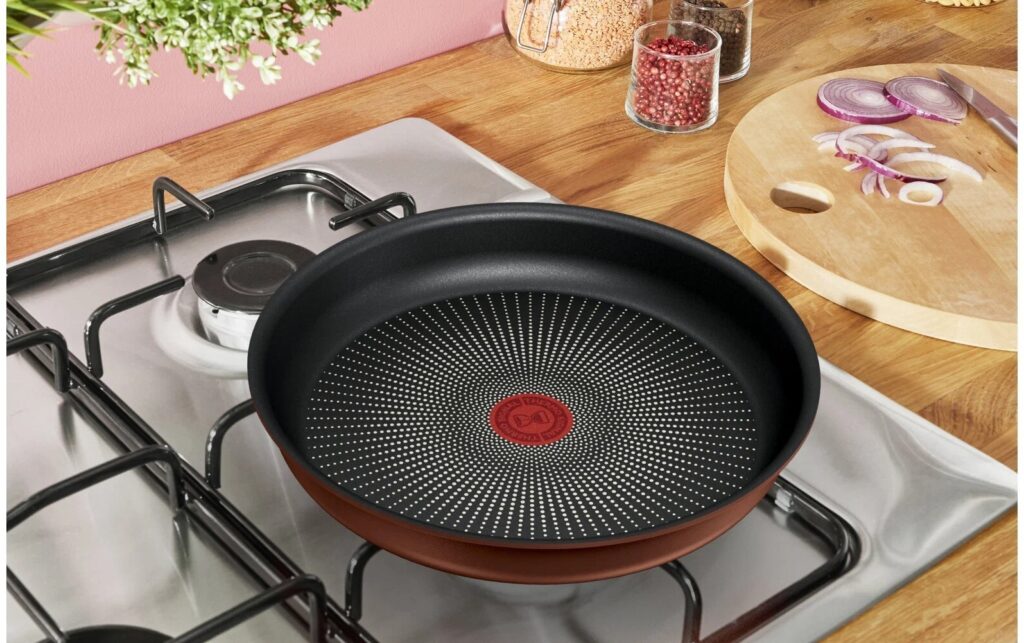
Best for: sustainable cooking without compromise
This cookware is made from 100% recycled aluminum, coated with toxin-free, water-based nonstick material.
- Works on all heat sources, including induction.
- Packaging made from recycled cardboard and plant inks.
Eco note: Uses 90% less CO₂ in manufacturing compared to traditional aluminum pans.
10. Full Circle Eco Tools Cleaning Set
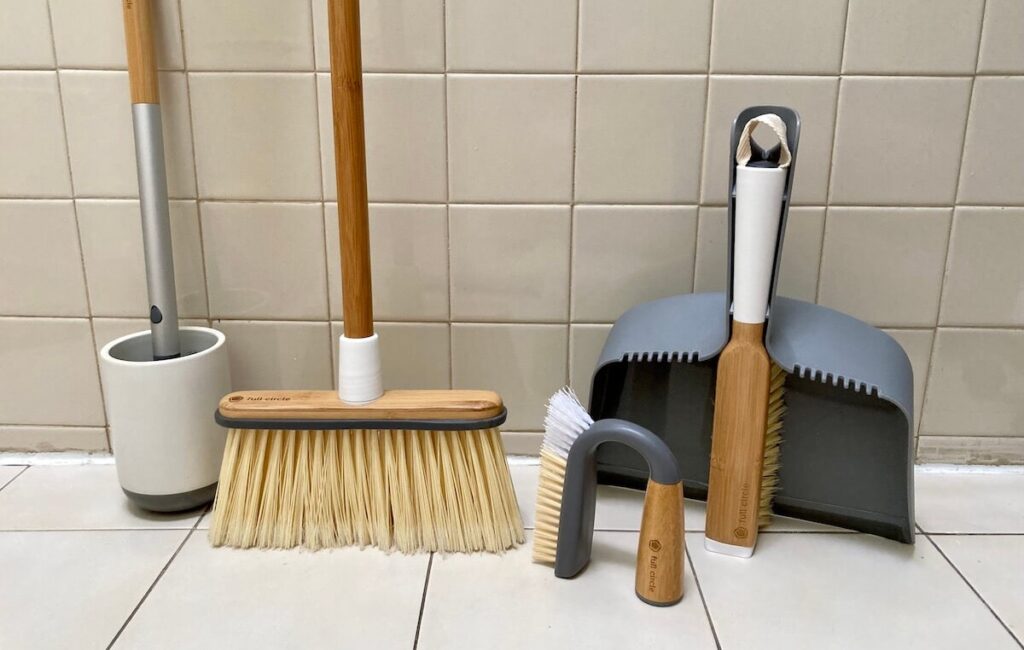
Best for: a plastic-free cleaning routine
Full Circle’s cleaning brushes, sponges, and cloths are crafted from bamboo, cellulose, and recycled steel.
- Compostable sponges, replaceable brush heads.
- Sleek design that lasts years, not months.
Tip: Pair with biodegradable dish soap to create a fully sustainable cleaning zone.
Small Changes, Big Impact
Each of these products offers more than eco-credibility — they offer real, measurable savings. When you waste less food, use longer-lasting tools, and reduce single-use plastics, you protect both your wallet and the planet.
And the best part? Sustainability in 2025 looks and feels beautiful. Clean glass, natural materials, and soft-toned finishes blend seamlessly into modern kitchens, proving that eco-living isn’t about compromise — it’s more about intentional living only done better.
The Smart Side of Sustainability

The future of sustainable living isn’t just reusable — it’s intelligent. In 2025, technology has quietly become one of the most powerful allies in the fight against food waste. Smart sensors, connected apps, and AI-powered appliances are transforming kitchens into efficient, eco-aware ecosystems that help you make better decisions without even trying.
1. From Guesswork to Guidance
One of the biggest reasons people waste food is simply not knowing what they have. We overbuy when we’re scrolling Instagram at midnight, forget expiry dates, and lose track of what’s hiding in the fridge. Today’s connected tools fix that with precision.
- Smart fridges like the Samsung Bespoke AI Refrigerator or LG InstaView ThinQ use internal cameras and barcode scanning to track what you store, automatically logging expiry dates and sending reminders before items spoil.
- Food management apps such as Too Good To Go and NoWaste sync with your grocery lists to suggest recipes based on what’s already in your fridge — helping you use everything you buy.
- Some systems even suggest portion sizes based on your household’s consumption habits, so you don’t overcook or overshop.
Consumer benefit:these tools help reduce household food waste by up to 35%, saving an estimated $500–$800 per year for the average family.
2. The Rise of AI Cooking Assistants
If you thought you had seen everything AI had done, think again. AI isn’t just making cooking easier; it’s making it smarter and more sustainable. Ovens and cooktops with built-in intelligence (like the Samsung Bespoke AI Oven and LG ThinQ AI Range) analyze ingredients and adjust cooking settings automatically for minimal energy use and zero overcooking.
These systems learn over time: if you consistently underuse certain ingredients, they’ll prompt you with recipes that use them up before they expire. This type of digital awareness not only cuts waste but also saves electricity by reducing unnecessary preheating or idle energy draw.
Eco impact: AI-assisted cooking can lower energy usage by 20–30% compared to traditional methods while keeping food perfectly cooked.
3. Smart Composting & Waste Tracking
When scraps are unavoidable, modern composting tech closes the loop and does the dirty work for you. Devices like Lomi 2.0 or Mill’s Smart Kitchen Bin process waste into usable compost overnight, but they also track your waste data via companion apps.
These dashboards show how many kilograms of food you’ve diverted from landfills and your corresponding carbon savings. Over time, you can literally watch your environmental impact shrink, and that feedback is deeply motivating.
Consumer insight: Households that track their compost or waste diversion data are twice as likely to maintain low-waste habits compared to those that don’t monitor progress.
4. Energy Efficiency Meets Data Intelligence
Modern sustainability goes beyond food wastage; it includes how we power our kitchens. Apps like SmartThings Energy or Bosch Home Connect Energy Manager link to smart plugs and meters to measure real-time appliance usage. They highlight your top energy consumers and suggest eco-modes or off-peak times for running devices like ovens and dishwashers.
Some systems even sync with solar panels or smart grids, scheduling power-hungry cycles when the renewable energy supply is highest.
Practical payoff: households using these systems report average annual energy savings of 15–20%, often paying off the cost of the device within a year.
5. Sustainability That Runs Itself
The most powerful change in 2025’s sustainable kitchen isn’t that people are working harder to be green — it’s that technology is doing it for them, like that friend who cares. From AI cookers that use every watt wisely to fridges that remind you to finish leftovers, the modern kitchen has evolved from passive storage to an active sustainability partner.
And unlike the tech of the past, these systems feel effortless — sleek interfaces, gentle notifications, and adaptive learning mean you don’t have to think about being eco-conscious. You just naturally are.
Smart, Sustainable, and Simple
What makes this new generation of sustainability tools so remarkable is how natural it feels. It’s not about forcing behavior — it’s about empowering better habits through convenience. Whether it’s saving you money, cutting down on your waste, or reducing your footprint, smart technology ensures that the eco-friendly choice is always the easiest one.
The Mindful Kitchen Movement: Living Better by Using Less
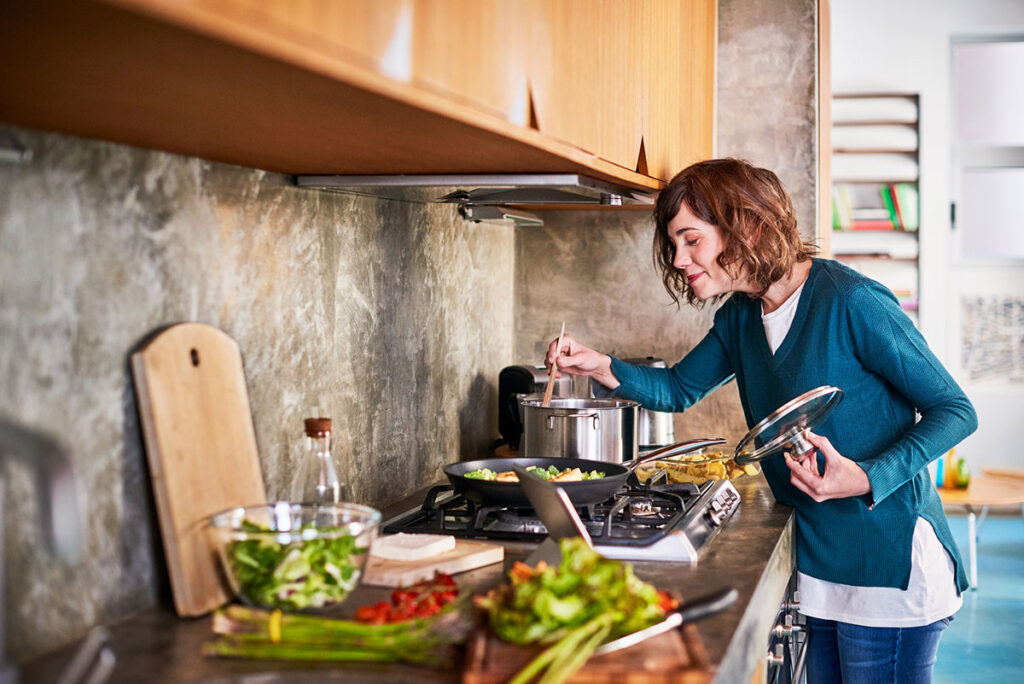
The 2025 kitchen looks and sounds different. It’s quieter, cleaner, and more intentional. Counters aren’t cluttered with gadgets, pantries aren’t overstuffed, and drawers aren’t filled with disposables. This shift isn’t just to welcome a new aesthetic — it’s about welcoming a change of heart. Across the U.S., U.K., and Europe, consumers are embracing what designers call “the mindful kitchen movement.” It’s a new way of living that blends sustainability with simplicity, where every tool has a purpose and every action has meaning.
1. From Convenience to Consciousness
For decades, modern kitchens were built on convenience. You could cook instant meals, put your food in single-use plastics, and just have oversized appliances. But that culture created more waste than ease. The mindful kitchen reverses that mindset: it’s about slowing down, making deliberate choices, and finding satisfaction in using things fully.
Research from the Global Sustainability Index 2025 shows that more than 60% of homeowners now consider environmental impact a top factor in their kitchen purchases, up from just 28% in 2018. The biggest shift? People are buying fewer things but also better ones. Quality has replaced quantity as the new form of luxury.
Consumer insight: Sustainable living isn’t about deprivation — it’s about intentional enjoyment. The less you waste, the more you appreciate what you have.
2. The Rise of Minimalist, Circular Design
Minimalism has evolved from a design trend into a sustainability principle. The modern kitchen favors natural materials, timeless shapes, and reusable systems that eliminate the cycle of “buy, use, discard.” Circular design — where products are made to last, repair, or recycle — now defines everything from cookware to cleaning tools.
Brands like Joseph Joseph and Tefal Eco Respect have embraced this philosophy, creating multi-purpose tools and long-life materials that extend beyond trends. The idea is simple: build once, use for years, and reduce both waste and emotional clutter.
Home designers are following suit. NAHB’s 2025 Home Trends Report found that kitchens featuring sustainable cabinetry, recycled surfaces, and integrated storage now rank among the most desirable upgrades. A mindful space, it turns out, feels better to live in.
3. Mindful Cooking: A Return to Intention
At its core, mindful cooking is about attention to not only the ingredients but also to your time and to the impact that you create. It means planning meals that use every part of an ingredient, reimagining leftovers, and reducing reliance on pre-packaged convenience foods. Tools like the Zwilling Fresh & Save Glass Set or OXO GreenSaver Produce Keeper support this mindset by making ingredients visible and long-lasting.
And as smart technology becomes part of this journey, mindfulness doesn’t disappear — it evolves. Apps that track freshness or compost output help users feel connected to their actions, turning eco-consciousness into a daily habit rather than a passing trend.
Everyday example: turning vegetable scraps into broth or compost becomes a simple act of gratitude — honoring food rather than wasting it.
4. The Emotional Payoff
Living sustainably isn’t just better for the planet — it’s better for us. Because after all, we are all living on it! Psychologists note that reducing clutter and waste in the home lowers stress levels and increases satisfaction. In kitchens, especially, where daily routines unfold, clarity and order can change the entire mood of a household.
A tidy countertop, neatly stored produce, and reusable tools that feel good in the hand — these small details foster calm and pride. The mindful kitchen, then, isn’t just an environmental statement; it’s an emotional reset.
5. The Future of Sustainable Living
The mindful kitchen represents the next evolution of home design: one that merges aesthetic minimalism with ecological intelligence. It shows that sustainability isn’t a niche concept — it’s a universal aspiration.
By embracing mindful tools and habits, households are proving that sustainability and simplicity can coexist beautifully. The kitchen is becoming less about consumption and more about connection to our food, our routines, and our values.
Because when you use less, you don’t lose comfort, you gain clarity, purpose, and peace.
Conclusion — A Smarter, Kinder Way to Cook and Live
The modern kitchen is more than a place to cook — it’s where change begins. Every container you reuse, every ingredient you save, every small habit you shift adds up to something far bigger: a kitchen that gives back.
In 2025, sustainability has evolved from a trend into a lifestyle mindset. It’s no longer about perfection or guilt; it’s about sustained progress. The new generation of kitchen tools and technologies proves that living sustainably doesn’t require sacrifice. It simply means being more intentional: storing food properly, buying what you’ll use, rethinking waste, and choosing products that last.
From vacuum-sealed storage systems and eco-friendly cookware to AI-powered fridges that track freshness, the tools we use now empower us to make better choices effortlessly. They help us cook smarter, waste less, and save more — all while reducing our impact on the planet.
But beyond the tools, the deeper transformation is personal. By employing the simple act of using what you have, of caring for ingredients, of turning scraps into compost, it reconnects us with the essence of food and the satisfaction of mindful living. The kitchen becomes calmer, cleaner, and more fulfilling when every choice has meaning.
Here’s something that’ll make you happy: you don’t need a full kitchen overhaul to start. You can begin small — swap plastic wraps for reusable ones, use glass containers instead of disposable tubs, or add a countertop composter. Over time, these minor shifts turn into lasting habits that save both money and resources.
According to sustainability studies from the World Resources Institute, households that actively reduce food waste save up to $1,000 annually! Not to mention the environmental benefits of diverting hundreds of kilograms of waste from landfills each year. You see, that’s the beauty of the sustainable kitchen: it rewards you in every way. You spend less, you stress less, and you contribute more.
So as we look ahead, remember: sustainability doesn’t start with a global movement, it starts with what’s on your countertop. Because when you care for your kitchen, you’re not just building a better home — you’re helping build a better world.